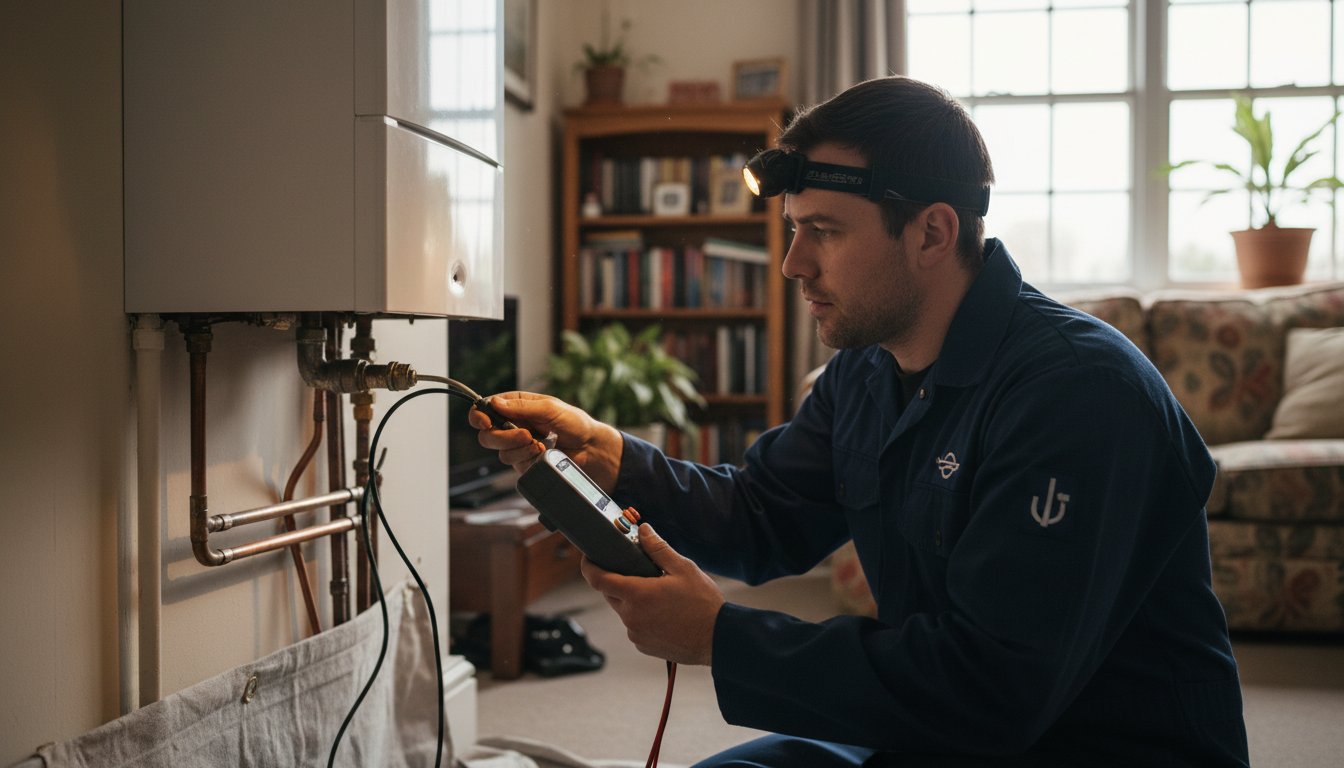
This isn't a grey area or a technicality. Below is the actual legal text, what the penalties really look like in practice (with named, sentenced cases from this year), the narrow DIY exception, landlords' specific legal duty, and how to check an engineer is genuinely registered before they start work. For the route into registration itself, see our guide to how to become a Gas Safe registered engineer.
The actual law
Regulation 3 of the Gas Safety (Installation and Use) Regulations 1998 is titled "Qualification and supervision." It works in two parts:
- Regulation 3(1) applies to everyone, with no exception: "No person shall carry out any work in relation to a gas fitting or gas storage vessel unless he is competent to do so."
- Regulation 3(3) applies specifically to employers (in respect of their employees) and self-employed people: they must not carry out such work unless they are "a member of a class of persons approved for the time being by the Health and Safety Executive" — in practice, this means being on the Gas Safe Register.
Regulation 3(4) carves out two narrow, specific exceptions from the approval requirement: replacing a hose or regulator on a portable or mobile space heater, and replacing a hose connecting a refillable gas cylinder to installation pipework. Nothing else is exempted.
What the penalties actually are
Breaches of the gas safety regulations are prosecuted under the Health and Safety at Work etc. Act 1974. The penalty framework sits in Schedule 3A of that Act, for offences under section 33(1)(c) — contravening health and safety regulations, which covers the Gas Safety (Installation and Use) Regulations:
| Court | Maximum penalty |
|---|---|
| Magistrates' court (summary conviction) | Up to 12 months' imprisonment, or a fine up to £20,000, or both |
| Crown Court (conviction on indictment) | Up to 2 years' imprisonment, or an unlimited fine, or both |
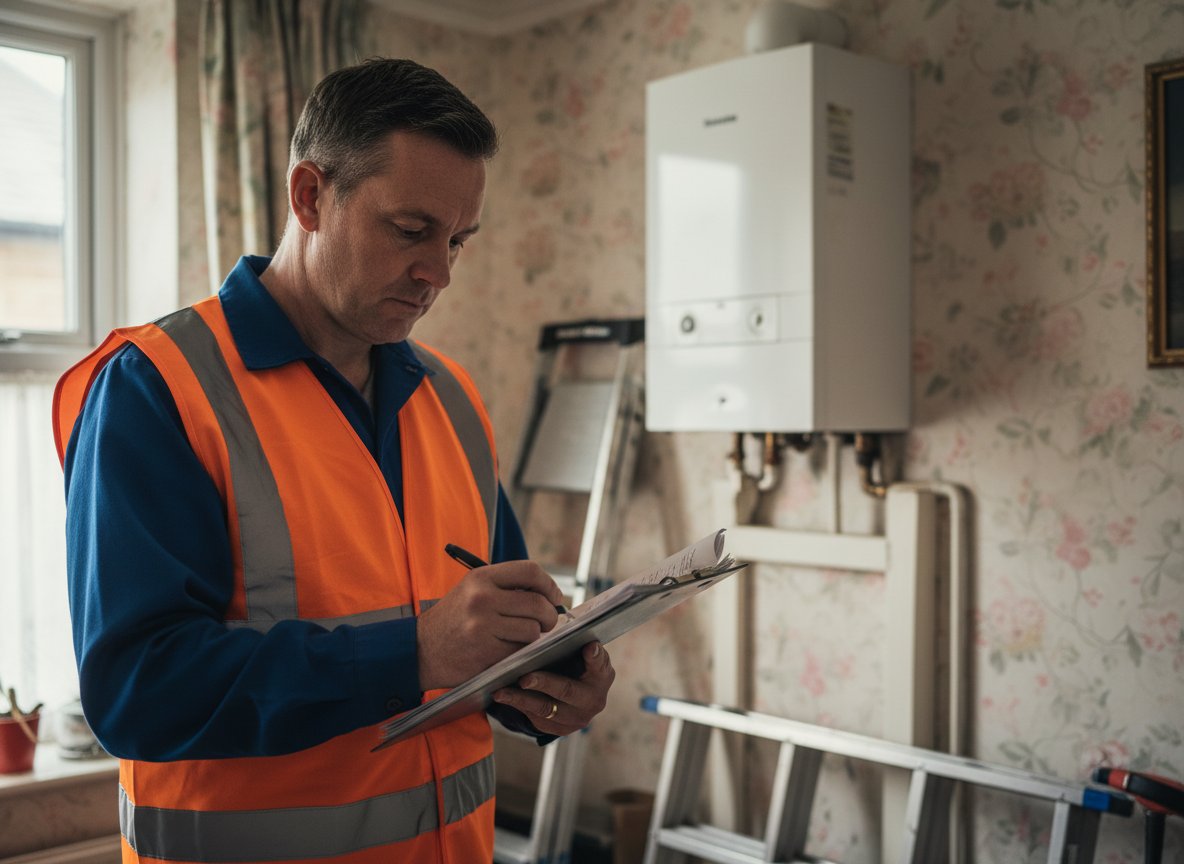
These aren't theoretical maximums. HSE actively investigates and prosecutes unregistered gas work, and 2026 alone produced several sentenced cases.
Real 2026 cases
These are genuine HSE prosecutions from this year, not hypotheticals.
A father and son in Stoke-on-Trent (July 2026). Wayne Culliss, a landlord, subcontracted a boiler replacement at his rental property to his then 18-year-old son Kazys, who wasn't qualified or Gas Safe registered. The work caused a gas leak that put the tenants — including a baby — at risk; a British Gas engineer found the leak during a routine safety check and isolated the supply. Kazys pleaded guilty to contravening Regulation 3(1) and received a 12-month community order, 140 hours' unpaid work and £500 costs. Wayne pleaded guilty to breaching Section 3(2) of the Health and Safety at Work etc. Act 1974 and was fined £3,000 plus £2,500 costs, at Wrexham Magistrates Court. HSE Inspector Rob Gidman: "Gas work must only ever be undertaken by Gas Safe Registered engineers and HSE will not hesitate to prosecute those who disregard this and put people at risk."
An unregistered fitter advertising on Facebook in the North East (July 2026). Alexander Robson traded under names including "GasnHeat Plumberz," having let his Gas Safe registration lapse, and continued advertising with flyers using the Gas Safe logo. He carried out illegal boiler and gas fire work at five homes across Blyth, Ryton, Hexham, Winlaton and Newcastle. He pleaded guilty to ten breaches of the gas safety regulations and was sentenced at South Tyneside Magistrates Court to 8 months' imprisonment, suspended for 2 years, plus a mental health treatment requirement, 30 days' rehabilitation activity, £450 compensation and £200 costs. HSE Inspector Darian Dundas: "All gas work must be carried out by registered Gas Safe Register engineers to ensure the highest standards are met. When they are not, the consequences can be deadly."
A previously struck-off fitter in Hampshire. Bradley Willis-Chambers removed and replaced boilers at two homes despite having been struck off the Gas Safe Register in 2016 for failing to demonstrate competence. One property was left without working hot water for an extended period. He pleaded guilty to four counts of breaching Regulations 3(3) and 5(3), was found to have shown "a flagrant disregard for the law," and was sentenced at Portsmouth Crown Court to 18 months' imprisonment, suspended for 2 years, with 180 hours' unpaid work and £600 compensation to each victim. HSE Inspector Francesca Arnold: "All gas work must be undertaken by Gas Safe registered engineers. The public should always ask to see the gas engineer's identification and check the registration number online to ensure it is valid — it only takes a few minutes to check and could prevent disaster."
The pattern across all three: real harm (gas leaks, families without hot water, danger to children), real convictions, and sentences that combine suspended custody, unpaid work, compensation to victims and costs — not just a fine.
Is there a DIY exception?
The regulations' registration duty (Regulation 3(3)) is written to bind employers and self-employed people, not private individuals doing unpaid work on their own property. A homeowner carrying out gas work on their own home, for no payment and not as part of a business, falls outside that specific duty.
But two things matter here, and we want to be precise rather than repeat the loose "DIY is fine" claim you'll see on forums:
- Regulation 3(1) still applies to everyone. You must still be competent to do the work safely, with no exception. Gas work done incompetently is still dangerous whether or not the person doing it is legally required to be registered.
- This is our reading of the regulation's own wording, not a plain-English statement from HSE or Gas Safe Register. We looked for an official page stating outright "homeowners may DIY their own gas work" and could not find one — HSE's own domestic FAQ pages say only that anyone employed to work on gas appliances in domestic premises must be Gas Safe registered, without directly addressing the unpaid owner-occupier case. If you're planning to do gas work on your own home yourself, we'd suggest contacting HSE or Gas Safe Register directly for an on-the-record answer for your specific situation, rather than relying on this interpretation or anything you read in a forum.
In practice, the overwhelming majority of domestic gas work is carried out by paid tradespeople, where the registration duty applies without question.
Landlords have a specific, separate legal duty
If you're a landlord, this isn't optional or merely best practice. HSE's guidance states landlords are responsible for ensuring an annual gas safety check is carried out within 12 months of a new appliance or flue being installed, and every 12 months after that, by a Gas Safe registered engineer. Landlords must keep records for 2 years and give tenants a copy within 28 days of the check (or before they move in, for new tenants).
HSE's own guidance is direct about the consequence of skipping this: breaking the regulations "puts lives at risk and is unlawful," and HSE "will take enforcement action," which "could result in a substantial fine and/or a custodial sentence" — under the same Schedule 3A penalty framework set out above. The Culliss case above involved exactly this scenario: a landlord who should have ensured registered work was done instead arranged unregistered, unsafe work himself.
How to check an engineer is actually registered
Every HSE inspector quoted above says the same thing: check before the work starts. There are two official ways:
- Check online at Gas Safe Register's own site (gassaferegister.co.uk) — enter the engineer's licence number from their ID card to confirm their photo and the categories of work they're qualified to do.
- Text "GAS" plus the engineer's 7-digit licence number to 85080 for a reply confirming their registration status.
Always ask to see the physical ID card first and match the photo to the person at your door — Robson's case shows that logos and flyers can be faked, but the registration database can't.
Common mistakes
- Assuming a lapsed registration is a technicality. Robson had previously been registered; the offence was continuing to work after his registration lapsed. A past registration gives no cover once it expires.
- Trusting a logo on a van or flyer. Both genuine and faked Gas Safe branding look similar to an untrained eye — check the ID card and the online database instead.
- Landlords assuming any heating engineer will do. The annual safety check must specifically be carried out by someone Gas Safe registered for the relevant category of work, not just a general heating engineer.
- Confusing "competent" with "registered." Regulation 3(1)'s competence duty applies to everyone, but it's separate from Regulation 3(3)'s registration duty for employers and the self-employed — someone can be unregistered and still claim to be "competent," which the law doesn't accept as a substitute for registration in a trading or employment context.
- Subcontracting to someone you haven't checked. The Culliss case shows that arranging for someone else to do the work doesn't remove your own legal exposure if that person isn't registered.
Frequently asked questions
What happens if you get caught doing gas work without being registered?
You can be prosecuted under the Health and Safety at Work etc. Act 1974. On summary conviction (magistrates' court), the maximum is 12 months' imprisonment or a £20,000 fine, or both. On conviction on indictment (Crown Court), the maximum is 2 years' imprisonment or an unlimited fine, or both. Real 2026 cases have resulted in suspended prison sentences, unpaid work, compensation orders and costs.
Can I legally do gas work on my own home myself?
The regulations' registration duty applies to employers and self-employed people, not unpaid private individuals working on their own property, so a strict reading of the text suggests a narrow exception exists. However, we couldn't find an official HSE or Gas Safe Register statement confirming this in plain terms, and the universal competence duty under Regulation 3(1) still applies regardless. If you're considering this, we'd recommend checking directly with HSE or Gas Safe Register for your specific situation.
How do I check if a gas engineer is really registered?
Check online at gassaferegister.co.uk using the licence number from their ID card, or text "GAS" plus their 7-digit licence number to 85080. Always ask to see the physical ID card and match the photo before work starts.
Do landlords have extra legal duties around gas safety?
Yes. Landlords must have an annual gas safety check carried out by a Gas Safe registered engineer, keep records for 2 years, and give tenants a copy within 28 days (or before move-in for new tenants). Failing to do this is a breach of the regulations and can result in enforcement action, including prosecution.
Has anyone actually been prosecuted for this?
Yes, regularly. In 2026 alone, HSE secured convictions against multiple unregistered gas fitters, including suspended prison sentences, unpaid work requirements, and compensation payments to victims, for work ranging from boiler replacements to gas fire installations.
Does a Gas Safe ID card or van logo prove someone is registered?
No — logos and ID-style cards can be faked, as one of the cases above shows. The only reliable check is looking the engineer up directly via Gas Safe Register's online checker or text service, using their licence number.
How Nexis Academy can help
Nexis Academy is a City & Guilds Approved Centre (T91185) in Manchester. We currently deliver internal wall insulation training, with more trade and construction courses in development, including gas. We do not yet offer gas qualifications, so please register your interest to hear when that changes.
See also how to become a Gas Safe registered engineer and what ACS gas assessment is and which categories you need.
Sources
- Gas Safety (Installation and Use) Regulations 1998, regulation 3.
- Health and Safety at Work etc. Act 1974, Schedule 3A.
- HSE, "Father and son sentenced for carrying out illegal gas work", 23 July 2026.
- HSE, "SENTENCED: Illegal gas fitter who touted for business on Facebook despite not being on the Gas Safe Register", 17 July 2026.
- HSE, "Unregistered gas installer sentenced for illegal gas work at two Hampshire homes," via HSE Media Centre.
- HSE, "Check an engineer's registration" and landlord gas safety FAQ (hse.gov.uk/gas/domestic/).