
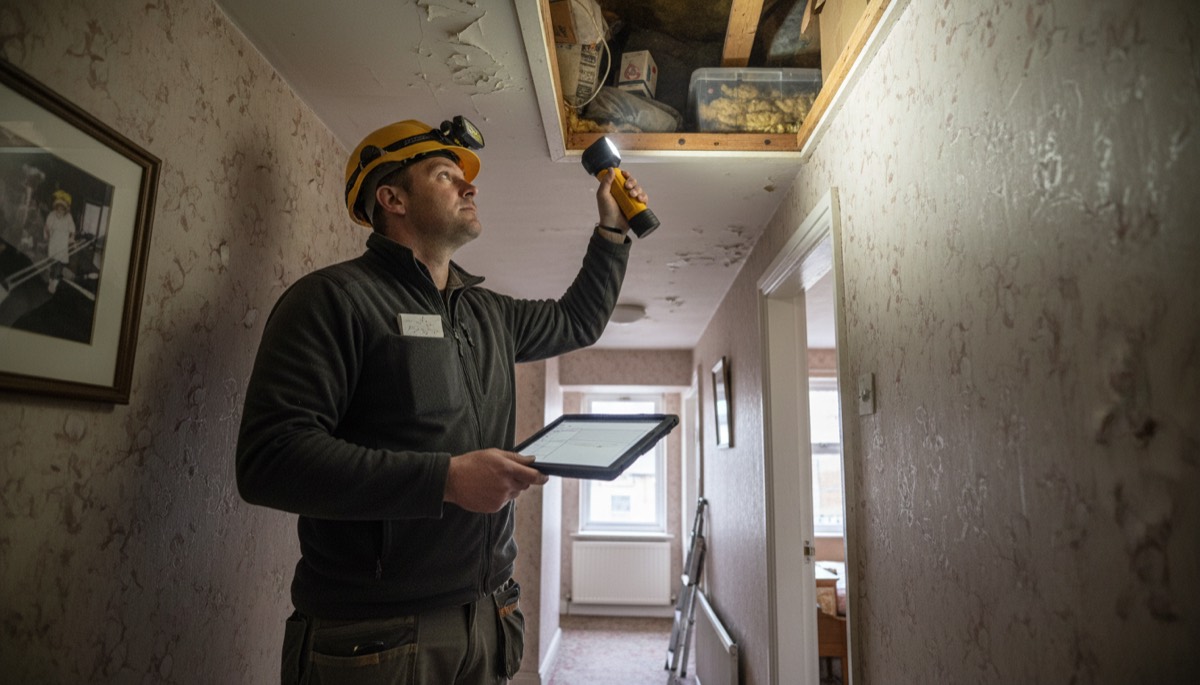
If you already work in construction, retrofit or energy assessment, this is one of the more direct ways into the growing retrofit sector. This guide explains the role, the qualification, and where it sits relative to the Domestic Energy Assessor (DEA) and retrofit coordinator roles, which people often confuse with it.
What does a retrofit assessor do?
A retrofit assessor's job is to survey a home thoroughly enough that a retrofit coordinator can plan improvement work safely and correctly. The ABBE qualification specification describes the role as giving "the learner the knowledge, understanding and skills to carry out an assessment and produce a condition report," including understanding retrofit principles and standards, building structures, appraisal of buildings, and occupancy assessments.
In practice this covers:
- Surveying the dwelling, including traditional and heritage buildings, and identifying defects such as thermal transmittance issues, U-value problems, ventilation shortfalls and site constraints.
- Assessing occupancy: who lives there, how they use the dwelling, and factors such as heat gains and solar gains that affect comfort and energy use.
- Understanding retrofit risk, including how risk assessment affects the assessor's own recommendations.
- Producing a condition report, drawing on Standard Assessment Procedure (SAP), Passive House Planning Package (PHPP) and Reduced Data SAP (RdSAP) principles, and estimating annual fuel usage, costs and carbon emissions.
- Working within PAS 2035 and TrustMark requirements, including how the assessment is lodged and audited.
Under PAS 2035, this survey work feeds directly into a retrofit coordinator's planning. Our guide on what a retrofit coordinator does explains the next stage of that process. The retrofit assessor's job stops at the survey and report; specifying measures and overseeing the project belongs to the coordinator and designer.
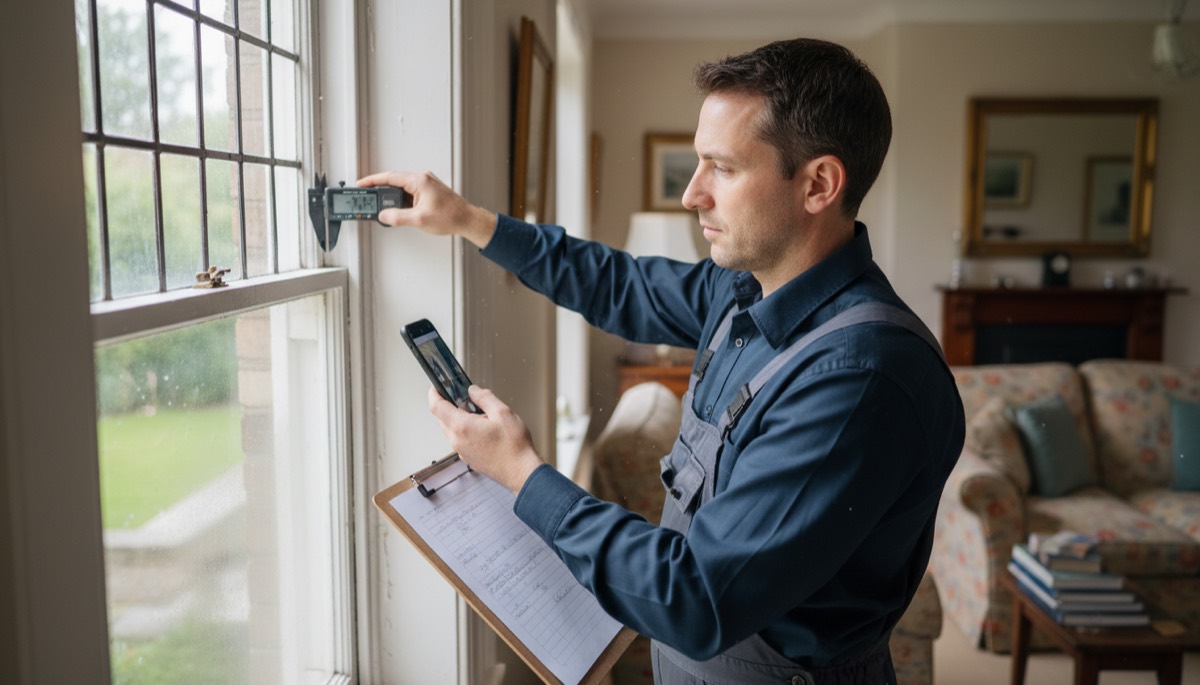
The ABBE Level 3 Certificate for Retrofit Assessors
ABBE's own specification sets out the qualification clearly.
| Feature | Detail |
|---|---|
| Qualification number | 603/6853/6 |
| Level | 3 on the Regulated Qualifications Framework |
| Total Qualification Time | 135 hours |
| Guided Learning | 27 hours |
| Credit value | 14 credits |
| Structure | 8 mandatory units |
| Grading | Pass or fail |
| Age | 18+ |
The 8 mandatory units
| Unit | Credit | What it covers |
|---|---|---|
| 1. Understand the principles of PAS2035, Trust Mark and the Data Warehouse | 1 | The basic principles of PAS 2035 and the roles the standard requires |
| 2. Retrofit Energy Efficiency Advice | 2 | Giving customers advice on the retrofit energy efficiencies they can make |
| 3. Understand Retrofit standards | 1 | Retrofit standards, audit requirements and lodging the assessment |
| 4. Understand retrofit risk assessment and the impact it has on assessors | 2 | Retrofit risk assessment, the process, and what it means for assessors |
| 5. Understand the Building Physiology | 2 | Dwelling structure, appraisals, and risk assessment of buildings |
| 6. Occupancy Assessment | 2 | Appraising occupancy, heat gains and solar gains |
| 7. Carry out an appraisal of a dwelling | 2 | Surveying a dwelling, including heritage buildings, identifying defects, U-values and ventilation |
| 8. Produce a condition report for a dwelling | 2 | SAP, PHPP and RdSAP principles, identifying measures, and producing the final report |
Every unit is assessed by a portfolio of evidence. Units 7 and 8 are where the real survey work happens: carrying out an appraisal and then writing it up as a condition report that a coordinator can act on.
Who can take it?
This is where sources disagree, and it is worth being precise.
ABBE's own specification is clear: qualifications are available to anyone who is capable of reaching the required standards, and the document lists no pre-entry requirements beyond the minimum age of 18. It says the qualification is aimed at people already working in the built environment or construction sector, and notes it "may be of particular interest to current Domestic Energy Assessors who can upskill to a Retrofit Assessor." That is an invitation, not a rule.
Many training providers, however, describe a firmer entry bar. Course listings commonly state that applicants should hold a Level 3 qualification in Domestic Energy Assessment or equivalent before applying. This is a sensible practical requirement, because the course is short (27 guided learning hours) and assumes you can already read a dwelling, use RdSAP concepts and talk to clients about energy performance, skills a DEA qualification builds. Our guide on how to become a domestic energy assessor explains that route.
So in practice: the awarding body does not require a DEA certificate, but your chosen training centre may. Ask directly before you pay.
Pre-course reading
ABBE's specification lists required reading before the course starts:
- Assessment of significance as per BS 7913, the British Standard on the conservation of historic buildings
- Understanding Path C extra requirements (in situ and air pressure testing)
- An overview of Standard Assessment Procedure (SAP) and Passive House Planning Package (PHPP)
If you are not already familiar with these, build in time to read around them before your course starts.

Retrofit assessor vs DEA vs retrofit coordinator
These three roles are often confused, partly because people move between them. Here is how they differ.
| Role | Main output | Typical qualification | Works under |
|---|---|---|---|
| Domestic Energy Assessor (DEA) | Energy Performance Certificate (EPC) using RdSAP | Level 3 Certificate in Domestic Energy Assessment | An accreditation scheme |
| Retrofit Assessor | PAS 2035 condition report, occupancy assessment, dwelling appraisal | ABBE Level 3 Certificate for Retrofit Assessors | A retrofit coordinator |
| Retrofit Coordinator | Whole-project plan: medium-term improvement plan, measure specification, monitoring | ABBE Level 5 Diploma in Retrofit Coordination and Risk Management | Independently, overseeing the project |
A DEA can produce a standalone EPC for a sale or let. A retrofit assessor's survey is specifically for a PAS 2035 retrofit project, feeding a condition report that includes far more detail than an EPC: occupancy, risk and heritage considerations among them. The ABBE Level 5 Retrofit Coordinator specification confirms this structure: it names the Level 3 Certificate for Retrofit Assessors and the Level 3 Certificate in Domestic Energy Assessment as two of the qualifications a learner may hold on the way into coordination.
If you are not sure which of these three roles fits you, start with whichever matches your current work. Experienced DEAs often move into retrofit assessing. Experienced retrofit assessors often move into coordination once they have the required construction and project management background.
How does this fit into PAS 2035?
PAS 2035:2023 structures the whole-dwelling assessment into several parts: a full property assessment, a condition report, an occupancy assessment, and a ventilation assessment, with a heritage impact assessment required where an area of significance is identified. The retrofit assessor produces this evidence base. The retrofit coordinator then uses it to build a medium-term improvement plan and specify measures, working with designers and installers.
This division of labour exists because PAS 2035 is built around independence and accountability. The person surveying a home should not be the same person deciding what work it needs and overseeing that work, which is why coordination, design and assessment are kept as separate, defined roles even when one person holds qualifications for more than one of them.
What happens after you qualify?
Once you hold the ABBE Level 3 Certificate for Retrofit Assessors, you can carry out retrofit assessments for PAS 2035 projects, typically working for or alongside a retrofit coordinator, a local authority retrofit scheme, or a larger retrofit contractor. ABBE's specification notes that the qualification is designed to connect into a wider suite of retrofit qualifications, including the Level 2 and Level 3 NVQ Certificates in Insulation Building Treatments, the Level 3 Award for Retrofit Advisors, and the Level 5 Diploma for Retrofit Coordinators, so your next step can build directly on this one.
A worked example: from survey to condition report
It helps to see what the eight units add up to on a real job. Here is a simplified walk-through of a typical domestic retrofit assessment.
| Stage | What the assessor does | Which unit it draws on |
|---|---|---|
| Before the visit | Reviews the property's age, construction type and any existing retrofit history on the Data Warehouse | Unit 1, Unit 3 |
| On arrival | Introduces themselves, explains the process, and talks to the occupant about how they use the home, heating patterns and any comfort problems | Unit 6 |
| Fabric survey | Walks the property identifying construction type, insulation (where visible), window and door condition, and any signs of damp, cold bridging or disrepair | Unit 7 |
| Services survey | Records the heating system, hot water, ventilation provision and any existing low-carbon technology | Unit 5, Unit 7 |
| Risk and constraints | Notes planning constraints, listed building or conservation area status, and anything that limits which measures could work | Unit 4, Unit 7 |
| Data and calculation | Runs the dwelling through RdSAP or an equivalent methodology to estimate current performance, fuel use and emissions | Unit 8 |
| Write-up | Produces the condition report, including defects found, ventilation assessment and recommended next steps for the coordinator | Unit 8 |
| Advice | Gives the occupant a plain-English summary of what was found and what it could mean for them | Unit 2 |
The report then goes to the retrofit coordinator, who uses it to build the medium-term improvement plan. The assessor's job ends at a well-evidenced, accurate report; the coordinator decides what work actually happens and in what order.
Common findings a retrofit assessor flags
Real surveys turn up the same handful of issues again and again. Knowing what to look for, and why it matters, is most of what separates a confident assessor from a nervous one.
- Damp and mould, which can rule out some insulation measures until the underlying cause is fixed.
- Existing ventilation that is already inadequate, which gets worse once a home is made more airtight.
- Signs of previous poor-quality retrofit work, such as internal wall insulation fitted without a vapour control layer, which later assessors and coordinators need to know about before adding more measures.
- Heritage and conservation constraints, which can rule out external changes such as solid wall insulation or certain window replacements.
- Site access and structural issues that affect what contractors can realistically install.
None of these stop the project. They are exactly the information a retrofit coordinator needs to plan safely, which is the entire point of the assessor's role under PAS 2035.
What to ask a training provider
Because the ABBE specification sets no firm entry bar but providers often add one of their own, ask directly:
- What entry qualification do you require, and why? If they ask for a DEA certificate, confirm whether that is their own policy or an ABBE rule.
- How is the portfolio evidence collected? Ask whether you will assess real or simulated dwellings for units 7 and 8.
- What is the course format and length? The qualification is only 27 guided learning hours, but providers package it differently.
- Does the course cover the pre-course reading on BS 7913, Path C requirements, SAP and PHPP, or is that left to you beforehand?
- What does the fee include, and are there costs for resits or revalidation?
Is retrofit assessing a good career move?
Demand for retrofit assessors tracks the wider growth in the retrofit sector. PAS 2035 is the standard behind government-backed home energy efficiency schemes, and every funded project needs an assessment before work can begin. As more homes move through local authority and national retrofit programmes, the need for people who can survey properties to this standard grows alongside it.
The role suits people who are methodical, comfortable writing clear reports, and happy spending time in other people's homes asking questions and taking measurements. It does not suit everyone who is good on the tools: surveying and reporting is a different skill set from installing.
For many people, it is a natural step from site-based trade work or from domestic energy assessing, without requiring a return to full-time study. The 135-hour total qualification time, most of it guided learning rather than independent study, makes it one of the more achievable additions to a construction or energy-related career.
Frequently asked questions
Do I need a DEA qualification to become a retrofit assessor?
Not according to ABBE's own specification, which sets no formal entry requirements. Many training providers ask for a Level 3 Domestic Energy Assessment qualification in practice, because the retrofit assessor course is short and assumes related knowledge. Check directly with your chosen provider.
What is the difference between a retrofit assessor and a DEA?
A DEA produces an Energy Performance Certificate using RdSAP, for general sale, let or compliance purposes. A retrofit assessor produces a more detailed PAS 2035 condition report, occupancy assessment and dwelling appraisal, specifically to support a retrofit coordinator's planning for whole-house improvement work.
How long does the retrofit assessor qualification take?
ABBE lists 27 guided learning hours and a total qualification time of 135 hours for the Level 3 Certificate for Retrofit Assessors. How long it takes you in practice depends on how your training provider schedules the course and how quickly you complete the portfolio evidence.
Can a retrofit assessor also be a retrofit coordinator?
They are different qualifications with different scopes, but someone can hold both. ABBE's Level 5 Diploma in Retrofit Coordination and Risk Management names the Level 3 Certificate for Retrofit Assessors as one acceptable entry route into coordination.
Is this qualification the same as the Level 3 Certificate in Domestic Energy Assessment?
No. They are different ABBE qualifications with different unit structures. The DEA certificate focuses on producing EPCs using RdSAP. The Retrofit Assessor certificate focuses on the fuller PAS 2035 survey, condition report and occupancy assessment.
Does the qualification need renewing?
ABBE's specification does not state a formal expiry or revalidation requirement for the certificate itself. Some training providers describe a revalidation cycle as part of their own course delivery, so check this with the provider rather than assuming an ABBE-wide rule.
What is a condition report, exactly?
It is the retrofit assessor's main output: a written record of a dwelling's structure, defects, thermal performance, ventilation and site constraints, produced after the appraisal (Unit 7) and written up under Unit 8. It is the evidence base the retrofit coordinator uses to plan the project.
How Nexis Academy can help
Nexis Academy is a City & Guilds Approved Centre (T91185) in Manchester. We currently deliver internal wall insulation training, with more trade and construction courses in development. We do not yet offer retrofit assessor courses, so please register your interest to hear when that changes.
See also how to become a domestic energy assessor, what a retrofit coordinator does and PAS 2030 vs PAS 2035.
Sources
- ABBE, Level 3 Certificate for Retrofit Assessors specification v1.1, November 2020: qualification number, size, units, entry, pre-course reading.
- ABBE, Level 3 Certificate for Retrofit Assessors course page.
- ABBE, Level 5 Diploma in Retrofit Coordination and Risk Management specification v2, January 2024: entry routes naming the Retrofit Assessor and DEA certificates.