
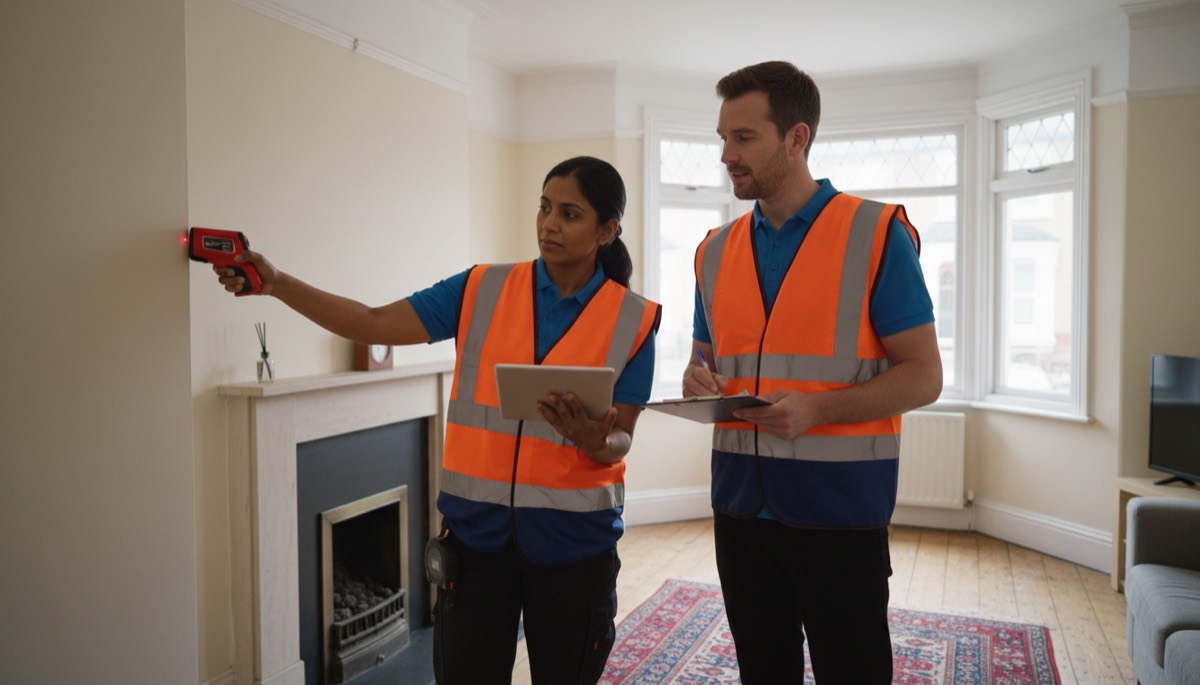
A DEA is the person who visits a home, records what is in it and produces its EPC. It is one of the most accessible ways into the energy efficiency and retrofit sector, because the entry qualification is short, practical and open to new entrants. This guide explains the route in order, what the job involves, and what is changing about EPCs.
What does a domestic energy assessor do?
The National Careers Service describes DEAs as people who work out the energy efficiency of domestic buildings such as houses and flats. A typical visit lasts 30 minutes to an hour. The assessor records property details, takes measurements and photographs, and checks heating and lighting equipment. Back at the office, they enter the data into software to produce an EPC, send it to the client, and advise on improvements.
The ABBE qualification specification shows what the training covers, which is a good guide to the work itself. A DEA learns to:
- Work safely and professionally, including lone working risks and conflicts of interest
- Prepare for an assessment: take instructions, make initial investigations and understand legislation and the types of property involved
- Inspect the property: introduce themselves and provide evidence of identity to those present before beginning, identify the age and method of construction, and record the building structure, heating, hot water and lighting
- Use the prescribed methodology: the Reduced Data SAP (RdSAP) approach for existing dwellings, working with approved software
- Produce and explain the EPC, including how to interpret the ratings and energy efficiency measures, lodge it on the national register and respond to customer questions
The specification also says where RdSAP is not suitable for a property, the assessor must refer the job on to an assessor accredited for the right methodology. In other words, knowing the limits of your own accreditation is part of the job.
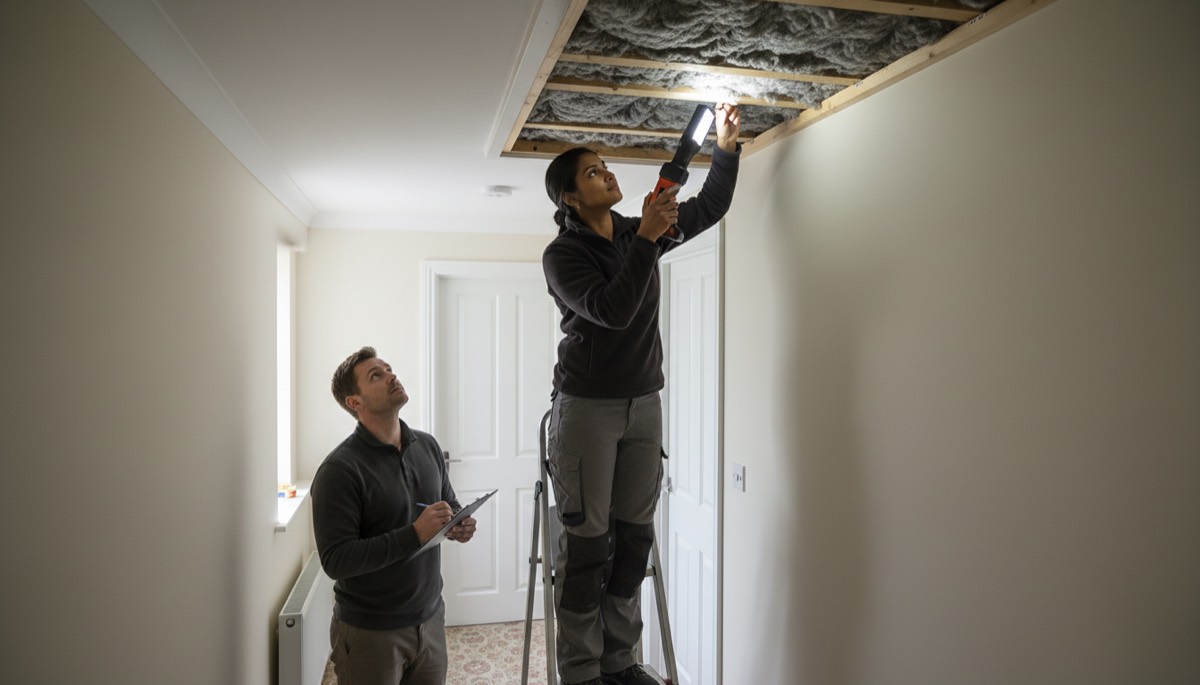
Who can become a DEA?
Almost anyone aged 18 or over. The ABBE specification says there are no pre-entry requirements, and describes the qualification as suitable both for new entrants to energy assessment and for people with experience in property inspection or surveying who want a qualification in energy assessment. The ABBE web page lists a minimum age of 18 as the only entry requirement.
The National Careers Service adds that related experience, such as property surveying or construction, may reduce the training you need. The NCS lists the skills that matter in practice: customer service, maths, thoroughness and attention to detail, verbal communication, flexibility, analytical thinking, business management, engineering science knowledge, and basic computer or handheld device use.
Be realistic about two things. Go Construct says work experience is essential for finding employment, and that a CSCS card may be needed to work on construction sites. And if you intend to work for yourself, you are running a small business as well as doing the assessments.
The part of the job that is not about energy
New assessors often expect the technical side to be the hard part. The ABBE specification shows that a large share of the training is about working safely and professionally in other people's homes. The first unit alone is worth 6 of the qualification's 25 credits, and covers:
- Lone working. You will often be on your own in a stranger's home, and the unit asks you to identify the risks to yourself that come with lone working.
- Protecting the customer's property while you measure, photograph and inspect.
- Conflicts of interest. The unit asks you to identify the range of potential conflicts you could face, and who to tell. This matters, for example, if you are assessing a property you have an interest in.
- Emergency procedures and who to inform if there are conflicts between different health and safety requirements.
- Identity. The inspection unit asks you to introduce yourself and provide evidence of your identity to those present before you begin.
The EPC unit adds the paperwork side: you need to understand the reasons for keeping clear and complete records and the minimum period for which you must retain them, and to be able to describe a complaints procedure and how customers can access yours. All of that is assessed as part of the qualification, because it is part of the job.
The route in, step by step
- Choose a Level 3 Certificate in Domestic Energy Assessment. Several awarding organisations offer one, including ABBE and City & Guilds. Compare delivery, assessment and what support you get with your portfolio.
- Complete the training and portfolio. The qualification is assessed through a portfolio of evidence, which includes inspecting real or simulated properties and producing EPCs.
- Join an accreditation scheme. The 2012 Regulations require an energy assessor to be a member of an accreditation scheme approved by the Secretary of State. Choose a scheme and apply.
- Set up your tools. You need approved software, measuring equipment and insurance appropriate to your scheme's requirements.
- Start producing EPCs. Once accredited, you produce EPCs for existing homes and lodge them on the national register.
- Keep up with changes. Schemes monitor their members, and the rules and methodology change over time (see the section on reform below).
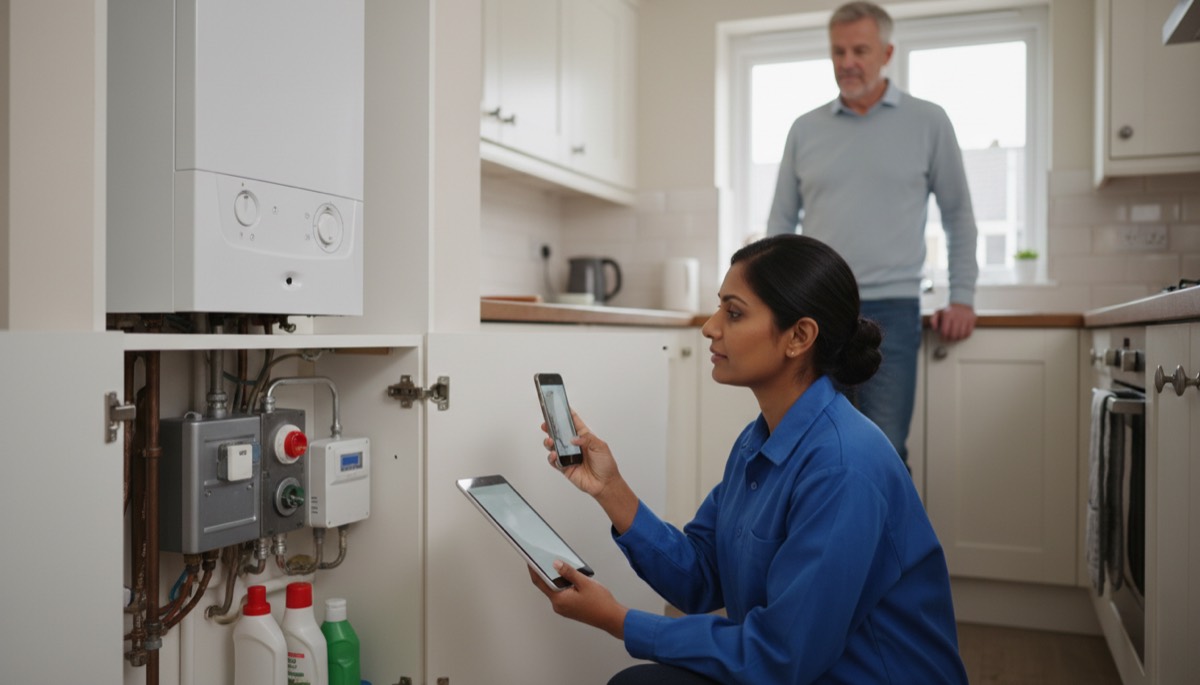
The qualification in detail
The ABBE Level 3 Certificate in Domestic Energy Assessment (600/5478/5) is one example of the qualification. According to ABBE's specification:
| Feature | Detail |
|---|---|
| Level | 3 |
| Size | 25 credits; total qualification time 250 hours |
| Structure | Four mandatory units |
| Assessment | Portfolio of evidence; pass or fail |
| Age | 18+ |
| Pre-entry requirements | None |
| Outcome | Qualifies you to apply to an accreditation scheme to produce EPCs for existing homes (not newly built) |
The four mandatory units are:
| Unit | Credits |
|---|---|
| Conduct energy assessments in a safe, effective and professional manner | 6 |
| Prepare for energy assessments of domestic property | 4 |
| Undertake energy inspections | 11 |
| Produce and explain Energy Performance Certificates relating to domestic property | 4 |
City & Guilds lists its Level 3 Certificate in Domestic Energy Assessment as 6371-01 (accreditation number 610/2262/7), which it describes as mostly classroom-based and aimed at anyone working, or looking for work, as an energy assessor in the construction sector. Its page shows a last registration date of 31 March 2027 and a last certification date of 31 March 2030. If you are considering City & Guilds' version, check the current dates and your centre's plans before registering, as dates change.
Do not assume that all providers' versions are identical. Check the exact title, number and awarding organisation of the qualification you register for, and check that your chosen accreditation scheme accepts it.
What about new-build homes?
The ABBE specification is clear that the qualification leads to EPCs for existing homes, not newly built ones. ABBE lists a separate qualification, the Level 3 Certificate in Domestic on Construction Energy Assessment, for new-build assessment. If you want to work on new homes, check which qualification and scheme category you need.
Accreditation schemes: the step people forget
The qualification gets you ready, but the scheme is what makes you legal. Regulation 22 of the Energy Performance of Buildings (England and Wales) Regulations 2012 states that "an energy assessor must be a member of an accreditation scheme approved by the Secretary of State."
The same regulation sets out what a scheme must provide before it can be approved. It must have adequate provision for:
- consistent and accurate energy assessments carried out in an independent manner
- members being fit and proper persons who are qualified by their education, training and experience
- a standard form for each type of certificate and report
- a published code of conduct
- indemnity arrangements
- facilitating the resolution of complaints against members
- entering the data from which EPCs are produced onto the national register
- keeping a register of the scheme's members
So when you apply, expect a scheme to ask about your qualification, your identity and suitability, your insurance, and your commitment to its code of conduct. Requirements and fees differ between schemes, so contact the ones you are considering and ask what they require and what they charge.
The rules above apply in England and Wales. Scotland has its own approval arrangements, in which assessors must belong to an organisation approved by the Scottish Government, and Northern Ireland also has its own arrangements through the Department of Finance. Check the rules for the nation where you will work.
How much do domestic energy assessors earn?
Treat pay figures as ranges, not promises. Two government-backed careers sources give different ranges:
| Source | Starting | Experienced |
|---|---|---|
| National Careers Service | £24,000 a year | £35,000 a year |
| Go Construct | About £25,000 for newly trained assessors | Up to £56,000 |
Go Construct says pay varies by location, employer, responsibility, overtime and whether training is industry recognised. Self-employed assessors earn according to how many assessments they win and their costs. The National Careers Service gives typical hours as 38 to 40 a week, with evening and weekend work possible to meet customer demand.
What is changing about EPCs?
EPCs are being reformed, and anyone training now should know the timetable. This section describes the government's published position as of November 2026.
- The reform has been delayed. The government's consultation outcome page says it has moved the launch of the reforms to the second half of 2027, and that it will agree a new launch date and shared implementation plan with industry and the devolved administrations by the summer. A further response on the remaining parts of the consultation is due to be published in 2026.
- Four new headline metrics for homes. The page says new-style domestic EPCs will introduce four new headline metrics, subject to parliamentary approvals. Propertymark's report, published in March 2026, lists them as energy use, fabric performance, heating system and smart readiness, with secondary metrics for energy demand and carbon emissions.
- Assessors. Propertymark notes the government is committing to improve assessment accuracy and reliability, including reforms to how assessors are trained and monitored, but gives no details. The government's page says nothing about assessor training or accreditation. Expect your scheme to tell you what changes, and when.
- The current system carries on until then. Propertymark says the current EPC system remains in force until further notice.
For demand, the legal background matters too. In England and Wales, landlords cannot let properties covered by the Minimum Energy Efficiency Standard regulations if the EPC rating is below E, unless they have a valid exemption. The government says it has not finalised any 2030 changes: it aims to upgrade as many privately rented homes as possible to around Band C or equivalent by 2030, and is exploring policy design options after its 2026 consultation. Demand for EPCs follows the property market and regulation, so be prepared for it to vary.
Where does a DEA qualification lead?
The National Careers Service says assessors can move into commercial building assessments or assessor training with further training. In the retrofit sector, the DEA certificate is also one of the qualifications ABBE names in its Level 5 Diploma in Retrofit Coordination and Risk Management specification: it says learners must also hold either the Level 3 Certificate for Retrofit Assessors or the Level 3 Certificate in Domestic Energy Assessment. The same specification elsewhere describes other routes into the diploma, such as a building-related professional qualification or experience in construction, so check ABBE's current entry rules before you plan your route.
A retrofit coordinator manages whole-house projects under PAS 2035. See our guides to what a retrofit coordinator does and PAS 2030 vs PAS 2035 for how the roles fit together. If you eventually want to teach or assess others, our guide to how to become a trade tutor explains the routes.
Costs and what to ask before you pay
We have not quoted course prices because they vary widely between providers and by funding. Whatever you are quoted, get the total in writing, and ask:
- Which qualification exactly, and from which awarding organisation? Ask for the number.
- Does my chosen accreditation scheme accept it? Check directly with the scheme.
- How is the portfolio assessed, and how many properties must I assess? Ask how many are simulated and how many are real, and who finds the properties.
- What is included? Software, equipment, scheme joining fees, support after the course.
- How much support do I get after the course? Many people find the portfolio is the hardest part.
- What does it cost to start working? Scheme membership, software, insurance and equipment.
- What happens if the qualification or methodology changes? The reform means training may be updated.
- Can I speak to recent learners? Ask how many are now working as assessors.
Common mistakes
- Thinking the qualification is the licence. You also need to join an approved accreditation scheme.
- Choosing a course before checking scheme acceptance. Ask the scheme first.
- Underestimating the portfolio. It is usually the longest part of the process.
- Skipping the business side. Self-employed assessors need to win work, price jobs, manage insurance and handle complaints.
- Ignoring the reform timetable. Methodology and training may change from the second half of 2027.
- Assuming the qualification covers new builds. The ABBE version covers existing homes only.
Frequently asked questions
Do I need experience to become a domestic energy assessor?
Not to start. The ABBE qualification has no pre-entry requirements beyond age 18, and is suitable for new entrants. Experience in surveying or construction may reduce the training you need, and Go Construct says work experience is essential for finding employment.
Can I produce EPCs with just the Level 3 certificate?
No. Regulation 22 of the 2012 Regulations says an energy assessor must be a member of an accreditation scheme approved by the Secretary of State. You need to join a scheme after qualifying.
How long does it take to become a DEA?
The ABBE qualification is 250 hours of total qualification time, but how long it takes you depends on the delivery pattern you choose and how quickly you complete the portfolio. Then you need to be accepted onto a scheme. Be sceptical of promises of a fixed number of days.
How much does a domestic energy assessor earn?
The National Careers Service gives £24,000 a year for starters rising to £35,000 when experienced. Go Construct gives about £25,000 for newly trained assessors, up to £56,000 for experienced ones. Your own income depends on location, employer and, if you are self-employed, how much work you win.
Is there a difference between a DEA and a retrofit assessor or coordinator?
Yes. A DEA produces EPCs for existing homes using RdSAP. A retrofit coordinator manages whole-house retrofit projects under PAS 2035, which is a more senior role. ABBE's Level 5 retrofit coordination diploma specification names the DEA certificate as one of the qualifications learners must hold, alongside the Retrofit Assessor certificate.
Are EPCs about to change?
Yes. The government has delayed its EPC reforms to the second half of 2027. New-style domestic EPCs will have four new headline metrics, subject to parliamentary approval. The current system stays in force until then.
Can I be a DEA in Scotland or Northern Ireland?
Both have their own arrangements. In Scotland, assessors must belong to an organisation approved by the Scottish Government. Northern Ireland has its own arrangements through the Department of Finance. Check the rules for the nation where you will work before choosing a qualification or scheme.
How Nexis Academy can help
Nexis Academy is a City & Guilds Approved Centre (T91185) in Manchester. We currently deliver internal wall insulation training, with more trade and construction courses in development. We do not yet offer domestic energy assessment courses, so please register your interest to hear when that changes.
See also how to become a retrofit installer.
See also how to become a retrofit assessor.
Sources
- National Careers Service, Domestic energy assessor: duties, routes in, hours, pay, skills.
- Go Construct, Domestic energy assessor: qualifications, accreditation, pay, experience.
- ABBE, Level 3 Certificate in Domestic Energy Assessment and specification v4.1, June 2023: structure, credits, assessment, entry. ABBE, Energy qualifications: the separate on-construction certificate.
- City & Guilds, Energy Assessment (6371): qualification details and dates.
- Energy Performance of Buildings (England and Wales) Regulations 2012, regulation 22: accreditation schemes.
- Scottish Government, Scottish EPC accreditation scheme and Department of Finance, Energy assessors and accreditation schemes: arrangements outside England and Wales.
- GOV.UK, Reforms to the energy performance of buildings regime: consultation outcome and Minimum energy efficiency standard: landlord guidance.
- Propertymark, Anticipated reinvention of EPCs held back until 2027, 18 March 2026.
- ABBE, Level 5 Diploma in Retrofit Coordination and Risk Management specification, January 2024.