
What is BS 7671?
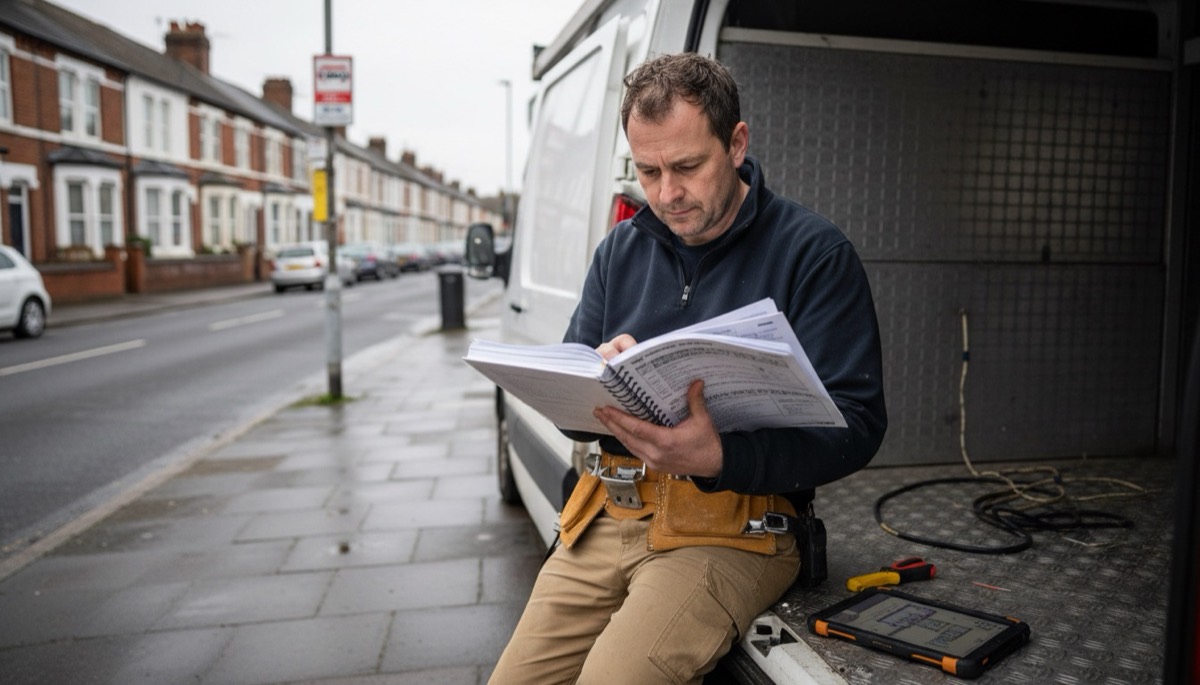
BS 7671 is the British Standard that sets out the requirements for electrical installations in the UK, published jointly by the Institution of Engineering and Technology (IET) and the British Standards Institution (BSI). It is better known as the IET Wiring Regulations, and the current version is called the 18th Edition. The IET describes it as having requirements for all low-voltage electrical installations, and it is the document electricians work to every day when they decide how to install, protect, earth, test and certify a circuit.
The regulations cover a huge range of practical questions: how big a cable has to be for a given load, what protective device protects it, how fast a fault has to be cleared, how to earth and bond an installation, and what extra rules apply in places such as bathrooms, swimming pools or caravan sites. They also set out how an installation must be inspected, tested and certified before it is handed over. In short, BS 7671 is the rulebook for the whole job, which is why a qualification in it is a core requirement for anyone who wants to be recognised as a competent installation electrician.
Is BS 7671 a legal requirement?
BS 7671 is a British Standard rather than an Act of Parliament, but in practice it is the benchmark the law and the industry point to. The government's Approved Document P, which covers electrical safety in dwellings in England under the Building Regulations, directs readers to BS 7671 as the standard to which electrical installations should be designed and installed. Competent person schemes, insurers, clients and employers also expect work to comply with it.
So while you will not be prosecuted simply for "breaking BS 7671" in the way you would for breaking a statute, working outside it carries real consequences. Work that does not comply is hard to certify, is hard to defend if something goes wrong, and can put you outside the schemes and insurance that a professional relies on. The Approved Document should be checked directly for its current wording, but the practical position is clear: electricians treat BS 7671 as the standard that defines good, safe practice.
What is the 18th Edition qualification?
The 18th Edition qualification is an award that proves you know and can apply the current version of BS 7671. The most widely taken is the City & Guilds 2382 Level 3 Award in Requirements for Electrical Installations. It has one core unit, "Requirements for electrical installations update to BS 7671: 2018", and 35 guided learning hours. City & Guilds says it can be taken as a one-day refresher or as a full qualification, and that it suits both practising electricians who need to update their certification and newly qualified electricians who need the certificate.
The qualification is assessed by an on-screen test. City & Guilds refers to a sample test and to a document on permitted reference materials, so check exactly what you are allowed to take into the test, and practise with the sample before sitting the real one. The point of the qualification is not to memorise the book, but to be able to find, interpret and apply the right regulation quickly, which is exactly what you do on a real job. Other awarding bodies offer equivalent awards, and the ECS accepts "a recognised BS7671:2018 qualification".
What has changed with Amendment 4?
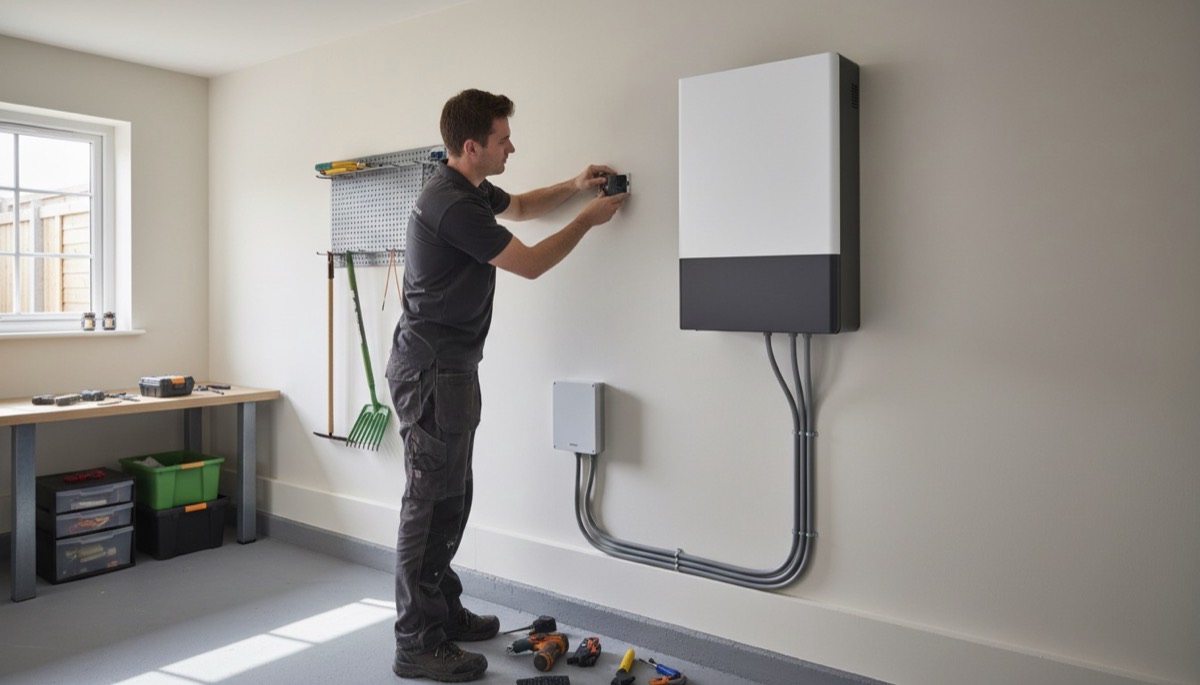
Amendment 4 is the latest update to the 18th Edition, and the IET now lists BS 7671:2018+A4:2026 as the current edition. It adds new requirements for the technology electricians increasingly install and revises one specialist area. According to the IET, the main changes are:
| Change | What it is in plain terms |
|---|---|
| A new chapter on stationary secondary batteries | Rules for rechargeable battery storage installed in a fixed location, such as home energy storage |
| A new section on functional earthing and functional equipotential bonding for ICT equipment and systems | Earthing arranged for how information and communications equipment works, rather than for shock protection alone |
| A new section on Power over Ethernet (PoE) | Requirements for delivering power to devices over data cabling |
| A major revision of Section 710 (Medical Locations) | Updated rules for installations in places like hospitals, including a schedule of test results for recording the resistance of supplementary protective equipotential bonding conductors |
You do not need to be working in all of these areas to need the update. Electricians installing or working near battery storage are directly affected, and everyone benefits from understanding the direction the regulations are moving. If you work in domestic installation, the battery chapter is the change most likely to matter to you. If you work in healthcare, the revision to the medical locations section is significant.
How did the amendments get us here?
The 18th Edition was published in 2018 and has been updated by a series of amendments, so you will see several version names in circulation. The IET describes the previous arrangement as the brown book including Amendment 2:2022, plus a free PDF "bolt-on" for Amendment 3, which meant electricians needed both to be up to date. Amendment 3, published in 2024, was limited to two new definitions in Part 2, for bidirectional and unidirectional protective devices, which relate to installations with battery storage or solar PV.
| Version | Status |
|---|---|
| BS 7671:2018 (the 18th Edition) | The base edition |
| Amendment 2:2022 | Included in the previous brown book |
| Amendment 3:2024 | A short free PDF bolt-on adding two definitions |
| BS 7671:2018+A4:2026 | The current edition, according to the IET |
The IET lists 15 October 2026 as the validity date for the brown book, Amendment 2 and the Amendment 3 PDF. That date has now passed, so the older documents are no longer the current reference. If you are buying a copy or choosing a course, you want the Amendment 4 version.
How is BS 7671 organised?
BS 7671 is arranged in seven numbered Parts, plus appendices, and learning the layout is half the battle in the qualification. Knowing which Part answers which kind of question lets you go straight to the right place, which is exactly the skill the test rewards.
| Part | What it covers |
|---|---|
| Part 1 | Scope, object and fundamental principles |
| Part 2 | Definitions |
| Part 3 | Assessment of general characteristics |
| Part 4 | Protection for safety (for example against electric shock and overcurrent) |
| Part 5 | Selection and erection of equipment |
| Part 6 | Inspection and testing |
| Part 7 | Special installations or locations |
Part 7 is where the rules for particular environments sit, in sections numbered in the 700 series. Examples include locations containing a bath or shower (Section 701), solar photovoltaic power supply systems (Section 712) and electric vehicle charging installations (Section 722), along with Section 710 on medical locations that Amendment 4 revises. If you are working on one of these, the general rules in Parts 4 and 5 still apply, and the 700-series section adds to or modifies them.
This is why a good working knowledge is about navigation. Nobody remembers every figure. A competent electrician knows which Part to open, can find the relevant regulation and table, and applies it correctly. The qualification tests that skill. Always check the current edition for exact section titles and numbering, since amendments can add or revise sections.
Which 18th Edition course should you take now?
You should take the version of the qualification that covers Amendment 4. City & Guilds lists two versions of the 2382, and they have different status:
| Version | What it covers | Status |
|---|---|---|
| 2382-26 | The latest version (Amendment 4) of BS 7671:2018 | Centres must use it from 16 April 2026; last registration 31 December 2029 |
| 2382-22 | The previous version, including Amendment 2 | Registration closed 31 July 2026; last test opportunity 15 October 2026; last certification 31 December 2026 |
For anyone starting now, the 2382-26 is the one to book. The older version has closed to new registrations and its test opportunities have ended. City & Guilds also notes that learners on the 5357 Level 3 electrotechnical qualification who want the latest BS 7671 test, including Amendment 4, must book on the 5357-026 route, so if you are working through the full qualification, check with your centre which version is built into your course.
Do you need the 18th Edition to be an electrician?
Yes, if you want to be recognised as a fully qualified installation electrician. The JIB states that the ECS Gold Card for an Installation Electrician requires a recognised BS 7671:2018 qualification, alongside a Level 3 qualification and a current ECS Health, Safety and Environmental Assessment. Without it you cannot get the Gold Card, which most employers and sites expect.
It is also valuable beyond the card. Joining a competent person scheme, signing off notifiable work in homes, and being confident to certify your own installations all rest on a sound working knowledge of the regulations. The qualification is where that knowledge is formally demonstrated. Our guide to how to become an electrician shows where the 18th Edition fits among the other requirements.
Do you need to update if you already hold an older version?
You should keep your knowledge current, but what the ECS and employers require of existing holders is something to confirm directly. The ECS requirement is worded as "a recognised BS7671:2018 qualification", and the IET's position is that Amendment 4 is now the current edition. City & Guilds also describes the 2382 as suitable for practising electricians who need to update their certification, and the course can be taken as a one-day refresher.
Practically, an electrician working to a version that is no longer current is working from an out-of-date rulebook, which is a professional and legal risk whatever a card scheme says. The sensible position is to update through a short Amendment 4 course, and to check with the ECS and any scheme or employer you work with what they require. The refresher format exists precisely so experienced electricians can update without retaking a full qualification.
How do you keep your knowledge current as amendments arrive?
Passing the qualification once is not enough, because the regulations keep changing. The IET has issued Amendment 3 in 2024 and Amendment 4 in 2026 in quick succession, and its own site notes that electricians needed both the brown book and a free PDF to be up to date during the transition. Staying current is a habit rather than a one-off task.
- Use the current edition. Check that any copy you rely on is BS 7671:2018+A4:2026, and retire older documents.
- Watch the IET's updates page. It is the authoritative place for what has changed and when older documents stop being valid.
- Take a short update course when a major amendment lands. The 2382 can be taken as a one-day refresher, which is designed for exactly this purpose.
- Read what changed in the areas you work in. If you install battery storage, the new chapter matters to you directly. If you work in healthcare buildings, Section 710 does.
- Tell your scheme and employer. If you belong to a competent person scheme or work for a contractor, check what they expect you to hold.
Treat each amendment as a short, scheduled piece of professional development. It is far easier to keep up as changes arrive than to catch up on several at once.
How do you prepare for the 18th Edition test?
The test rewards being able to find and apply the right regulation, not memorising the book. Preparing well is mostly about becoming fast and accurate at navigating the regulations.
- Learn the structure. Know what each Part of the regulations covers, so you can go straight to the right section instead of searching.
- Use tabs and highlighting if permitted. Check the permitted reference materials document for what you may mark up or bring in, then prepare your copy accordingly.
- Practise with the sample test. City & Guilds provides on-screen sample tests, so use them to get used to the format and the time pressure.
- Work through real calculations. Practise the tables and calculations you will meet, such as cable sizing and fault protection, until the method is automatic.
- Concentrate on what changed. Review the Amendment 4 topics, including batteries, functional earthing, PoE and medical locations, as these are the new content.
- Pace yourself in the test. If a question is taking too long, move on and return to it, rather than losing time on one item.
None of this replaces proper teaching, but it gives you a clear plan. Candidates who struggle usually have not practised finding things in the book under time pressure.
How does BS 7671 get used on a real job?
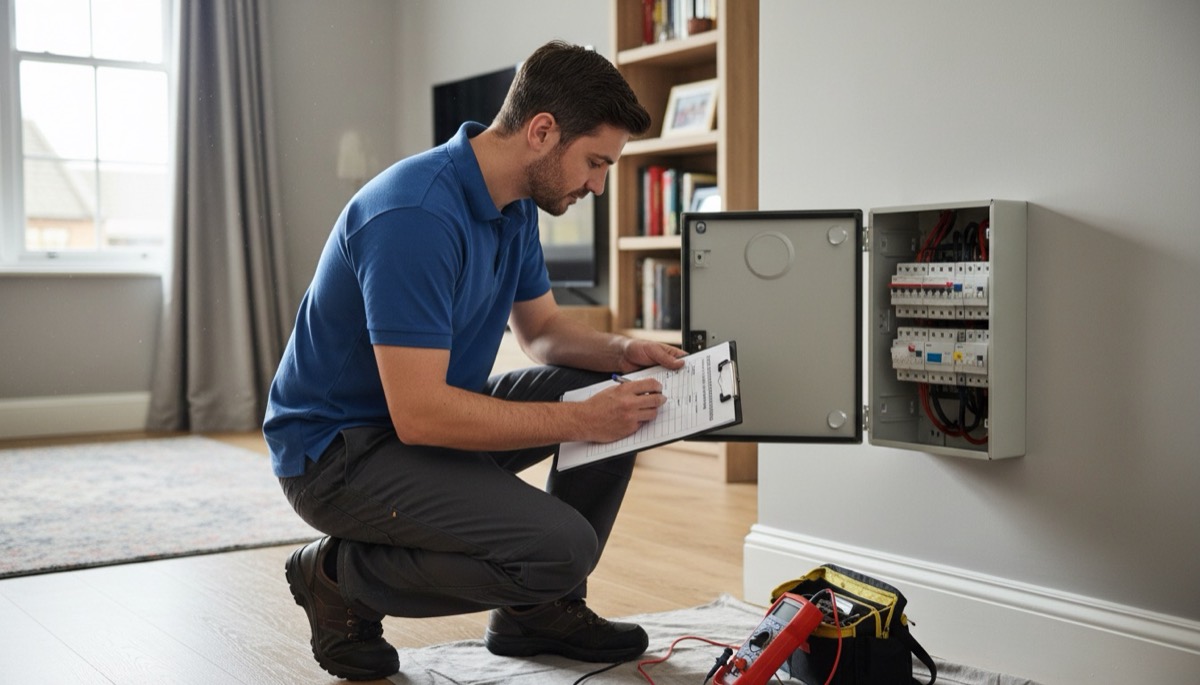
On a real installation, the regulations guide you from first assessment through to handover, following the same order as the Parts of the document. A simple new circuit shows how the pieces fit together.
- Assess the circumstances. Before you design anything, you establish what the circuit will supply, the supply arrangements, and the environment it will run through. This is the territory of Part 3.
- Design the protection. You choose cable sizes and protective devices so the circuit is protected against overload and faults, and so shock protection works, which is Part 4.
- Select and install the equipment. You choose suitable accessories, containment and fittings, and install them correctly, following Part 5. If the circuit serves a special location, the relevant 700-series section applies too.
- Inspect and test. Before the circuit is energised, you verify it against the requirements, which is Part 6, and record the results.
- Certify and hand over. You complete the certification and give the customer the documentation.
Every step is a place where the qualification's skill, finding and applying the right requirement, is used for real. That is why the qualification is built around navigating and applying the regulations rather than reciting them, and why electricians who know their way around the document work faster and make fewer errors.
What does it cost?
Course prices vary by provider, so get quotes, but City & Guilds lists a typical UK price of £69 for the 2382 qualification entry. That figure is the qualification fee, and centre charges for teaching, the exam and materials are separate and vary. A one-day refresher will cost less than a longer full course, and the best value usually depends on whether you are updating or taking the qualification for the first time. Check what is included, such as a copy of the regulations, before comparing prices.
Common mistakes to avoid
A few avoidable errors catch people out.
- Booking the old version. The previous 2382-22 has closed to registration, so make sure you book the Amendment 4 version.
- Treating it as a memory test. The skill being tested is finding and applying the right regulation quickly.
- Using an out-of-date copy. The IET lists the previous documents as valid only until 15 October 2026, so work from the current edition.
- Assuming one qualification covers everything. The 18th Edition is one requirement among several for the Gold Card, alongside the Level 3 qualification and the ECS safety assessment.
- Ignoring future amendments. The regulations will keep changing, so build the habit of updating as new amendments arrive.
Frequently asked questions
What is the difference between BS 7671 and the 18th Edition?
They are the same document. BS 7671 is the British Standard's number, and the "18th Edition" is the edition of the IET Wiring Regulations published in 2018. People use the names interchangeably, and the current version is BS 7671:2018+A4:2026.
How long does the 18th Edition course take?
City & Guilds lists 35 guided learning hours for the 2382 qualification and says it can be taken as a one-day refresher or as a full qualification. How long you need depends on whether you are updating existing knowledge or learning the regulations for the first time.
Do I need the 18th Edition for the ECS Gold Card?
Yes. The JIB states that the Installation Electrician Gold Card requires a recognised BS 7671:2018 qualification, in addition to a Level 3 qualification and a current ECS Health, Safety and Environmental Assessment.
Is Amendment 4 the latest version?
According to the IET, yes. It names BS 7671:2018+A4:2026 as the current edition. It adds a chapter on stationary secondary batteries, new sections on functional earthing for ICT equipment and on Power over Ethernet, and a major revision of Section 710 on medical locations.
Can I still take the Amendment 2 version of the 18th Edition?
Not as a new learner. City & Guilds lists the Amendment 2 version of the 2382 as closed to registrations from 31 July 2026, with the last test opportunity on 15 October 2026. New candidates should take the Amendment 4 version.
What does the 18th Edition test involve?
City & Guilds describes an on-screen test and publishes sample tests and a permitted reference materials document. The exact format and what you may take in are set out in those documents, so check them for the version you are taking.
Is the 18th Edition the same as being a qualified electrician?
No. It is one required component. To be a fully qualified installation electrician you also need a Level 3 electrotechnical qualification, the AM2 practical assessment and the ECS Health, Safety and Environmental Assessment. See our guide on how to become an electrician.
How Nexis Academy can help
Nexis Academy is a City & Guilds Approved Centre (T91185) in Manchester. We currently deliver internal wall insulation training, with more trade and construction courses in development. Register your interest to hear when new courses are available. See also how to become an electrician and what the AM2 assessment is and how to pass it.
See also inspection and testing qualifications and what a short electrician course can and can't do.
Sources
- IET, Updates to the 18th Edition (BS 7671:2018+A4:2026) and About BS 7671.
- City & Guilds, 2382 Requirements for Electrical Installations: versions, dates, guided learning hours, fee and structure.
- JIB / ECS, Installation Electrician (Gold) card requirements.
- HM Government, Approved Document P: Electrical safety (dwellings).