
What is the AM2?
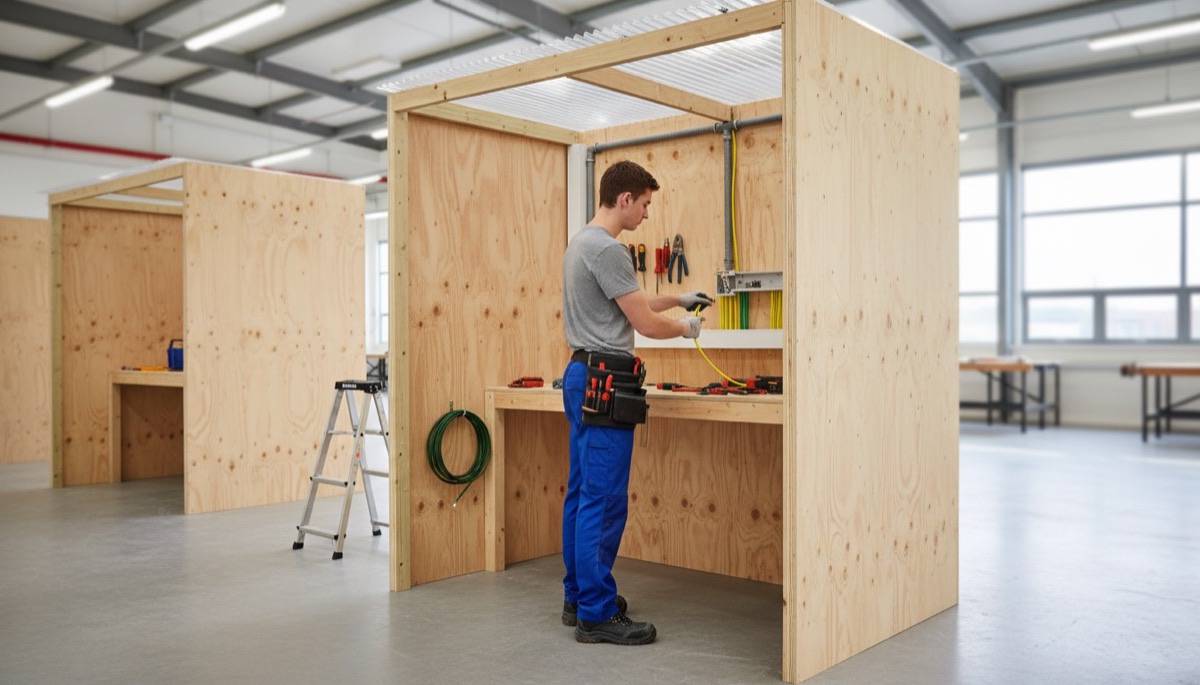
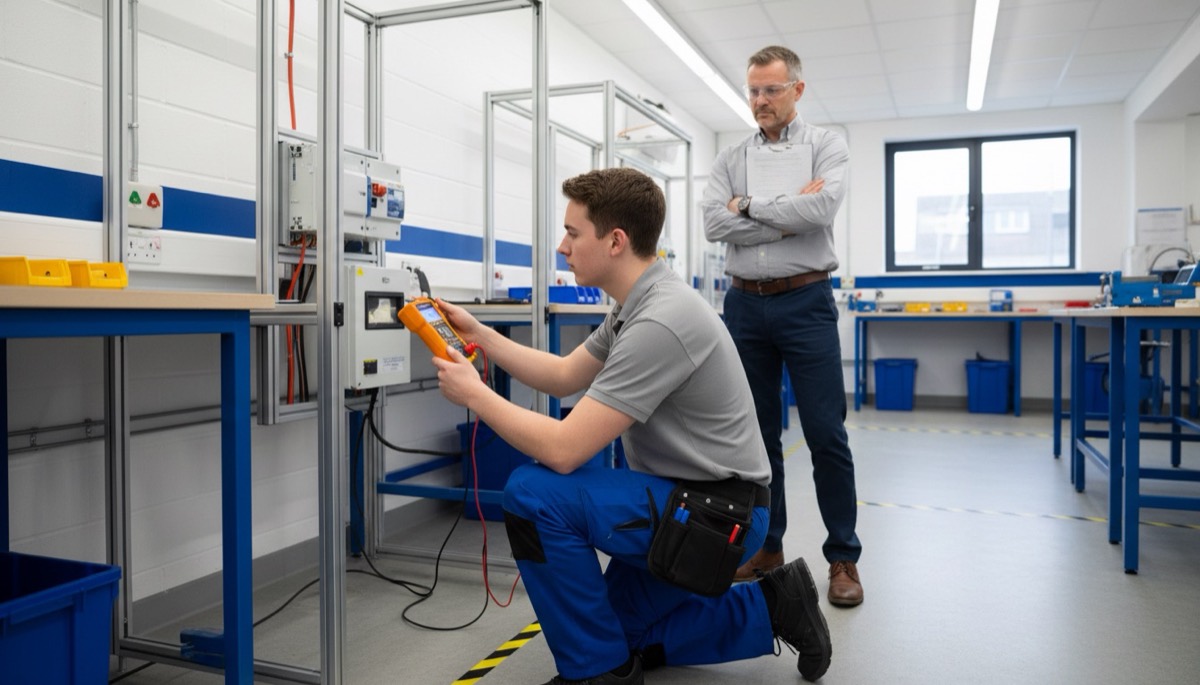
The AM2 is the industry's practical test of whether you can do the work of a qualified electrician, not just answer questions about it. NET describes it as the final unit of the Level 3 NVQ, which is why it is also the last thing most candidates do before being treated as fully qualified. You are assessed at an approved assessment centre, working to a set task with an assessor observing and marking against set criteria, rather than a client or foreman giving an informal verdict.
That setting matters. Everything is timed and marked, and the assessment stands apart from your portfolio. A candidate can have an excellent portfolio and still struggle if they have never worked to a clock under observation. The JIB, which issues the ECS Gold Card, treats the AM2 as part of the route to that card, so passing it is a gateway to being recognised as a qualified installation electrician. Our guide to how to become an electrician shows where the AM2 sits in the whole journey.
Who has to take the AM2, and which version?
Which version you take depends on how you are qualifying. NET states that the AM2 is for learners following the Level 3 NVQ (the C&G 2357 or EAL 1605), while apprentices on the Apprenticeship Standard take the AM2S instead. NET also runs versions for experienced workers, listed on its site as the AM2E and, for domestic experienced workers, the AM2ED. The details differ by version, so confirm the right one with your training provider before you book.
| Version | Who it is for |
|---|---|
| AM2 | Learners on the Level 3 NVQ |
| AM2S | Apprentices on the Apprenticeship Standard |
| AM2E | Experienced workers (see NET for the units and conditions) |
| AM2ED | Domestic experienced workers (see NET for details) |
The new Level 3 qualification, the C&G 5357, also leads to the AM2. City & Guilds states that the holder of that qualification must achieve the relevant version of the AM2 through NET to reach occupational competence. So the AM2 survives the change from the old NVQ to the new qualification. Only the version you take may change.
What are the sections of the AM2, and how long do they take?
The AM2 has six sections, each with its own time allowance, and candidates also get extra reading and preparation time before each one. NET lists them as follows.
| Section | What it covers | Time allowed |
|---|---|---|
| A1 | Safe Isolation and Risk Assessment | 45 minutes |
| A2–A5 | Composite Installation | 8 hours 30 minutes |
| B | Inspection, Testing and Certification | 3 hours 30 minutes |
| C | Safe Isolation of Circuits | 30 minutes |
| D | Fault Diagnosis and Rectification | 2 hours |
| E | Assessment of Applied Knowledge | 1 hour |
Added together, the allowances come to just over 16 hours before reading and preparation time, so the assessment is spread over several days rather than done in a single sitting. Your assessment centre will give you the exact schedule. The size of the composite installation stands out: more than half the allowed time is spent building a complete installation to a specification, which is why speed, accuracy and neatness all count.
What does each section test?
Each section targets a different skill, and together they mirror a real working day. The section titles tell you what the assessor is looking for.
- A1, Safe Isolation and Risk Assessment: proving you can make a circuit safe before you touch it, and assess the risks of the task. Safe isolation is the most important safety skill an electrician has, and it is assessed independently so there is nowhere to hide.
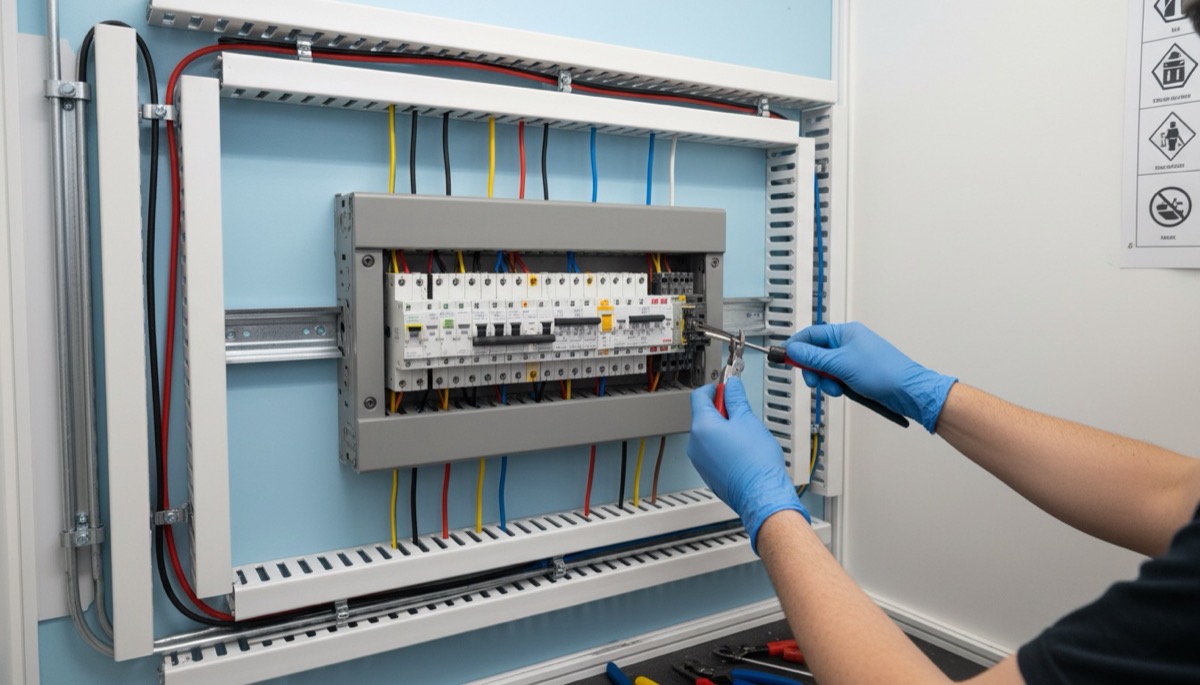
- A2–A5, Composite Installation: building a complete installation from a specification, including containment, cabling, terminations and the connection of the circuits. This is the longest part and the one where workmanship is most visible.
- B, Inspection, Testing and Certification: testing the installation you built, recording the results and completing the certification. This tests whether you can use the test instruments correctly and interpret the readings.
- C, Safe Isolation of Circuits: a further demonstration of safe isolation on circuits, reinforcing that this procedure has to be second nature.
- D, Fault Diagnosis and Rectification: finding and fixing faults on a prepared installation, which tests logical diagnosis rather than just following instructions.
- E, Assessment of Applied Knowledge: a knowledge assessment that checks you can apply regulations and theory, not only recite them.
What do you need before you can book the AM2?
You must pass a gateway check before NET will let you book. NET says the check confirms you have achieved the technical qualification that is part of your route, and that you meet the English and maths requirements. You are also asked to sign a Readiness for Assessment Checklist, and NET is explicit that you should only sign it if you are fully prepared and that you should not be put under pressure to sign it.
This is a useful safeguard, because the AM2 is expensive in time and money, and sitting before you are ready usually means resitting. NET also advises that, because the AM2 is the final unit of the NVQ, you should not sit it until all your other units are complete. Once NET approves your gateway check, you can book, and there must be at least 10 working days between booking and sitting the assessment. Plan for that notice period when you set a target date.
A realistic timeline from gateway to result
You can work out a sensible plan from the rules NET publishes. The assessment is the last stage, so the order matters, and each step has a minimum waiting time built in. Here is how the stages fit together.
| Stage | What happens | Timing rule from NET |
|---|---|---|
| 1. Finish your other units | Complete all the NVQ units before the AM2 | NET advises not to sit the AM2 until all other units are complete |
| 2. Gateway check | NET confirms your technical qualification and English and maths | You must pass it before you can book |
| 3. Readiness checklist | You sign only if you are fully prepared | You should not be pressured to sign |
| 4. Book the assessment | Choose your dates once the gateway is approved | At least 10 working days between booking and sitting |
| 5. Sit the assessment | The timed sections, over several days | Section allowances total just over 16 hours plus reading time |
| 6. Marking and moderation | The assessor marks, then NET moderates | Result issued at least five days after marking and moderation are finished |
Working backwards is the practical way to use this. If you want to have your result by a particular date, allow for the marking and moderation period at the end, the booking notice at the start, and the several days of the assessment itself. Candidates who leave it to the last minute often find the waiting periods more awkward than the assessment, especially when an employer or an upgrade to the ECS card depends on the result.
How are results given, and what if you fail a section?
NET gives your result at least five days after the assessor has finished marking and NET has moderated the results, and the assessor cannot give feedback on the day. If you do not meet the criteria for a section, you receive a general feedback statement explaining how you fell short, but not detailed marking information. NET's stated purpose is that the feedback shows where further training or improvement may be needed before you resit.
You do not have to retake everything. Resits are done by section, so if you pass most sections and fail one or two, you resit only those. That is a large saving in time and money compared with repeating the whole assessment. It also means the quality of your preparation for the individual sections matters, and it is worth working out honestly which section is your weakest before the first attempt.
How much do AM2 resits cost?
NET publishes recommended resit fees by section, which shows how the costs scale. For the period 1 April 2026 to 31 March 2027, the recommended fees are:
| Resit | Recommended fee |
|---|---|
| Section A1, C or E | £190 each |
| Section B or D | £265 each |
| One of the composite installation sections (A2 to A6) | £250 |
| Five of the composite installation sections | £610 |
These are NET's recommended resit fees, and your centre or employer may set their own, so confirm the charge before booking. The cost of the first attempt depends on your route and who is paying, since employers often cover it, so ask your training provider for a current figure rather than relying on a number you have seen elsewhere.
The number of resits you can have is at the employer's discretion, and NET asks for an action plan after three resits. NET can also restrict resit approval if verifiable training has not been completed, and can block candidates after excessive resits. The practical message is that resits are possible but not unlimited, and that further training between attempts is expected.
How to prepare and pass the AM2
You pass the AM2 by being safe, accurate and efficient, and by practising under realistic conditions before the real thing. NET's own gateway process is built around being properly prepared, so use the time you have before booking. These habits follow directly from how the assessment is structured.
- Practise in a booth, to the clock. Do mock composite installations against the time allowance until you finish with time to spare. Running out of time is a common way to lose marks.
- Make safe isolation automatic. It is assessed twice, in sections A1 and C, so build a routine you can perform correctly under pressure every time.
- Read the specification before you start. Spend your reading time understanding exactly what is being asked, so you do not build the wrong thing quickly.
- Work neatly as you go. Tidy containment, well-dressed cables and sound terminations are visible and are what the assessor sees. Rushing and redoing wastes more time than working carefully.
- Test methodically. Use your instruments correctly, in the right order, and record results clearly. The testing section rewards a logical routine.
- Learn a fault-finding method. Work from symptoms to causes step by step, rather than guessing, so you can find faults efficiently in section D.
- Revise the regulations for the knowledge section. Know your way around the current regulations. Our guide to the 18th Edition (BS 7671) qualification explains the current edition.
- Sign off only when ready. Treat the Readiness for Assessment Checklist honestly. A delay is cheaper than a failed section.
A sensible approach on the day
How you use your time and attention inside the assessment matters as much as the skills you bring. This is general good practice rather than anything NET prescribes, but it follows from how the sections are built.
- Use the reading time properly. You get reading and preparation time before each section. Spend it understanding the task and planning your order of work, not rushing to start.
- Plan the composite installation in stages. With more than eight hours available, break the job into sensible steps, check your progress against the clock at set points, and leave time to review your work against the specification.
- Slow down for safe isolation. Run through the full procedure every time and do not skip steps because you have done it many times before. It is assessed on its own for a reason.
- Keep your work area tidy. A clear bench and organised tools save time and reduce mistakes.
- Do not dwell on one error. If something goes wrong in one section, put it behind you. Each section is assessed separately, and you can resit sections individually.
- Ask about the rules before you start. If you are unclear on assessment conditions, check with the centre staff at the start rather than guessing.
Nerves are normal. The best protection against them is practice under realistic conditions, so the real assessment feels like something you have already done.
Common reasons candidates fail sections
The reasons are usually about habit and preparation rather than lack of ability. Nobody can tell you exactly where you will slip, but the section structure points to the likely pressure points.
- Safe isolation errors. Missing a step in the procedure is serious precisely because it is a safety skill, and it is assessed separately.
- Running out of time on the composite installation. It is the longest section, and poor time management shows up here first.
- Untidy or incorrect workmanship. Containment, cabling and terminations are marked on quality as well as completion.
- Weak testing technique. Using instruments incorrectly or recording results carelessly costs marks in the inspection and testing section.
- Unstructured fault finding. Guessing wastes time. A method works better.
- Sitting before ready. The gateway process exists because candidates who book too early often need resits.
What happens after you pass?
Passing the AM2 completes the practical assessment, but the Gold Card has other requirements, so check what is still outstanding. The JIB states that the Installation Electrician (Gold) card requires a recognised Level 3 qualification, a current ECS Health, Safety and Environmental Assessment and a recognised BS 7671:2018 qualification. The AM2 is the assessment that completes the NVQ route, not a replacement for those other items.
Once you hold everything, you apply to the JIB to upgrade your card. The ECS site explains that you can hold a card suited to your current qualifications while you work towards the Gold Card, and upgrade by sending in further certificates. If you are working through the full list, our guide to the 18th Edition (BS 7671) qualification covers the wiring-regulations requirement, and how to become an electrician puts every step in order.
Choosing preparation that actually helps
Preparation courses vary a lot, so it is worth asking the right questions before you commit. The aim is to practise the same tasks, to the same timings, in the same kind of conditions you will meet in the real assessment.
| Ask the provider | Why it matters |
|---|---|
| Do you run mock assessments to the NET section timings? | Practising against the real time allowances is the best preparation for the clock |
| Do I practise in assessment-style booths? | Familiar conditions make the real assessment less daunting |
| Who delivers the training, and what is their experience? | Instructors who know the assessment can point out common pitfalls |
| Is the course matched to my version (AM2, AM2S, AM2E)? | The content and timings differ by version |
| What happens if I am not ready to book? | A good provider will tell you honestly rather than push you to sit early |
Be wary of any provider that promises a guaranteed pass or that pushes you to book before you have completed your other units and passed the gateway check. NET's own process is built around readiness, and a provider who ignores that is not working in your interest.
Frequently asked questions
Can an experienced electrician without an NVQ take the AM2?
There are separate versions for experienced workers. NET lists the AM2E and, for domestic experienced workers, the AM2ED, and the ECS site describes an Experienced Worker Assessment route to Level 3 standard for people who have worked in the industry without a formal qualification. The conditions differ, so check the details with NET and the ECS before you book.
How long is the AM2?
NET lists section allowances that add up to just over 16 hours, plus reading and preparation time before each section. It is spread across several days. Your assessment centre will give you the exact schedule for your booking.
What is the difference between the AM2 and the AM2S?
The AM2 is for learners on the Level 3 NVQ, and the AM2S is for apprentices on the Apprenticeship Standard. Their content and timings differ, so use the pre-assessment manual for your version, which NET publishes, and confirm the version with your provider.
Can I resit just the section I failed?
Yes. NET allows resits by section, so you only retake the section or sections you did not pass. The number of resits is at the employer's discretion, and NET asks for an action plan after three.
How soon can I book the AM2 after passing my other units?
You need NET to approve your gateway check first, and then there must be at least 10 working days between booking and sitting the assessment. NET advises not to sit the AM2 until all your other NVQ units are complete.
Do I need the AM2 for the ECS Gold Card?
The JIB's route to the Gold Card for NVQ candidates includes the AM2 as the assessment of competence, alongside the Level 3 qualification, a recognised BS 7671 qualification and the ECS safety assessment. Check the current requirements for your route on the ECS website.
Does the new 5357 qualification still need the AM2?
Yes. City & Guilds states that the holder of the 5357 Level 3 electrotechnical qualification must also achieve the relevant version of the AM2 through NET to reach occupational competence.
How Nexis Academy can help
Nexis Academy is a City & Guilds Approved Centre (T91185) in Manchester. We currently deliver internal wall insulation training, with more trade and construction courses in development. Register your interest to hear when new courses are available. See also how to become an electrician and the 18th Edition (BS 7671) qualification.
See also what a short electrician course can and can't do and inspection and testing qualifications.
Sources
- NET, AM2 assessment: who it is for, sections, time allowances, recommended resit fees and resit rules.
- NET, AM2 journey: gateway check, booking notice, results and feedback.
- City & Guilds, 5357 Electrotech qualification: AM2 requirement for the 5357 holder.
- JIB / ECS, Installation Electrician (Gold) card requirements.