
What does an electrician actually do?
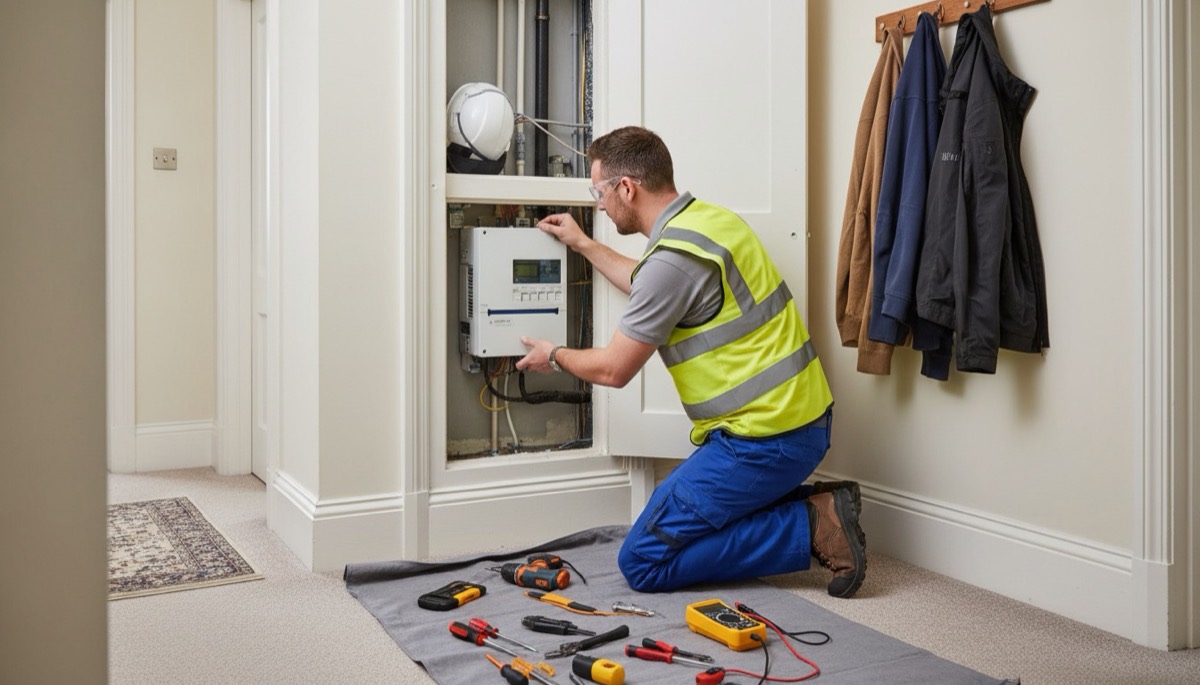
An electrician designs, installs, tests and maintains the electrical systems in buildings, from a single socket circuit in a house to the distribution boards of a factory. The day-to-day work covers fitting consumer units, running cables and containment, installing lighting and power circuits, connecting fixed appliances, and then testing everything to prove it is safe before it is energised. Fault finding is a large part of the job too: when something trips, fails or overheats, the electrician has to work out why.
The trade splits into several areas, and many electricians move between them over a career. Domestic electricians work in homes. Commercial and industrial electricians work in shops, offices, warehouses and factories, often on larger and more complex systems. Maintenance electricians look after existing installations. A growing area is electrical work linked to newer technology, such as battery storage and other low-voltage systems, which is one reason the wiring regulations keep being updated. Whichever area you choose, the route in is broadly the same, and the qualification you earn is recognised across all of them.
Do you need to be qualified to work as an electrician?
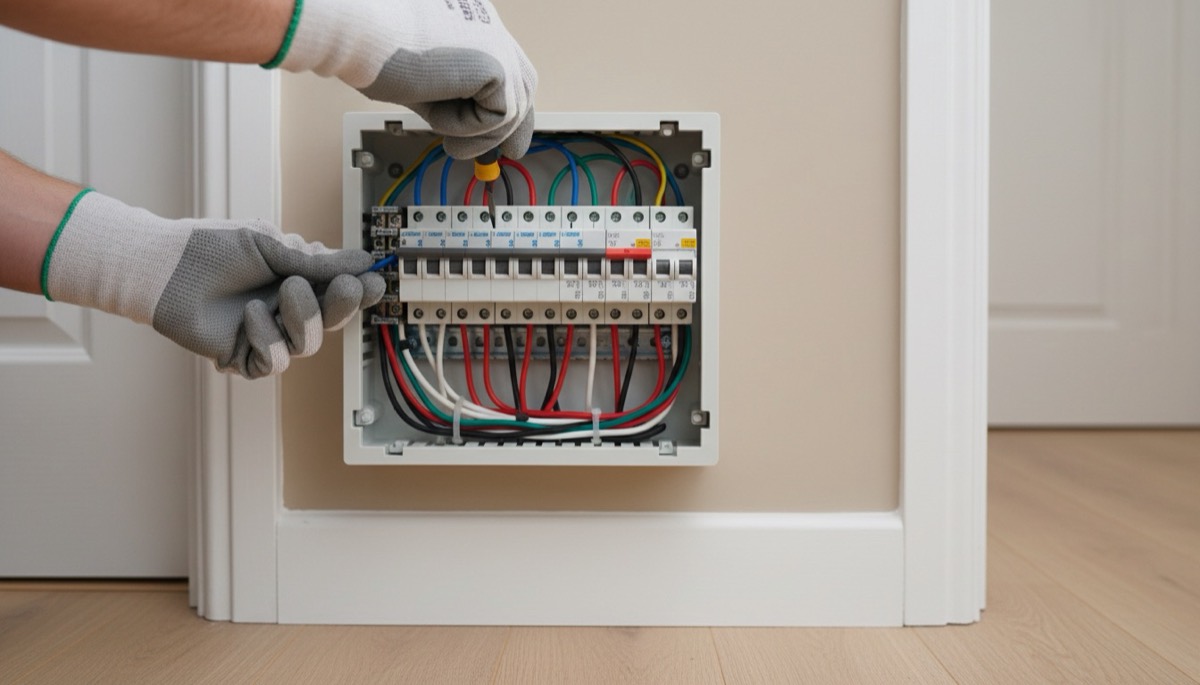
In practice, yes. There is no single personal licence that stops anyone picking up a screwdriver, but the system around electrical work makes qualification close to essential. Electrical safety in homes in England is covered by Part P of the Building Regulations, and the government's Approved Document P explains it. Higher-risk ("notifiable") work, such as adding a new circuit, has to be notified to building control in advance or carried out by an electrician registered with a government-approved competent person scheme. Registration with a scheme depends on being able to show you are competent.
Beyond the rules, the industry runs on cards and qualifications. Most sites, main contractors and employers expect an ECS card, issued by the Joint Industry Board (JIB), and the card you can get depends on the qualifications you hold. Customers and insurers also expect a competent, qualified person to sign off the work. So while the law does not hand out a single "electrician licence", you will find it very hard to work properly, win work or be insured without the recognised qualifications described in this guide.
What are the routes into becoming an electrician?
There are four main routes, and the right one depends on your age, your experience and whether you can be employed while you train. All of them lead to the same destination: Level 3 competence plus the AM2 assessment.
| Route | Who it suits | How it works |
|---|---|---|
| Apprenticeship | School leavers and anyone who can be employed as an apprentice | Paid work with an employer plus college training, working to the Installation and Maintenance Electrician standard (ST 0152); finishes with the AM2S assessment |
| College and NVQ route | Adults and career changers building a portfolio while working | Taught units at a centre, then a work-based NVQ assessed on real jobs, finishing with the AM2 |
| Experienced Worker route | People who have worked in the industry for years without formal qualifications | An Experienced Worker Assessment that can bring you to Level 3 standard |
| Overseas-trained | Electricians qualified outside the UK | Must demonstrate the same standard as UK-trained electricians |
The route you take mostly changes how you collect your evidence. An apprentice learns on the job from day one. A college-and-NVQ candidate needs access to real work to build a portfolio, so a job or placement is essential. An experienced worker is assessed on what they can already do. Whichever applies, nobody skips the final practical assessment: that is the common finish line.
Which route should you choose?
The best route is the one you can actually complete, so start from your circumstances rather than from what sounds most impressive. The three main questions are whether an employer will take you on, how much you can earn while you train, and how much industry experience you already have.
- If you are young, or can be employed as an apprentice, the apprenticeship is the most structured option. You earn while you learn, your employer supports your training, and the AM2S completes it.
- If you are an adult changing career, the college-and-NVQ route is the usual choice. You study the technical units and build your portfolio through paid work or a placement, so securing that work is the critical step.
- If you already work with electrical installations but never qualified, the Experienced Worker route can bring you to Level 3 standard through assessment, without starting from scratch.
- If you trained overseas, you need to demonstrate the same standard as UK-trained electricians, and the ECS site has a dedicated page for non-UK qualifications.
Whatever you choose, ask each provider or employer the same practical question: how will I get access to real electrical work to build my evidence, and who pays for the assessments? A route that looks cheap but offers no work placement is not really a route at all.
What qualifications do you need for the ECS Gold Card?
The ECS Gold Card for an Installation Electrician requires three things, according to the JIB: a recognised Level 3 qualification, a current ECS Health, Safety and Environmental Assessment, and a recognised BS 7671:2018 qualification. These are the minimum building blocks, and the Gold Card is the proof most employers look for.
| Requirement | What it means |
|---|---|
| Level 3 qualification | A JIB-recognised UK Level 3 apprenticeship standard, or a JIB-approved competency-based qualification (NVQ), or equivalent |
| ECS Health, Safety and Environmental Assessment | A current pass in the ECS safety assessment |
| BS 7671 qualification | A recognised qualification in the current wiring regulations (the "18th Edition") |
| AM2 (or equivalent) | The practical assessment of competence that completes the NVQ or apprenticeship |
The JIB also states that electricians trained outside the UK must show the same qualification standard as UK-trained electricians. If you cannot yet show Level 3 proof, you do not have to wait for a card: the ECS site explains you can start on a lower card, such as the Experienced Worker card, and upgrade later by sending in further certificates.
What is the Level 3 electrotechnical qualification, and what has changed?
The Level 3 qualification is the core technical qualification, and the NVQ most learners have taken is changing. City & Guilds states that its 2357 NVQ Diplomas close for registrations on 31 October 2026, because they have been replaced by the 5357 Level 3 Electrotechnical qualification. The 2357 diplomas affected show a last certification date of 31 December 2029, so people already registered can finish.
The replacement, the 5357, is built around the Installation and Maintenance Electrician standard (ST 0152). City & Guilds lists the Level 3 route at 743 guided learning hours and 1,040 hours of total qualification time, and its page states plainly that the holder must also achieve the relevant version of the AM2 through NET to reach occupational competence. There are separate routes for apprentices and for adult learners. If you are choosing a course now, make sure the centre is offering the current qualification rather than the one that is closing, and check the dates with the centre and awarding body before you register.
What is the AM2 and why does everyone have to pass it?
The AM2 is the final practical assessment of competence for electricians, run by NET (National Electrotechnical Training). NET describes it as the last NVQ unit, so you should not sit it until all your other units are complete. It tests you doing real electrical work under assessment conditions: a composite installation, inspection, testing and certification, safe isolation, fault diagnosis and a knowledge test.
There are variants. NET states that the AM2 is for learners on the Level 3 NVQ, while apprentices on the apprenticeship standard take the AM2S instead. Before you can book, NET runs a gateway check to confirm you have the required qualification. Because the AM2 is where most candidates feel the pressure, we have written a separate guide to what the AM2 assessment is and how to pass it.
What is the 18th Edition and do you need it?
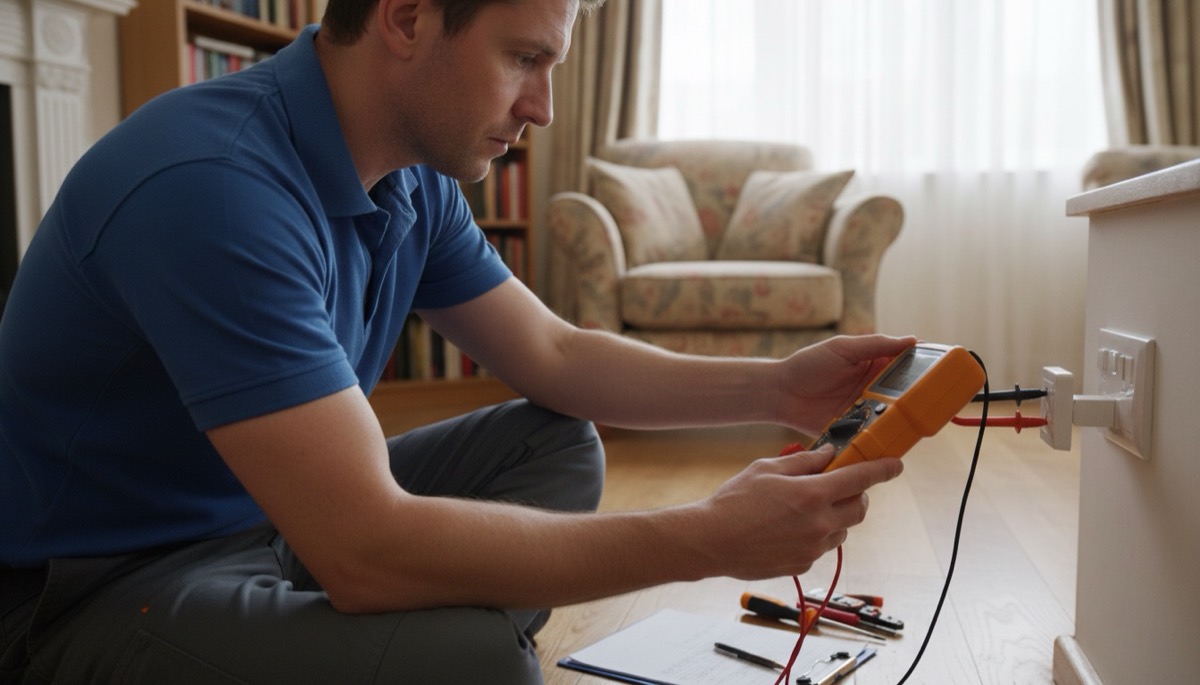
The 18th Edition is the common name for BS 7671, the Requirements for Electrical Installations, which sets the standard for the design, installation and verification of low-voltage electrical work in the UK. For the ECS Gold Card you need a recognised qualification in it, so in practice every electrician needs one. The standard has been amended several times, and the IET now names BS 7671:2018+A4:2026 as the current edition, with 15 October 2026 listed as the date the previous brown book and Amendments 2 and 3 stop being valid.
New amendments mean qualified electricians have to keep their knowledge up to date, not just pass once. Our guide to the 18th Edition (BS 7671) qualification explains what it is, which version to take, and what is new in Amendment 4.
How do the ECS cards work, and what is the Gold Card?
ECS cards show an electrician's level of qualification and are checked on sites across the industry. The Gold Card is the top card for an installation electrician, but there are others for people earlier in their journey, so you can hold a valid card while you are still training.
- Trainee and labourer cards let you work on site while you are studying or have no qualification yet.
- The Experienced Worker card suits people with industry experience who are working towards Level 3 standard.
- The Gold Card shows you have the full Installation Electrician qualification stack.
The sensible approach is to get the card that matches where you are, then upgrade as you gain certificates. You do not need to hold the Gold Card to start working, but you will need it to be treated as a fully qualified installation electrician, and many employers will not engage someone without it.
How to become an electrician, step by step
Whichever route you choose, the journey follows a similar order. Use this as a checklist.
- Decide your route. Apprenticeship if you can be taken on as an apprentice, college and NVQ if you are an adult building a portfolio, Experienced Worker if you have years of industry experience, or the overseas route if you trained abroad.
- Find employment or placement. Almost every route needs access to real electrical work to collect evidence, so an employer or placement is the key practical step.
- Complete the technical qualification. Work through the Level 3 units and build your portfolio on the current qualification, checking the centre is not offering one that is closing.
- Pass the ECS Health, Safety and Environmental Assessment. This is a requirement for the card and is usually done early.
- Gain your BS 7671 qualification. Take the 18th Edition qualification on the current version of the standard.
- Take the AM2 (or AM2S). Book through NET once the gateway check is passed and your units are complete.
- Apply for your ECS Gold Card. Send in your certificates to the JIB to upgrade to the Gold Card.
- Keep your knowledge current. Update your BS 7671 knowledge as new amendments arrive, and keep your card and safety assessment in date.
What can a newly qualified electrician work on legally?
A qualified electrician can carry out electrical installation work, but the regime for homes in England adds a layer of control. Under Part P, notifiable domestic work must either be notified to building control or carried out by someone registered with a government-approved competent person scheme, who can then self-certify the work. The scheme route exists because it lets a competent registered electrician issue the necessary certificate without a separate building control application each time.
This is why many electricians join a competent person scheme after they qualify. It is not part of the Gold Card requirements, but it is what allows you to certify domestic work yourself and run a business doing it. The exact range of notifiable work has been refined over time, so check the current rules for your nation before you rely on any list.
Where can the trade take you after qualifying?
Qualifying opens several paths, and many electricians change direction over a career. The core qualification is recognised across all of them, so you are not locked into your first choice.
| Direction | What it involves |
|---|---|
| Domestic installation | Work in homes, from rewires and consumer units to new circuits; often self-employed, usually with a competent person scheme |
| Commercial and industrial | Larger installations in shops, offices, warehouses and factories |
| Maintenance | Looking after and repairing existing installations for an employer or contract |
| Specialist and emerging technology | Areas such as battery storage and other low-voltage systems, where the regulations keep developing |
| Inspection and testing | Periodic inspection of existing installations, building on the testing skills the qualification develops |
| Teaching, assessing and quality assurance | Passing on the trade as a tutor, assessor or internal quality assurer |
The last route is worth knowing about, because the industry needs experienced electricians to train the next generation. Our guide to how to become a trade tutor explains that you do not need a degree, only your trade qualification and experience plus a teaching qualification. Many electricians move into training later in their career, once they want a change from site work.
Common mistakes people make
Most problems come from starting in the wrong order or from relying on out-of-date information.
- Enrolling on a closing qualification. The 2357 NVQ closes to registrations on 31 October 2026. Check what you are registering for.
- Underestimating the AM2. It is a demanding practical assessment, and NET advises not to sit it until your other units are complete.
- Taking an out-of-date BS 7671 course. The IET names Amendment 4 as the current edition, so make sure your qualification covers it.
- Paying for a course with no way to build a portfolio. NVQs are assessed on real work, so you need access to jobs or a placement.
- Assuming a short course makes you fully qualified. The recognised route requires the Level 3 qualification, the AM2 and the other items above, not just a few weeks of classroom training.
Frequently asked questions
Can I become an electrician as an adult?
Yes. Adults train through the college-and-NVQ route, the Experienced Worker route if they already have industry experience, or by finding an adult learner pathway on the current Level 3 qualification. You will need access to real electrical work to build your evidence, so an employer or placement is the main practical requirement.
Do I need an apprenticeship to be an electrician?
No. An apprenticeship is one route, but you can also qualify through a college-and-NVQ route or the Experienced Worker route. All lead to the same Level 3 standard and the AM2 assessment, so the apprenticeship is not the only way in.
What is the difference between the AM2, AM2S and AM2E?
The AM2 is the practical assessment for learners on the Level 3 NVQ. The AM2S is for apprentices on the apprenticeship standard. The AM2E is for experienced workers. NET sets which version applies to you, so confirm it with your provider before booking.
Is the 18th Edition the same as being a qualified electrician?
No. The 18th Edition (BS 7671) qualification is one required component of the Gold Card, alongside the Level 3 qualification, the AM2 and the ECS safety assessment. Holding it alone does not make you a fully qualified electrician.
Can I do electrical work at home myself?
Homeowners may be allowed to do some electrical work, but notifiable work in England has to be notified to building control or done by a registered competent person. Because the rules are specific and the safety risks are real, check Approved Document P and your local building control before starting any electrical work.
Do electricians need to renew their qualifications?
The Level 3 qualification does not expire, but the ECS card and the ECS safety assessment must be kept current, and you need to keep your BS 7671 knowledge up to date as new amendments are issued. The IET now lists Amendment 4 as the current edition.
Does the 2357 closing mean existing students are affected?
City & Guilds states the 2357 diplomas close for registrations on 31 October 2026, with a last certification date of 31 December 2029 for the diplomas affected. People already registered can complete, but new learners should register on the replacement 5357 qualification.
How Nexis Academy can help
Nexis Academy is a City & Guilds Approved Centre (T91185) in Manchester. We currently deliver internal wall insulation training, with more trade and construction courses in development. Register your interest to hear when new courses are available. See also our guides to the AM2 assessment and the 18th Edition (BS 7671) qualification.
See also domestic installer vs fully qualified electrician, inspection and testing qualifications and what a short electrician course can and can't do.
See also how to become an EV charger installer.
Sources
- JIB / ECS, Installation Electrician (Gold) card requirements and Routes to Gold Card.
- City & Guilds, 2357 Electro Technical Technology (closing dates) and 5357 Electrotech qualification (GLH, TQT, AM2 requirement).
- NET, AM2 assessment and AM2 journey.
- IET, Updates to the 18th Edition (BS 7671:2018+A4:2026).
- HM Government, Approved Document P: Electrical safety (dwellings).