

So "registration" in plumbing is not one thing. It is a set of different schemes, each covering a particular type of work. Some are effectively compulsory, others are voluntary but strongly recommended. This guide explains each one, for plumbers deciding what to join and for customers trying to check who they are hiring.
The short answer, by type of work
| Type of work | Registration needed? | Rule behind it |
|---|---|---|
| General plumbing repairs, such as a dripping tap | No | Work must still comply with water regulations |
| Gas appliances and pipework | Yes, Gas Safe | Gas Safety (Installation and Use) Regulations 1998 |
| Some new water installations, such as a large bath or a garden watering system | Notify the water company, unless an approved contractor | Water Supply (Water Fittings) Regulations 1999, regulation 5 |
| Unvented hot water cylinder | Notify building control, unless registered with a competent person scheme | Building Regulations, Part G |
| New bathroom or heating system | Usually notifiable unless a competent person scheme member self-certifies | Building Regulations |
| Work on building sites | No legal registration, but contractors usually want a card | Employer and contractor requirements |
The rest of this guide explains each line. The rules described here apply mainly in England and Wales. Scotland and Northern Ireland have their own equivalents, so check the local rules if you work there.
Gas: the one area where registration is the law
If you work on gas, registration is not optional. Regulation 3 of the Gas Safety (Installation and Use) Regulations 1998 says that nobody should carry out work on a gas fitting unless they are competent. It also says employers and the self-employed may only do such work if they are members of a class of persons approved by the Health and Safety Executive. In practice, that approved class is the Gas Safe Register, and the National Careers Service says you need Gas Safe registration to work on domestic gas heating systems.
The regulation also makes it an offence to falsely pretend to be a member of the approved class. For customers, this is the one registration you should always check before work starts. For plumbers, a plumbing qualification does not give you any right to do gas work. You need to be assessed in gas and then registered.
Water regulations: notifying the water company
The Water Supply (Water Fittings) Regulations 1999 apply in England and Wales to water fittings connected to the mains supply. They exist to prevent waste, misuse, undue consumption and contamination of water. They apply to everyone who installs fittings, whether or not they are registered.
What must be notified?
Regulation 5 requires anyone proposing to install a water fitting as part of certain types of work to give notice to the water undertaker, usually the local water company, before the work starts. The work cannot begin without the water company's consent. That consent must not be withheld unreasonably, and if the company has not refused or set conditions within 10 working days, consent is treated as given.
The types of work listed in regulation 5 include:
- erecting a building or other structure, other than a pond or swimming pool
- extending or altering a water system in premises other than a house
- a material change of use of a property
- installing a bath with a capacity of more than 230 litres
- installing a bidet with an ascending spray or flexible hose
- installing a single shower unit (subject to conditions in the regulations)
- installing a pump or booster drawing more than 12 litres a minute
- installing a reverse osmosis or water treatment unit that discharges waste water or uses water for regeneration or cleaning
- installing a reduced pressure zone valve or similar device for fluid category 4 or 5
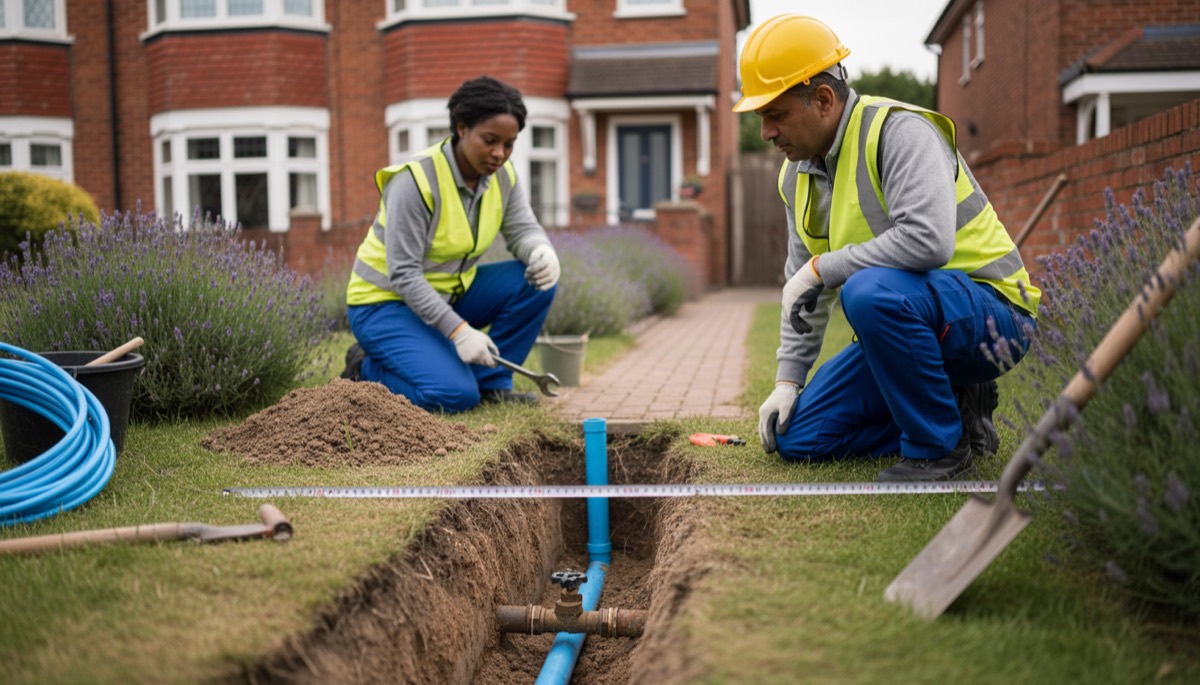
- installing a garden watering system, unless it is operated by hand
- laying external pipework less than 750mm or more than 1,350mm below ground
- building a pond or pool of more than 10,000 litres that is filled automatically from the mains
The notice must give the names and addresses involved, a description of the work, and, in most cases, a plan and pipework diagram. If an approved contractor will do the work, the notice must name them.
What changes if you are an approved contractor?
The regulations create approved contractors: plumbers approved by the water company or certified by a body the regulator has specified. Regulation 5 exempts some work from advance notice when an approved contractor does it. That covers alterations in premises other than houses, bidets with an ascending spray or flexible hose, and category 4 or 5 backflow protection devices. Regulation 6 then requires the approved contractor to give the customer a certificate stating whether the work complies with the regulations.
The regulations treat approved contractors as more trusted, so they have less advance paperwork to do. That also gives customers more confidence.
What is WaterSafe?
WaterSafe is the national register of approved plumbers and contractors. It brings together the approved contractor schemes run by water companies and by industry bodies, and provides a search so that customers can find an approved plumber. WaterSafe's guidance stresses that notification must happen before work starts.
Joining an approved contractor scheme is voluntary, but it is worth it for many domestic plumbers. WaterSafe's guidance for trainees treats a Level 2 NVQ with a Water Regulations certificate as its minimum, and recommends Level 3 for full competence. Our guide to Level 2 vs Level 3 plumbing qualifications explains the difference.
Building Regulations: competent person schemes
The Building Regulations cover work in buildings: heating, hot water, sanitation, ventilation and energy efficiency. Some plumbing and heating work is notifiable, which means building control must be involved. There are two ways to meet that.
- Notify building control before work starts and pay their fee, so that they can check the work.
- Use an installer registered with a competent person scheme. The installer self-certifies that the work complies, and building control is notified through the scheme.
The government's list of current competent person schemes shows which schemes cover which work in England.
| Type of work | Schemes listed by GOV.UK |
|---|---|
| Heating and hot water systems, including controls | APHC, BESCA, Blue Flame Certification, Certsure, Gas Safe Register, HETAS, NAPIT, OFTEC |
| Wholesome water supply | APHC, BESCA, Certsure, HETAS, NAPIT |
| Toilets, sinks, washbasins, baths, showers or bathrooms in dwellings (not involving shared or underground drainage) | APHC, BESCA, Certsure, HETAS, NAPIT |
GOV.UK notes that Gas Safe Register is not technically a competent person scheme, although its installers have similar responsibilities. To join a scheme, installers must show they meet the minimum technical competence requirements for each type of work, and some work needs several.
What happens when a scheme member does the work?
Approved Document G explains the paperwork. Where a person registered with a competent person scheme does the work, the occupier must be given a certificate confirming it complies with all applicable Building Regulations within 30 days of completion, and building control must be told within the same period. The certificate and notice are usually issued through the scheme. Local authorities keep their inspection and enforcement powers, but normally use them only after a complaint.
What work is not notifiable?
Schedule 4 of the Building Regulations lists minor work that does not need notifying, although it must still comply with the regulations. Approved Document G gives examples relevant to plumbers:
- replacing a part of an existing hot water system, other than a combustion appliance, or adding an output or control device. This remains notifiable where commissioning is possible and would affect energy efficiency, which is most likely where water heaters are being provided.
- installing a single stand-alone hot water appliance, subject to conditions
- replacing a toilet, washbasin, sink, bidet, bath or shower, where the work does not include underground drainage or changes to the water or drainage systems that could affect health and safety. A replacement toilet must use no more water than the one it replaces.
- replacing parts of, or adding outlets or controls to, an existing cold water supply
- a hot water storage system of 15 litres or less, provided any related electrical work is not notifiable
Installing an unvented hot water system is notifiable. If you fit them, read our guide to the G3 unvented hot water qualification.

A worked example: three jobs, three different routes
Here is how the rules apply to three common jobs in a house in England. These are simplified, so always check the regulations for the specific job.
Job 1: a new bathroom with a shower, plus an unvented cylinder. - The unvented cylinder is notifiable building work. A plumber registered with a competent person scheme for unvented hot water can self-certify. Otherwise, building control must be notified before work starts. - The bathroom may also be notifiable, depending on what is involved, for example new drainage or water supply work. - Under the water regulations, a single shower unit is among the listed work requiring notice, subject to the conditions in regulation 5. Check whether the notification applies to your job. - The customer should end up with a Building Regulations compliance certificate, and the installer should complete the cylinder's label and commissioning records.
Job 2: replacing a gas combi boiler. - This is gas work, so the engineer must be Gas Safe registered. - A combi boiler is a combustion appliance and part of the heating system, and the Part G FAQ notes it must be notified even though it may store less than 15 litres of water. In practice, Gas Safe registered engineers notify this work through the Gas Safe Register.
Job 3: an automatic garden watering system. - Under regulation 5, a garden watering system, other than one operated by hand, must be notified to the water company before work starts. - The water company has 10 working days to refuse consent or set conditions. If it says nothing in that time, consent is treated as given. - Building Regulations are unlikely to be involved.
The point of the example is that one job can involve two or three different rules, and a plumber can need different registrations for different parts of the same job.
Who is responsible: the owner or the plumber?
Both, in different ways. Industry and water company guidance stresses that owners, occupiers and installers can all carry responsibility for complying with the water regulations, including notifying before work starts. Under the Building Regulations, the person carrying out the work, and often the owner, can be responsible for making sure notifiable work is properly notified or self-certified.
For customers, the safest approach is to use a registered plumber for the type of work involved and to keep the paperwork. For plumbers, agree in writing who is handling notification, so that it does not get missed.
Cards are not registration
Plumbers often mix up cards and registration. A JIB-PMES card, with the CSCS logo, shows your qualification and your health and safety awareness, mainly for building sites. It does not register you with a water company, a competent person scheme or Gas Safe. Equally, joining a scheme does not get you onto a building site that asks for a card.
Most busy plumbers end up holding a mix:
- a JIB-PMES card for site work
- approved contractor status for water regulations work
- competent person scheme membership to self-certify Building Regulations work
- Gas Safe registration if they do gas work
- other specialist registrations, such as OFTEC for oil or HETAS for solid fuel, if relevant
Each one has its own requirements, fees and renewal dates. Our pillar guide on how to become a plumber explains the qualifications behind them.
Which registrations should you get?
| If you mainly do... | Consider |
|---|---|
| New-build site plumbing for a contractor | A JIB-PMES card; your employer handles the scheme side |
| Domestic repairs and replacements | Approved contractor status, through a scheme listed by WaterSafe |
| Bathroom installations | A competent person scheme covering bathrooms and water supply |
| Heating and hot water | A competent person scheme for heating and hot water, plus unvented qualification and Gas Safe if relevant |
| Gas boilers | Gas Safe registration, which is a legal requirement |
If you are self-employed, membership of the right schemes is often what customers, insurers and letting agents check first. It also saves you money and time on notifications.
How customers can check a plumber
If you are hiring a plumber, a few minutes of checking can save a lot of trouble.
- For gas work, check the Gas Safe Register. Ask for the engineer's card, and check it covers the work you need.
- Check scheme registers. Use the WaterSafe search for approved plumbers, and the competent person scheme's own register for bathrooms, heating or unvented hot water.
- Ask about notification. For notifiable work, ask who will notify the water company or building control, or whether the plumber will self-certify.
- Ask for the paperwork. You should receive a Building Regulations compliance certificate for notifiable building work, and an approved contractor's certificate where relevant.
- Keep everything. These documents can matter when you sell your home.
Frequently asked questions
Is it illegal to work as a plumber without being registered?
No. There is no general registration requirement for plumbing. Gas work is the exception, where registration with an HSE-approved class of persons, in practice Gas Safe, is a legal requirement. The water and building regulations still apply to all work, registered or not.
What happens if I do not notify notifiable water work?
Water companies have a duty to enforce the Water Supply (Water Fittings) Regulations on the premises they supply. Work that should have been notified, or that does not comply, can lead to enforcement action. Responsibility can fall on owners and occupiers as well as installers. Notify before work starts, or use an approved contractor where the exemptions apply.
What is the difference between WaterSafe and a competent person scheme?
WaterSafe covers approved contractors under the water fittings regulations, which protect water supplies. Competent person schemes cover self-certification under the Building Regulations, which protect safety and energy efficiency in buildings. Many plumbers join both, sometimes through the same organisation.
Do I need to be registered to fit a bathroom?
Not by law. But bathroom work can be notifiable under the Building Regulations, particularly when it involves new water supply or drainage work. A competent person scheme covering bathrooms lets you self-certify. Otherwise, notify building control before work starts.
Can I join a competent person scheme as a newly qualified plumber?
Possibly. Schemes require you to show minimum technical competence for each type of work, and they assess your qualifications and work. Some types of work, such as unvented hot water, need specific qualifications. Contact the scheme directly to find out its requirements.
Do plumbers need registering in Scotland?
The legal framework is different in Scotland, which has its own water byelaws and Building Standards. Gas work across Great Britain still needs Gas Safe registration. Check the Scottish rules before you work there.
Does a JIB-PMES card mean a plumber is registered?
No. A JIB-PMES card shows qualifications and health and safety awareness, mainly for site access. It is not Gas Safe registration, approved contractor status or competent person scheme membership.
How Nexis Academy can help
Nexis Academy is a City & Guilds Approved Centre (T91185) in Manchester. We currently deliver internal wall insulation training, with more trade and construction courses in development. We do not yet offer plumbing courses, so please register your interest to hear when that changes.
Sources
- Water Supply (Water Fittings) Regulations 1999, regulation 5 (notification and approved contractor exemptions) and regulation 6 (approved contractor certificates).
- Gas Safety (Installation and Use) Regulations 1998, regulation 3: competence and HSE-approved class of persons.
- GOV.UK, Competent person schemes: current schemes and how schemes are authorised.
- HM Government, Approved Document G (with 2024 amendments): competent person self-certification, Schedule 4 non-notifiable work, unvented systems.
- WaterSafe, Notifying plumbing to water companies and NVQ level guidance.
- National Careers Service, Plumber job profile.