
You will hear plumbers say "I've got my G3" as if it were a licence. It is not quite that. The regulation sets out what a safe system must do, and the official guidance points to registration and current skills cards as the way to show you can do it. This guide explains the law, the qualification, and how they fit together.
What is G3 in the Building Regulations?
Part G of the Building Regulations deals with sanitation, hot water safety and water efficiency. Requirement G3 covers hot water supply and systems. In summary, Approved Document G sets out that:
- G3(1): suitable heated water must be provided to washbasins and bidets in or next to a toilet, to washbasins, bidets, baths and showers in a bathroom, and to sinks where food is prepared.
- G3(2): a hot water system, including any cistern that supplies it or receives its expansion water, must be designed, built and installed to resist the temperature and pressure it may face, including foreseeable malfunctions, and must be adequately supported.
- G3(3): a system with a hot water storage vessel must prevent the stored water from exceeding 100°C, and must make sure any discharge from safety devices goes safely to where it is visible but does not endanger people.
- G3(4): in new homes, including those formed by certain changes of use, the hot water supplied to a fixed bath must not exceed 48°C.
The safety rules once applied only to unvented systems, but the government's Part G FAQ explains that the regime was extended to all types of hot water system, vented as well as unvented. You may read online that this changed in 2024. It did not: the 2024 amendments to Approved Document G, which took effect on 1 October 2024, changed the guidance on sanitary conveniences and washing facilities in section G4, not G3.
What is an unvented hot water system?
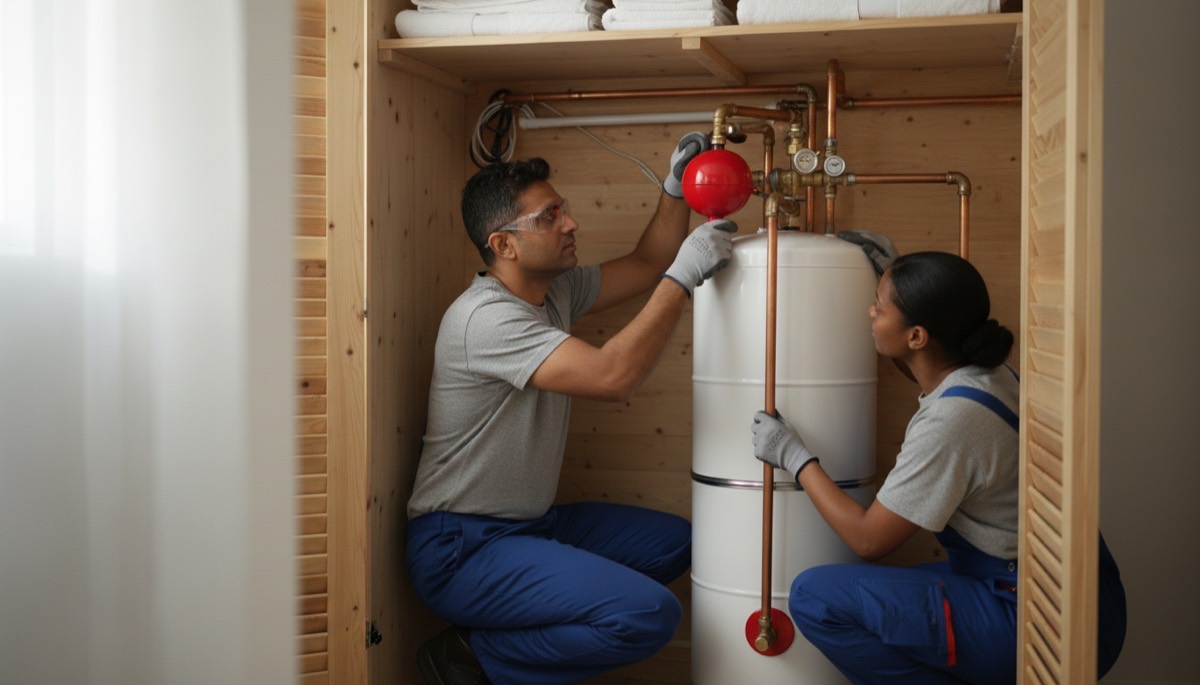
An unvented system stores hot water in a sealed cylinder fed directly from the mains, rather than from a cold water tank in the loft. Because it is under mains pressure, it gives strong flow to taps and showers and frees up loft space. That is why unvented cylinders are now so common.
The same feature makes it more dangerous if it goes wrong. A sealed vessel of water heated well above normal boiling point can fail violently if its safety controls fail. That is why unvented systems carry layers of safety devices:
- a non-self-resetting energy cut-out, to stop the heat source if the water overheats
- a temperature and pressure relief valve, to release water if temperature or pressure rise too far
- an expansion arrangement to cope with the increased volume of hot water
- a discharge pipe and tundish, so that any discharge is safe and visible
Approved Document G sets out detailed guidance on these devices. For example, it says systems up to 500 litres and 45kW should be a proprietary unit or package. The discharge from safety valves should go via a short length of metal pipe (D1) to a tundish. Each unit should be indelibly marked with key data and a warning to the user and installer.
Does the law say you must hold a G3 qualification?
This is where the common understanding and the official text differ slightly, and it is worth being precise.
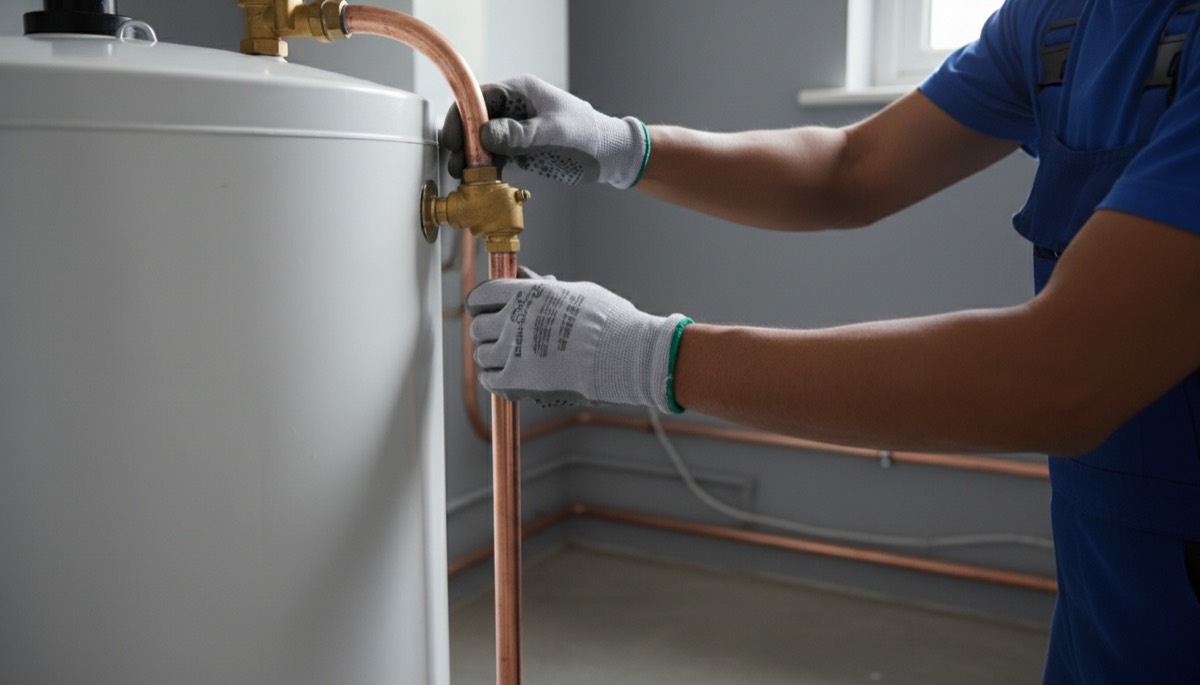
Approved Document G does not name a specific qualification. Instead, it says the safety and performance of an unvented system depends on choosing the right system and safety devices, and on correct installation. It says building owners and occupiers should take care to choose installers with the necessary skills. Those skills can be shown, for example, by registration with a competent person scheme for this type of work, or by holding a current registered operative skills certification card for unvented hot water systems.
In practice, that is why the qualification matters so much:
- Competent person schemes require you to show competence for unvented work before they register you. A recognised unvented qualification is the normal way to do that.
- Customers, insurers and manufacturers expect it. Many manufacturers' instructions say their cylinders should be installed by a competent, qualified person, so check the instructions for the product you fit.
- The card shows current skills. A certificate with an expiry date is evidence that you have been assessed recently.
So, do you need it? If you want to install unvented systems professionally, yes, in every practical sense.
Is installing an unvented cylinder notifiable?
Yes. Approved Document G states that installing an unvented system is notifiable building work, which must be notified to the building control body before work starts.
There is one exception, and it matters a great deal to installers. If the installer is registered with a competent person scheme for the installation of unvented hot water systems, the work does not need to be notified in advance. The installer self-certifies, and the building owner or occupier receives a Building Regulations compliance certificate, usually issued by the scheme operator.
Approved Document G also sets out timings. Where work is carried out by a registered person, the occupier must be given a compliance certificate within 30 days of the work being completed, and building control must be notified within the same period, usually through the scheme. For systems that need commissioning, the notice of commissioning must be given within 30 days by a scheme-registered installer, or within 5 days of completing commissioning where building control is handling the work.
What about small water heaters and combi boilers?
The rules cover all hot water systems, but they treat small, low-risk ones more lightly.
- Small storage heaters of 15 litres or less. Approved Document G says providing a hot water storage system with a vessel not exceeding 15 litres is not notifiable, provided any associated electrical work is also not notifiable. Water heaters of 15 litres or less with appropriate temperature and pressure safety devices will generally satisfy G3(3).
- Combi boilers. The government's Part G FAQ notes that, even though a combi boiler may store less than 15 litres, it still needs to be notified because it is a combustion appliance and forms part of the space heating. Gas work also needs Gas Safe registration.
So the 15-litre figure is about notification and the level of safety provisions, not about whether the regulations apply at all. They apply to every hot water system.
What does a G3 or unvented course cover?
BPEC's Domestic Hot Water Storage Systems (Unvented) qualification is a good example of what to expect. It covers both vented and unvented systems. BPEC says it is for plumbing and heating engineers who want to install domestic hot water storage systems and show they are competent to do so.
| Feature | BPEC Domestic Hot Water Storage Systems (Unvented) |
|---|---|
| Entry | A recognised trade qualification such as a Level 2 or 3 NVQ in Plumbing and Heating or Domestic Heating, or working towards one, or several years' plumbing or heating experience |
| Structure | Four training modules followed by three assessments, one of them practical |
| To pass | Pass all three assessments to receive the certificate and competency card |
| Validity | 5 years |
| Renewal | Reassessment within 12 months of expiry; previous certificates must be shown |
| Regulations covered | England and Wales: Approved Document G3, Part L1 and Part P; Scotland: Part J of the Building Standards |
Other awarding organisations offer equivalents. City & Guilds lists a Water Regulations and Unvented Hot Water Systems qualification (3345) among its plumbing qualifications. The content usually includes system types and components, safety devices and how they work, installation, discharge pipe sizing and routing, commissioning, servicing and fault finding.

Vented vs unvented: what changes for the installer
Both kinds of system fall under G3, but the installer's job is quite different.
| Vented system | Unvented system | |
|---|---|---|
| How it is fed | From a cold water cistern, usually in the loft | Directly from the mains, through a sealed cylinder |
| Pressure | Low, set by the height of the cistern | Mains pressure, reduced by a pressure-reducing valve |
| Expansion | Into the open vent and cistern | Into an expansion vessel or internal air gap |
| Key safety devices | Open vent; for indirect heat sources, an overheat cut-out; for direct heat sources such as immersion heaters, a non-self-resetting energy cut-out | Energy cut-out, temperature and pressure relief valve, discharge pipe and tundish, as set out in the guidance |
| Notifiable? | Depends on the work; minor replacements may fall under Schedule 4 | Yes, unless self-certified through a competent person scheme |
| Typical evidence of competence | Plumbing qualification | Current unvented qualification or scheme registration |
Approved Document G also gives guidance on vented systems. For example, cisterns that supply or receive water from a hot water system must be properly supported. The Part G FAQ links this guidance to past tragedies caused by cistern failures.
What a homeowner should receive on completion
If you are paying for an unvented cylinder, these are the things to expect. If you are the installer, these are the things to hand over.
- A completed warning label. Approved Document G says the unit should carry a visible warning to the user and installer, including the installer's name, address, telephone number and the completion date. Make sure it is filled in.
- A Building Regulations compliance certificate. This is issued through the scheme where the installer self-certifies. Otherwise, building control will deal with the work.
- Commissioning records. These show the system was set up and checked properly.
- The manufacturer's instructions. Leave them with the homeowner, including any servicing requirements.
- A clear explanation of the warning signs. The label tells users not to adjust components, and to switch the heater off and contact the installer if hot water flows from the discharge pipe.
Missing paperwork can cause problems when the home is sold, and it makes it harder to prove the work was done properly.
How unvented work fits with the water regulations
An unvented cylinder is a water fitting connected to the mains, so the Water Supply (Water Fittings) Regulations 1999 apply to it as well as the Building Regulations. In practice, that means the components must be suitable, the system must prevent backflow and contamination, and the installation must not waste water. A good unvented course covers both sets of rules. Our guide on do plumbers need to be registered? explains how the water regulations and approved contractor schemes work.
Who needs a G3 qualification?
| You are... | Do you need it? |
|---|---|
| A plumber who installs or replaces unvented cylinders | Yes |
| A heating engineer who services or repairs unvented systems | Yes, for the safety-critical work on the cylinder and controls |
| A plumber who wants to self-certify through a competent person scheme | Yes, the scheme will require you to show competence for unvented work |
| A trainee working towards an NVQ | You may do supervised work, and some Level 3 routes cover it, but you need your own qualification to work independently |
| A plumber who only works on vented systems | The G3 regime still applies to your work, and many courses cover vented systems too, so it is worth having |
| A homeowner | No, but check that your installer holds a current card or scheme registration |
Is G3 included in the plumbing NVQ?
It can be, depending on your route. The City & Guilds Level 3 NVQ handbook lists unvented water as a safety-critical activity that must be assessed under simulated conditions. It says competence assessment in areas including unvented hot water should meet the minimum standards set under the Building Regulations. The aim is that it can support separate operative registration with the relevant bodies without further assessment or training.
Ask your centre whether your Level 3 route includes the unvented assessment and the card, because this varies with the qualification and pathway. If you hold a Level 2 NVQ Diploma, you will usually take a separate unvented course. Our guide to Level 2 vs Level 3 plumbing qualifications explains how the levels differ.
How to keep your G3 current
A G3 certificate is not a once-in-a-career qualification.
- Track your expiry date. BPEC certificates are valid for five years. Put a reminder in your calendar at least six months ahead.
- Renew in time. BPEC allows reassessment within 12 months of expiry. Leave it longer and you may need to take the full course again, so check with your centre.
- Keep your scheme informed. If you are in a competent person scheme, it will expect your competence evidence to be current.
- Keep up with guidance and products. Approved Document G was last updated in 2024, and manufacturers change their products. Read the instructions for every cylinder you fit.
Common mistakes on unvented installations
Assessors and building control often see the same issues.
- Poorly routed discharge pipes. The discharge must go somewhere visible and safe, and it must not put anyone at risk.
- Undersized discharge pipework. Approved Document G says the D1 pipe should be at least the nominal outlet size of the safety device.
- Adjusting or replacing safety devices with the wrong parts. Only use parts appropriate for that unit.
- Missing paperwork. No notification, no compliance certificate, or a blank warning label.
- Skipping commissioning. Commission the system properly, and record it.
Frequently asked questions
What does G3 stand for?
G3 is Requirement G3 of Schedule 1 to the Building Regulations 2010, which covers hot water supply and systems. Approved Document G gives guidance on meeting it in England. Plumbers use "G3" as shorthand for the unvented hot water qualification that shows they can meet it.
Can I fit an unvented cylinder without a G3 qualification?
Approved Document G does not name a qualification, but it expects installers to have the skills, shown for example by scheme registration or a current unvented skills card. The work must also be notified to building control unless you self-certify through a scheme, and schemes require evidence of competence. In practice, you should not fit unvented cylinders without the qualification.
How long does a G3 certificate last?
BPEC's unvented certificates are valid for five years, and you can be reassessed within 12 months of expiry. Other awarding organisations set their own rules, but five years is the common pattern. Check the date on your certificate.
Is replacing an unvented cylinder notifiable?
Approved Document G says the installation of an unvented system is notifiable building work. If you are registered with a competent person scheme for this work, you self-certify and do not need to notify building control in advance. Otherwise, notify building control before work begins.
Do I need G3 for a vented cylinder?
The G3 safety regime applies to vented systems too, so you still need to meet its requirements. Many unvented courses, including BPEC's, cover vented and unvented systems. For unvented work specifically, the qualification is the normal evidence of competence.
Does G3 apply in Scotland?
Approved Document G applies in England, and Wales has its own Approved Documents. Scotland uses its own Building Standards. BPEC produces a separate manual for Scotland, which refers to Part J of the Building Standards.
Do I need G3 to join a competent person scheme?
For self-certifying unvented hot water work, schemes require you to show competence for that type of work, and a recognised unvented qualification is the normal evidence. Check the requirements with the scheme you want to join.
How Nexis Academy can help
Nexis Academy is a City & Guilds Approved Centre (T91185) in Manchester. We currently deliver internal wall insulation training, with more trade and construction courses in development. We do not yet offer plumbing courses, so please register your interest to hear when that changes.
See also how to become a plumber and do plumbers need to be registered?
Sources
- HM Government, Approved Document G: Sanitation, hot water safety and water efficiency, 2015 edition incorporating 2016 and 2024 amendments (PDF): Requirement G3, paragraphs 3.19–3.24, 3.40–3.42, 3.50–3.51, 3.78–3.80, competent person and Schedule 4 guidance.
- HM Government, Approved Document G amendment booklet, May 2024 (effective 1 October 2024).
- HM Government, Part G FAQ, March 2016: scope extended to all hot water systems; small heaters; combi boilers.
- GOV.UK, Competent person schemes: current schemes.
- BPEC, Domestic Hot Water Storage Systems (Unvented).
- City & Guilds, Level 3 NVQ Diplomas in Domestic Plumbing and Heating handbook v6.4 and Plumbing Craft (6035) page.