
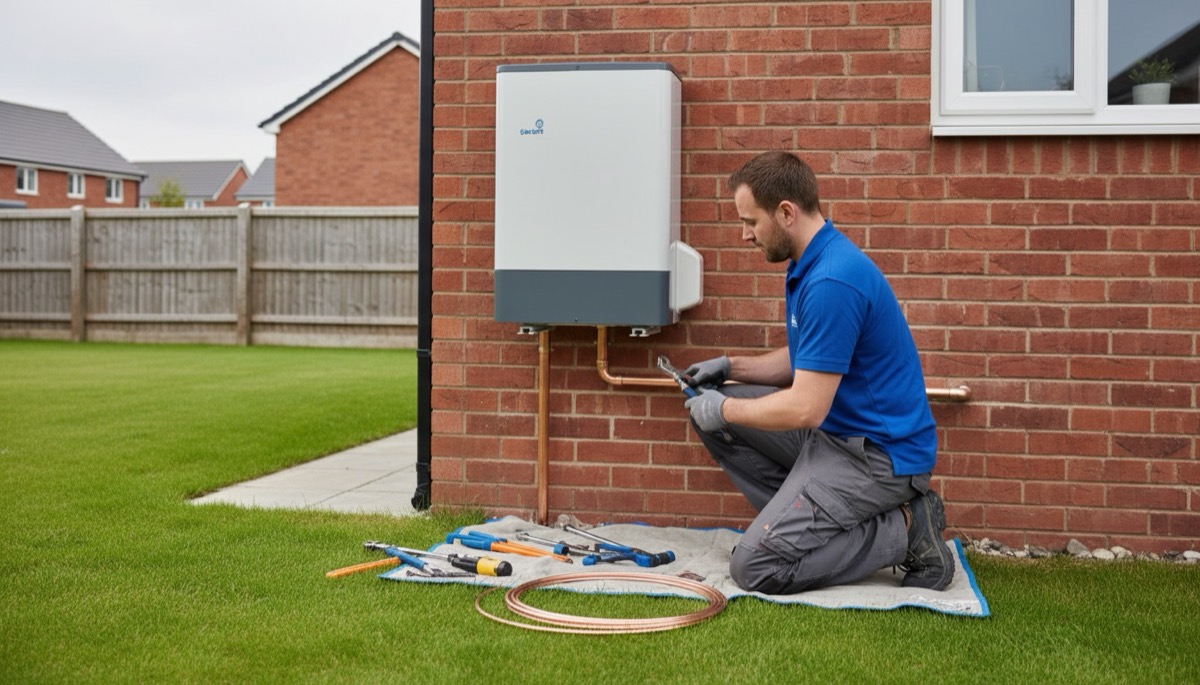
Why gas engineers are perfectly placed for heat pumps
A heat pump is a wet central heating system with a heat pump in place of a boiler, and a gas engineer already understands wet central heating better than almost anyone. You size systems, run pipework, fit cylinders, balance radiators, commission heating and talk to customers about their heating every day. That is most of what a heat pump installation involves. The new part is the heat pump itself and how it is designed to run efficiently; the rest is heating work you already do.
This is exactly why the heat pump qualifications are built for people with your background. Entry to the Level 3 heat pump award is typically a Level 2 or 3 in plumbing or heating, or around three years of evidenced experience installing wet central heating systems, which Gas Safe registration and your work history demonstrate. You are not starting from scratch; you are adding a specialism to a trade you already hold. Compared with someone coming in from outside the trades, who has to learn wet heating first, you are a long way down the road already. Our guide to how to become a heat pump installer covers the full route for any background.
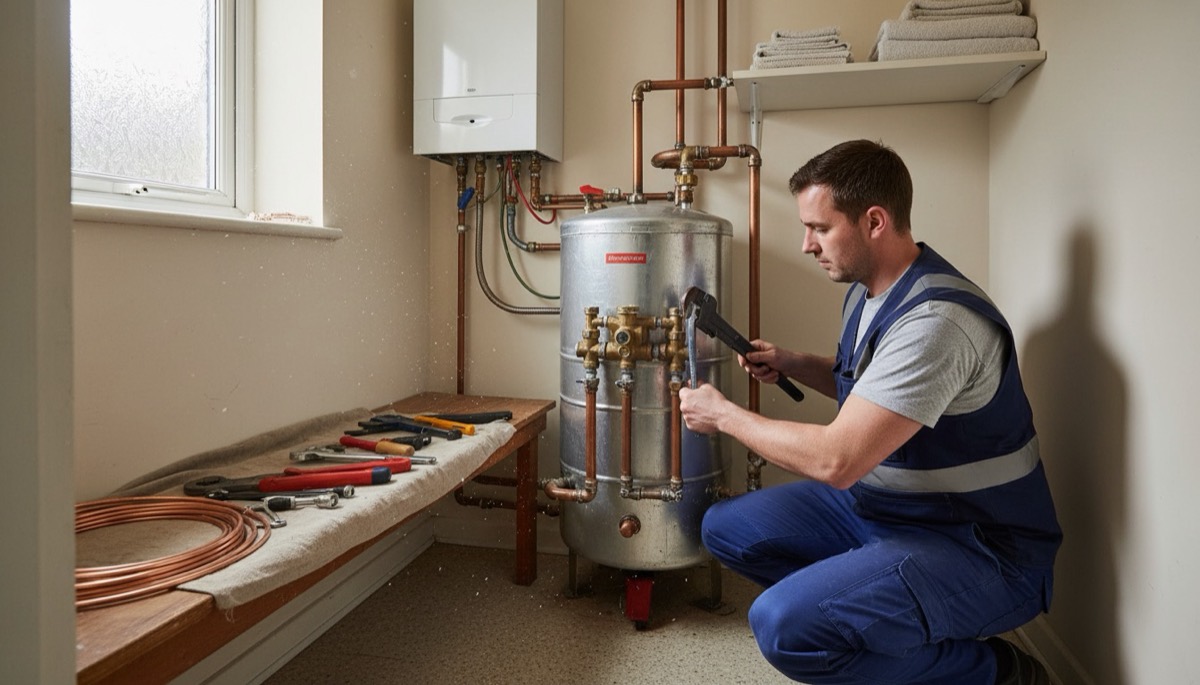
What you already have, and what you need to add
As a gas engineer you already hold most of the foundation. The gap is usually a short list: the heat pump award, a couple of supporting tickets you may already have, and the business-level MCS certification. Here is the honest picture.
| Element | Typical gas engineer position |
|---|---|
| Wet heating competence | Already held, through experience and qualifications |
| Entry to the heat pump award | Already met, via Gas Safe registration and experience |
| Water Regulations | Often already held; if not, a short course |
| Unvented hot water (G3) | Often already held; if not, a short course |
| Level 3 heat pump award | The main thing to add |
| Low temperature system design (for MCS design) | To add if you will design systems yourself |
| Electrical connection | Arrange via an electrician, or your own electrical qualification |
| MCS certification (business) | To set up for grant-funded work |
| F-gas | Only if you install split systems |
For most gas engineers, the genuinely new items are the heat pump award and MCS. The supporting tickets are often already in the drawer, because they are the same ones you need for unvented cylinders and water connections on gas work.
The fastest upskilling route, step by step
The quickest path keeps you earning on gas while you add the heat pump pieces one at a time. There is no need to down tools; you layer the new competence on top of your existing business.
- Check your supporting tickets. Confirm you hold current Water Regulations and unvented hot water (G3) qualifications. If you do, that is two items already done. If not, book the short courses.
- Take the Level 3 heat pump award. The Level 3 Award in Air Source Heat Pump Systems (non-refrigerant circuits) is the core qualification, recognised as evidence of competence for MCS. Your heating background meets the entry requirement.
- Add system design if you will design installs. For MCS design, as opposed to installation-only, you also need a Level 3 low temperature heating and hot water system design qualification. Most independent installers design their own systems, so this usually matters.
- Sort the electrical side. The electrical connection must be done by a qualified electrician. Either partner with one or, if you want to do it yourself, gain the electrical qualification.
- Get your business MCS certified. This is the commercial gateway. Your heat pump qualification makes you the Nominated Technical Person; your business then certifies through an MCS certification body. See our guide to MCS certification for heat pump installers.
- Register for the Boiler Upgrade Scheme. Once MCS certified, you can offer customers the £7,500 grant, which transforms your competitiveness on heat pump quotes.
- Do your first installs and build a portfolio. Your first jobs build the track record and the confidence to scale the heat pump side of the business.
The heat pump qualification in detail
The core qualification to add is the Level 3 Award in Air Source Heat Pump Systems (non-refrigerant circuits). It teaches the design principles, installation and commissioning of air source heat pumps, and is recognised across certification bodies as evidence of competence for MCS. The "non-refrigerant circuits" part matters: it covers monobloc heat pumps, where the refrigerant stays sealed in the factory-charged unit and you connect only the water side, so you do not need an F-gas qualification to install them.
For a gas engineer, the course content is a mix of the familiar and the genuinely new. The wet heating, pipework and cylinder work will feel like home. The new learning is in how a heat pump differs from a boiler: it delivers heat at a lower flow temperature, so systems must be designed around larger emitters and good heat loss performance to run efficiently. Getting that design right is the single biggest skill shift from boilers to heat pumps, and it is where the system design qualification earns its place. A heat pump sized or designed like a boiler will disappoint the customer; one designed properly runs cheaply and keeps the house warm.
Boiler vs heat pump: what actually changes on the job
The biggest mental shift from boilers to heat pumps is flow temperature, and almost everything else follows from it. A gas boiler typically runs the heating at a high flow temperature, often around 70 to 80°C, heating small radiators quickly. A heat pump is most efficient running much cooler, often in the region of 35 to 55°C, because the colder it has to make the water, the harder it works and the more it costs to run. Designing for that lower temperature is the heart of a good heat pump installation.
In practice that changes several things you already understand, rather than introducing anything alien:
- Emitter sizing. Lower flow temperatures mean radiators and underfloor loops have to be larger to give out the same heat, so some emitters may need upsizing. This is heat loss and output calculation, which you already do, applied at a lower temperature.
- Heat loss accuracy. A heat pump is sized to the property's actual heat loss, so a careful room-by-room heat loss calculation matters more than the rule-of-thumb sizing that often passes for boiler replacement.
- System design and flow. Heat pumps like steady flow and good system volume, and they run for longer periods at lower output rather than short, hot bursts. Weather compensation, which varies flow temperature with the outside temperature, is normal.
- Commissioning. Setting the system up to run efficiently, at the lowest flow temperature that keeps the house warm, is where a heat pump is made or broken.
None of this is beyond a competent heating engineer; it is a shift in emphasis from "get it hot fast" to "keep it efficient and steady." But it is a real skill, and it is why the system design qualification is worth taking seriously rather than treating a heat pump like a drop-in boiler.
Keeping gas work during the transition
You do not have to give up gas to move into heat pumps, and you should not. Gas boiler work is not disappearing overnight, and your gas income funds the transition while the heat pump side of your business grows. The sensible approach is to run both: keep servicing and installing boilers, add heat pump installs as the work comes in, and let the balance shift over time as demand moves.
This is one of the biggest advantages gas engineers have over new entrants. You have an existing customer base, an existing income, and an existing business to build on. Many of your gas customers will eventually replace their boiler, and increasingly some will consider a heat pump, especially with the grant available. Being able to offer both means you keep the customer either way, rather than losing heat pump enquiries to a competitor. The transition is additive, not a leap off a cliff.
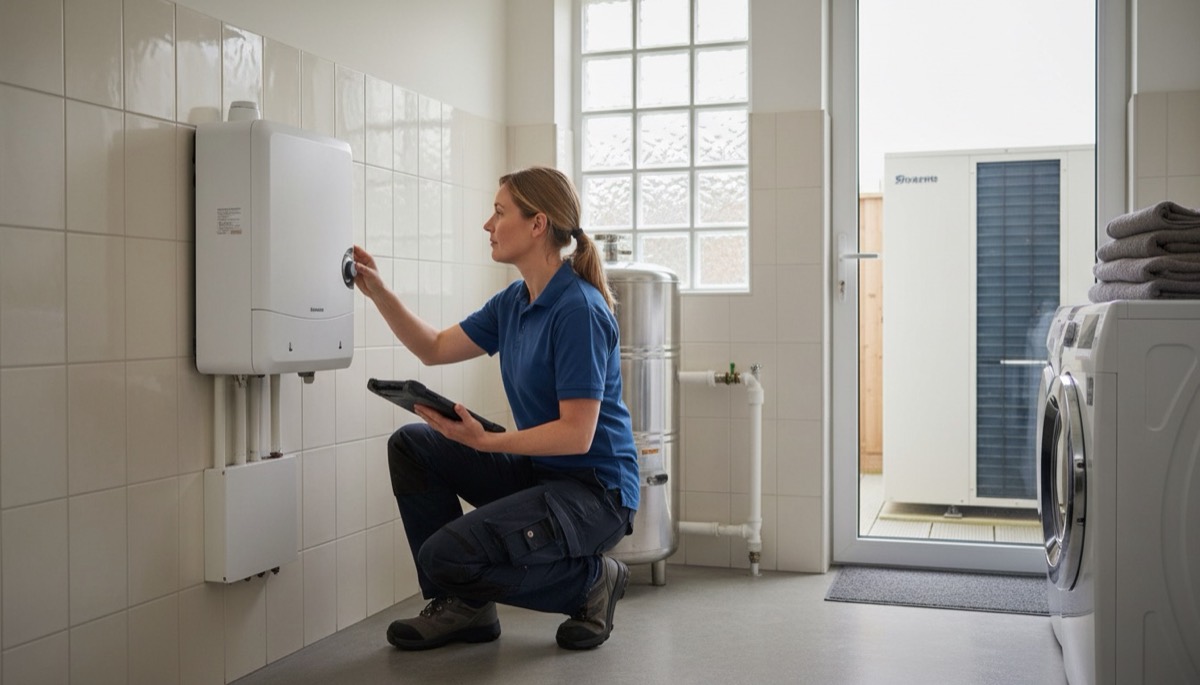
Why now is the right time to upskill
Government policy and funding are moving heating decisively towards heat pumps, and the installer base has not kept pace with the ambition. The Warm Homes Plan commits £15 billion of public investment to 2030, including £2.687 billion for the Boiler Upgrade Scheme, and states it should support 180,000 additional jobs in energy efficiency and clean heating by 2030. The Boiler Upgrade Scheme itself has been extended to 2030 and offers homeowners £7,500 towards a heat pump, applied by the installer.
For a gas engineer, the signal is clear. Gas boiler installation will decline over the coming years as policy pushes homes to low-carbon heating, while heat pump work is funded and expanding. There is a well-documented shortage of trained heat pump installers relative to the targets, which means early movers can build a strong position. Adding heat pump competence now is about being ready for where the heating trade is going, while your existing gas work keeps you earning in the meantime. Our article on what the end of ECO4 means for installers covers the wider funding shift.
Winning your first heat pump jobs from your gas base
The advantage you have over a brand-new heat pump business is a customer base that already trusts you with their heating. That is where your first heat pump jobs usually come from. Every gas customer whose boiler is ageing is a future heating decision, and increasingly some of those decisions will be heat pumps, especially with a £7,500 grant on the table. Being able to talk knowledgeably about both options, rather than defaulting to a like-for-like boiler swap, keeps you in the conversation.
A practical way to start is to be honest about which homes suit a heat pump well. A reasonably insulated home with space for the right emitters is a strong candidate; a hard-to-heat, poorly insulated property may need fabric work first. Your existing relationship lets you have that conversation straight, which builds trust and leads to better installations and happier customers. Early heat pump jobs done well become the references and word-of-mouth that grow the low-carbon side of your business.
It also pays to pair up where it helps. Many heating engineers work with an electrician for the electrical connection and, in the early days, lean on manufacturer technical support and training for the specific products they fit. You do not have to know everything on day one; you have to be a competent heating engineer who is building a new specialism on a solid base, which is exactly what you are.
What does it cost and how long does it take?
For a gas engineer who already holds the supporting tickets, the heat pump award is a matter of a short course, after which the main task is setting up MCS. Costs and timescales vary by provider and certification body, so get current quotes, but the structure is predictable: the cost of the heat pump award and any supporting qualifications you do not already hold, the system design qualification if you will design installs, and the MCS certification costs for your business.
The critical path is usually the MCS side rather than the qualification. The heat pump award can be done quickly; getting your business MCS certified, including a first assessable installation, takes more calendar time. Because you keep working on gas throughout, the transition does not mean lost income, which makes the cost far easier to carry than for someone leaving another job to retrain. Plan it as a few months of adding qualifications and setting up MCS alongside your normal work, rather than a single expensive leap.
Common questions gas engineers ask
A few concerns come up again and again when gas engineers consider heat pumps, and most have reassuring answers. The work is closer to what you already do than you might expect, the qualifications recognise your experience, and you do not need to become a refrigeration engineer to install the common monobloc systems. The main genuine learning curve is heat pump system design, which is worth taking seriously because it is what separates a good installation from a poor one.
The other common question is about timing: is it too early, or too late? Neither. Heat pump volumes are rising from a relatively low base, the grant is in place to 2030, and the trained installer base is thin, so there is room for competent installers entering now. Waiting until gas work dries up would mean retraining under pressure; moving while you still have steady gas income is the lower-risk path.
Frequently asked questions
Can a gas engineer install heat pumps?
Yes, and gas engineers are among the best placed to do so. Heat pumps are wet heating systems, so your existing skills transfer directly. You add a Level 3 heat pump award to your experience, hold the supporting water and unvented tickets, arrange the electrical connection, and get your business MCS certified for grant-funded work.
Do I need to give up gas work to install heat pumps?
No. You can keep doing gas work while you add heat pump installs. Running both is the sensible approach: your gas income funds the transition and you keep customers who might otherwise go elsewhere for a heat pump.
Do gas engineers need F-gas for heat pumps?
Only for split systems. Most domestic heat pumps are monobloc, with a sealed, factory-charged refrigerant circuit, so you connect only the water side and do not need F-gas. You only need F-gas if you install split systems, where refrigerant pipework is joined on site. See our guide on whether you need F-gas.
Will gas boilers be banned?
Government policy is steadily moving heating away from fossil fuels towards low-carbon options like heat pumps, with significant funding behind the shift. Rather than betting on a single ban date, the practical response for a gas engineer is to add heat pump capability now while continuing gas work, so you are ready as demand moves.
How long does it take a gas engineer to qualify for heat pumps?
If you already hold the supporting water and unvented tickets, the heat pump award itself is a short course. The longer part is setting up MCS certification for your business, including a first assessable installation. Because you keep working on gas throughout, the transition is gradual rather than a single step.
Do I need to be an electrician as well?
No, but the electrical connection on a heat pump must be done by a qualified electrician. You either partner with one or gain the electrical qualification yourself. Many heating engineers work with an electrician for that part of the job.
Is there enough heat pump work to justify retraining?
Demand is rising, backed by the £7,500 Boiler Upgrade Scheme grant to 2030 and the Warm Homes Plan's investment, while the trained installer base is thin. For a gas engineer who keeps gas income during the transition, adding heat pump capability is a low-risk way to position for where the heating trade is heading.
How Nexis Academy can help
Nexis Academy is a City & Guilds Approved Centre (T91185) in Manchester. We currently deliver internal wall insulation training, with heat pump and other retrofit courses in development. Register your interest and we will let you know when heat pump training is available. See also how to become a heat pump installer and MCS certification for heat pump installers.
Sources
- BPEC, Level 3 Award in Air Source Heat Pump Systems (non-refrigerant circuits): scope and entry requirements.
- Ofgem, Boiler Upgrade Scheme (BUS): £7,500 grant, extended to 2030, installer-led.
- Department for Energy Security and Net Zero, Warm Homes Plan, updated 18 March 2026: investment and jobs.
- MCS, Heat Pump Installation Standard MIS 3005-I:2025.