
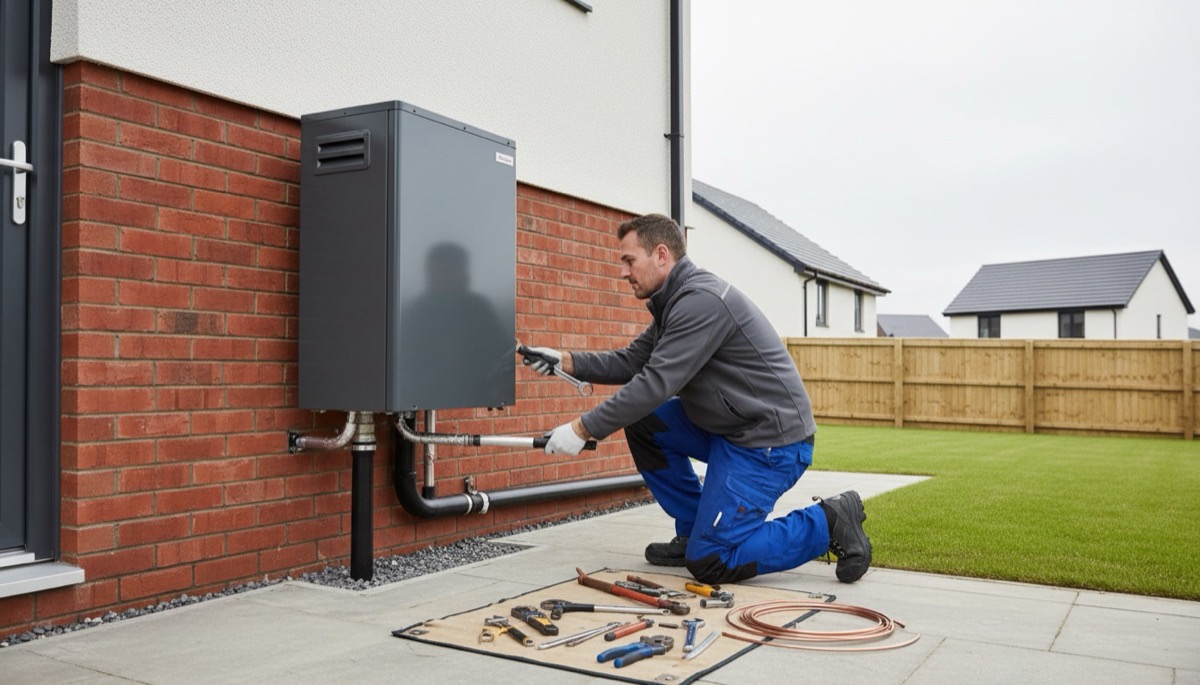
What does a heat pump installer do?
A heat pump installer designs and fits heat pump heating systems in homes, replacing gas or oil boilers with low-carbon heating. Most domestic work is air source heat pumps, which take heat from the outside air and use it to heat radiators, underfloor heating and hot water. The job combines wet heating skills, system design and commissioning.
It is a plumbing and heating role at its core, which is why most heat pump installers come from a plumbing, heating or gas background. The work includes sizing the system to the property's heat loss, fitting the outdoor unit and indoor cylinder, connecting the wet heating system, and commissioning it to the MCS standard. The current standard governing this is MIS 3005-I:2025, the MCS Heat Pump Installation Standard.
What qualifications do you need?
A heat pump installer needs a recognised Level 3 heat pump qualification, supporting plumbing qualifications, and a relevant trade background. The core qualification is a Level 3 heat pump award, such as the BPEC Level 3 Award in Air Source Heat Pump Systems (non-refrigerant circuits), which is recognised as evidence of competence for MCS.
| Requirement | What it is | Why you need it |
|---|---|---|
| Trade background | Level 2/3 in plumbing or heating, or around 3 years installing wet central heating | Entry requirement for the heat pump qualification |
| Heat pump qualification | Level 3 Award in Air Source (or Ground Source) Heat Pump Systems | The core competence qualification, recognised for MCS |
| Water regulations | WRAS / BPEC Water Regulations (or equivalent) | Required for MCS; connecting to the water supply |
| Unvented hot water | G3 unvented domestic hot water storage | Required where an unvented cylinder is fitted |
| Electrical work | A qualified electrician (not the installer, unless separately qualified) | The electrical connection is a legally separate competence |
| F-gas (split systems only) | F-gas qualification (e.g. City & Guilds 2079) for refrigerant circuits | Needed only where refrigerant pipework is joined on site |
Our companion guide on what qualifications you need to install air source heat pumps breaks the qualification stack down in full.
Can a plumber or heating engineer become a heat pump installer?
Yes, and it is the most natural route. Plumbers, heating engineers and gas engineers already have the wet-heating skills heat pump work is built on, so for them becoming a heat pump installer is mostly about adding the heat pump qualification and the MCS pieces. The entry requirement for the Level 3 heat pump award is typically a Level 2 or 3 in plumbing or heating, or around three years of evidenced experience installing wet central heating systems.
If you are a gas engineer, heat pumps are a strong way to future-proof your business as gas boilers are phased down. You keep your existing trade and add a growing, grant-supported service. Someone from outside the trades faces a longer route, because you need the underlying plumbing and heating competence first.
What is MCS and do you need it?
MCS (the Microgeneration Certification Scheme) is the quality certification scheme for installers of small-scale low-carbon technologies, including heat pumps. You do not legally need MCS to install a heat pump someone pays for privately, but you do need it to access government grants, and most customers expect it. To be certified, your business works to the MCS standards, including the Heat Pump Installation Standard (MIS 3005-I), and joins through an MCS certification body.
MCS matters commercially because it is the gateway to the Boiler Upgrade Scheme. Without it, you cannot offer customers the grant, which puts you at a large price disadvantage against installers who can.
How does the Boiler Upgrade Scheme affect installers?
The Boiler Upgrade Scheme (BUS) gives homeowners a grant towards a heat pump, and only MCS-certified installers can access it. It is the main reason to get MCS certified. According to Ofgem, the scheme is open in England and Wales, it is installer-led, and MCS-certified installers apply for and redeem the grant vouchers on the property owner's behalf.
The current grant amounts, per Ofgem:
| Measure | Grant |
|---|---|
| Air source heat pump | £7,500 |
| Ground source or water source heat pump | £7,500 |
| Air-to-water or ground source in eligible off-gas-grid homes | £9,000 (until 31 March 2027) |
| Biomass boiler | £5,000 |
| Air-to-air heat pump (residential) | £2,500 |
The scheme has been extended to 2030, so it offers installers a stable, grant-supported pipeline of work for years. Because the installer handles the grant, being MCS certified effectively lets you knock £7,500 off the customer's price, which is a decisive selling point.
Why is demand for heat pump installers growing?
Demand is growing because government policy is pushing homes away from fossil-fuel heating, with funding attached. The Warm Homes Plan commits £15 billion of public investment to 2030, including £2.687 billion for the Boiler Upgrade Scheme, and states it should support 180,000 additional jobs in energy efficiency and clean heating by 2030.
For a plumber or heating engineer, that is a clear signal. Gas boiler work will decline over the coming years; heat pump work is funded and expanding. Adding heat pump competence now positions you for where the heating trade is going, not where it has been. Our guide to what the end of ECO4 means for installers covers the wider funding shift.
How to become a heat pump installer, step by step
- Start from a plumbing or heating base. If you are not already in the trade, gain a Level 2/3 plumbing or heating qualification first. If you are, you likely already meet the entry requirement.
- Hold the supporting tickets. Get your Water Regulations and unvented hot water (G3) qualifications if you do not have them.
- Take the Level 3 heat pump qualification. The Level 3 Award in Air Source Heat Pump Systems is the core competence qualification recognised for MCS.
- Add system design if you will design installs. A Level 3 low-temperature heating and hot water system design qualification is needed for MCS design, not just installation.
- Sort the electrical side. Either qualify as an electrician or work with one, because the electrical connection is a separate legal competence.
- Get your business MCS certified. Join through an MCS certification body and work to the MCS standards.
- Register for the Boiler Upgrade Scheme. Once MCS certified, you can offer customers the grant.
Frequently asked questions
Do I need to be an electrician to install a heat pump?
No, but the electrical connection must be done by a qualified electrician. The heat pump installer handles the heating and water side; the electrical work is a legally separate competence. Many installers either hold electrical qualifications too or work alongside an electrician.
Do I need F-gas certification to install heat pumps?
It depends on the type. Monobloc heat pumps have a sealed, pre-charged refrigerant circuit, so the installer connecting only the water side generally does not need F-gas. Split systems, where refrigerant pipework is joined on site, do require F-gas certification. Confirm the requirement for the specific systems you install.
How long does it take to become a heat pump installer?
For an existing plumber or heating engineer, the heat pump qualification and supporting tickets can be gained in a matter of weeks to months, then MCS certification on top. Coming from outside the trade takes much longer, because you need the underlying plumbing and heating competence first.
Can I install heat pumps without MCS?
You can install a privately funded heat pump without MCS, but you cannot offer the Boiler Upgrade Scheme grant, and most customers expect MCS certification. In practice, MCS is essential for a competitive heat pump business.
Is heat pump installation a good career move for a gas engineer?
Yes. Heat pumps let a gas engineer add a growing, grant-supported service while gas boiler work declines. The wet-heating skills transfer directly, so it is one of the most logical upskilling routes in the heating trade.
How Nexis Academy can help
Nexis Academy is a City & Guilds Approved Centre (T91185) in Manchester. We currently deliver internal wall insulation training, and heat pump and other retrofit courses are in development as part of our growing portfolio. Register your interest and we will tell you when heat pump training is available. See also what qualifications you need to install air source heat pumps.
See also MCS certification for heat pump installers, do you need F-gas, and gas engineer to heat pump installer.
Sources
- Ofgem, Boiler Upgrade Scheme (BUS): grant amounts, eligibility, MCS requirement, installer-led process.
- MCS, Heat Pump Installation Standard MIS 3005-I:2025.
- Department for Energy Security and Net Zero, Warm Homes Plan, updated 18 March 2026.
- BPEC, Level 3 Award in Air Source Heat Pump Systems (non-refrigerant circuits).