
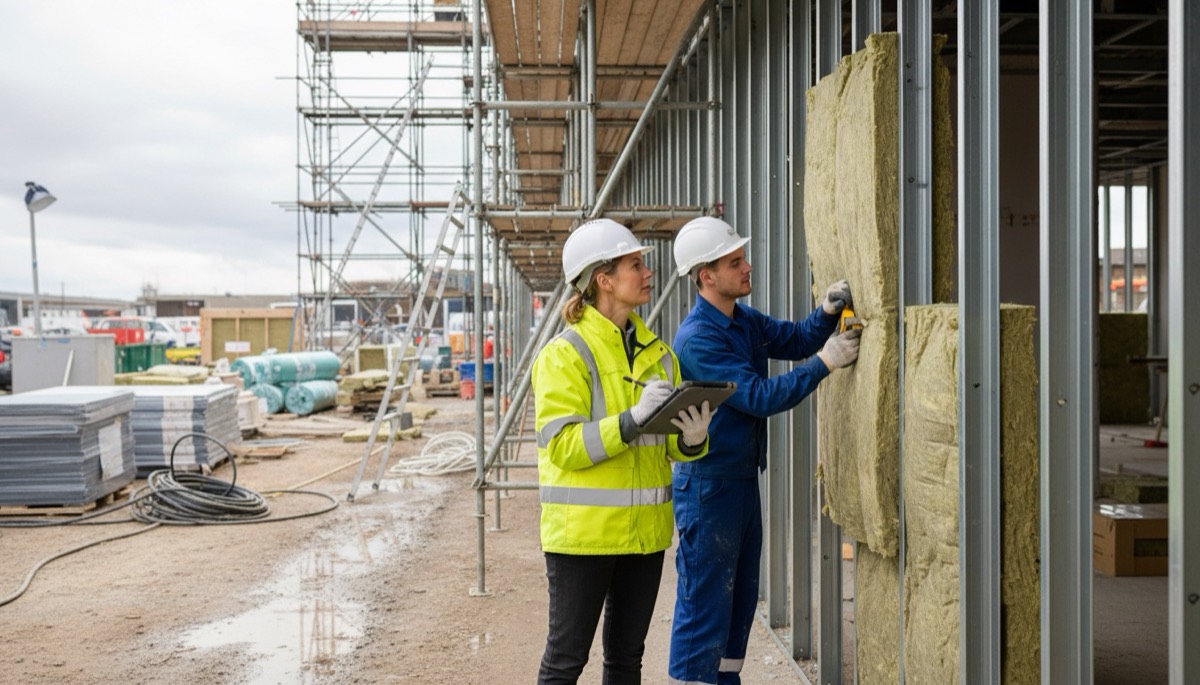
What is a vocational assessor?
A vocational assessor decides whether a learner has met the standard for a qualification, by observing them, questioning them, and gathering evidence. The assessor is the person who signs off that someone is competent in their trade, which is why the role carries real responsibility: a qualification is only as credible as the assessment behind it.
Assessors work across every vocational sector, from construction and retrofit to care, engineering and hairdressing. In trades with on-site NVQs, like insulation, the assessor often travels to assess competence in a real workplace. In centre-based subjects, assessment happens in a training workshop or classroom. Many assessors are experienced tradespeople who have moved into training without leaving their industry behind.
What qualifications do you need to be an assessor?
You need two things: occupational competence in what you assess, and a recognised assessor qualification. Neither works without the other. You cannot assess a trade you are not competent in, and competence alone does not qualify you to make formal assessment decisions.
| Requirement | What it means | Typical qualification |
|---|---|---|
| Occupational competence | You are skilled and experienced in the subject | Level 3 NVQ in your trade, plus current experience |
| Assessor qualification | You can assess learners to a standard | Level 3 Certificate in Assessing Vocational Achievement (CAVA) |
| Access to learners | Real candidates to assess | A job or placement that provides them |
The assessor qualification has no formal entry requirements and no prior qualification is needed to enrol. The real gate is occupational competence: awarding organisations expect assessors to be qualified and experienced in the subject they assess, so a relevant trade qualification and experience are what make you employable.
Which assessor qualification should you take?
The main assessor qualification is the CAVA, but there are smaller awards for people who only assess in one setting. They sit in the same City & Guilds 6317 suite.
| Qualification | C&G number | What it covers | Best for |
|---|---|---|---|
| Level 3 Award in Understanding the Principles and Practices of Assessment | 6317-30 | Theory only (unit 301/205) | Managers and quality staff who need the theory, not practice |
| Level 3 Award in Assessing Competence in the Work Environment | 6317-31 | Theory + workplace assessment | Assessors who only assess on the job |
| Level 3 Award in Assessing Vocationally Related Achievement | 6317-32 | Theory + centre assessment | Assessors who only assess in a classroom or workshop |
| Level 3 Certificate in Assessing Vocational Achievement (CAVA) | 6317-33 | Theory + both practical settings | Most assessors — covers everything |
For most people the CAVA is the right choice, because it covers both workplace and centre assessment and is what most employers and awarding organisations ask for. Our guides to the CAVA and CAVA vs the Level 3 Award in Assessing Competence explain the difference in detail.
Do you need to be working to qualify as an assessor?
Yes, in practice. The CAVA's two practical units require you to assess real learners and be observed doing so, which means you need access to candidates. The qualification has no formal entry requirements, but you cannot build the portfolio without people to assess.
Two routes work:
- You already sign off others' work. Supervisors, trainers and experienced tradespeople who oversee and judge others' work can often generate the evidence in their existing role.
- An employer or provider gives you access to learners. Some training providers arrange candidates for assessor learners, and many employers take on trainee assessors and support them to qualify. Confirm access to real learners before you enrol, if your current role does not provide it.
How do you become an assessor, step by step?
The realistic route is to secure a role that gives you learners to assess, then complete the qualification on the job. Most people are already assessing in some form before they finish.
- Confirm your occupational competence. Make sure your trade qualification is at Level 3 and your experience is current. For insulation and retrofit, that means the relevant NVQ.
- Choose your assessor qualification. The CAVA for most people, or one of the smaller awards if you only assess in one setting.
- Get access to learners. Through an assessor role, a trainee assessor post, or a placement your training provider arranges.
- Complete the qualification. Finish the knowledge unit and gather assessment evidence from real learners for the practical units.
- Keep your competence current. Awarding organisations and employers expect continuing professional development and up-to-date occupational knowledge.
What else should you know before starting?
An assessor qualification is often the first step into a wider training career, not the end point. The qualifications connect, and holding more than one makes you far more employable.
- Teaching: if you also deliver training, the Level 3 Award in Education and Training (AET) covers planning and delivering learning. Many trade trainers hold both the AET and the CAVA.
- Quality assurance: experienced assessors often move up to become an internal quality assurer, who samples and standardises other assessors' work. See what an IQA does.
- Choosing a path: our guide to tutor, assessor or IQA compares the three routes and who each suits.
Is becoming an assessor worth it?
Becoming an assessor is worth considering if you want to use your trade experience in a flexible, indoor role, and demand is strong across vocational sectors. The government's Warm Homes Plan states it should support 180,000 additional jobs in energy efficiency and clean heating by 2030, and those workers all need assessing against standards, which needs assessors.
The honest trade-offs: assessing involves significant paperwork and evidence-gathering, and in some trades the day rate may be lower than site rates. But it offers regular, flexible work, a long career after the tools, and the chance to bring new people into your trade. For freelance assessors in high-demand sectors, there is good, steady work.
Frequently asked questions
Can I become an assessor without an NVQ in my trade?
The CAVA itself has no entry requirements, so you can technically take it first. But awarding organisations expect assessors to be occupationally competent, so without a relevant Level 3 trade qualification and experience you may hold the CAVA and still not be approved to assess that subject.
How long does it take to become an assessor?
It depends on how quickly you can gather assessment evidence with real learners, which is usually the limiting factor rather than the taught content. The CAVA is 84 guided learning hours and 150 hours total qualification time. Most providers quote a few months part time.
Can I assess more than one trade?
You can assess any subject you are occupationally competent in. The assessor qualification is generic, but your competence is specific. To assess an additional trade, you need credible qualifications and experience in that trade too.
Is an NVQ assessor the same as a vocational assessor?
They are the same role. "NVQ assessor" is an older term from when most vocational qualifications were NVQs. "Vocational assessor" is the broader current term, covering NVQs and other competence-based qualifications.
Do assessor qualifications expire?
No. The CAVA and the other 6317 assessor qualifications do not expire. Employers and awarding organisations expect evidence of current practice and occupational competence that stays up to date.
How Nexis Academy can help
Nexis Academy is a City & Guilds Approved Centre (T91185) in Manchester. Assessing and quality assurance courses are in development as part of our growing portfolio, so contact our team to register your interest.
We are also recruiting qualified assessors for our own City & Guilds programmes. If you hold the CAVA and retrofit, insulation or construction experience, see careers at Nexis Academy.
See also Assessing Competence in the Work Environment vs Assessing Vocationally Related Achievement.
Sources
- City & Guilds, Level 3 and 4 Awards and Certificates in Assessment and Quality Assurance (6317) Qualification Handbook v1.8, November 2025: Level 3 qualification tables and structures.
- Department for Education, Teach in Further Education: FAQs.