
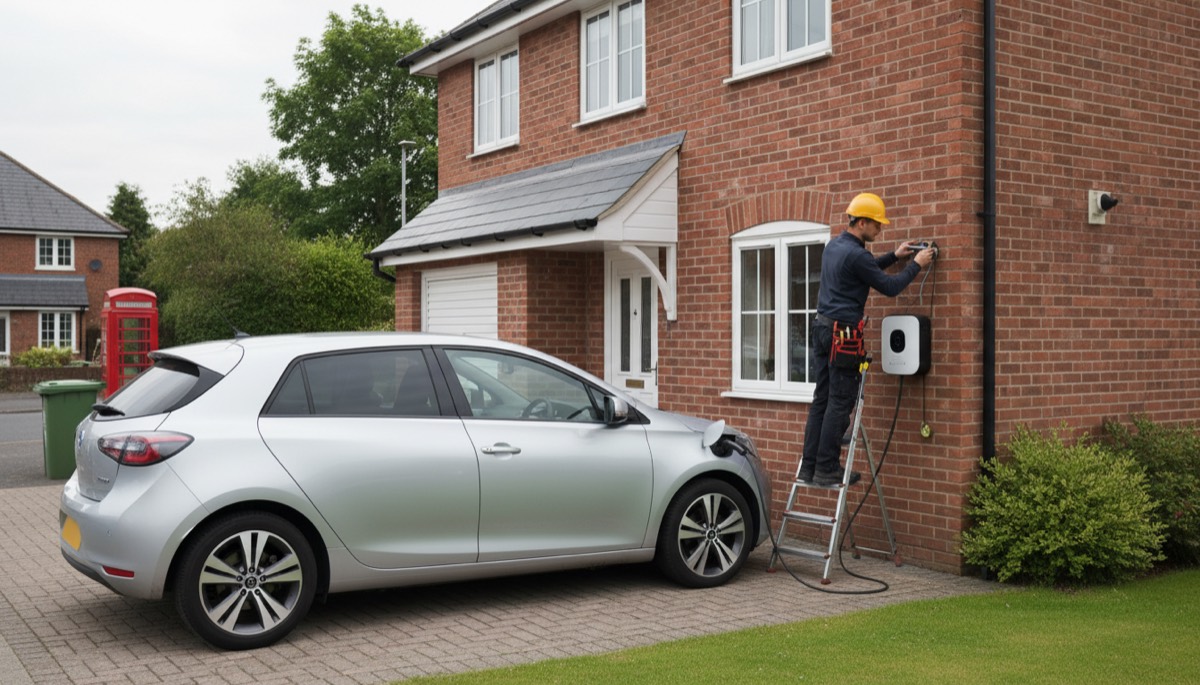
EV charger installation is one of the fastest-growing areas of electrical work, driven by the shift to electric vehicles. It is also a good example of a qualification people assume is an entry route into electrical work when it is actually a specialist add-on for people who are electricians already.
Do you need to be an electrician first?
Yes. City & Guilds describes its 2921 suite as aimed at "qualified electricians, installers and engineers wishing to upskill to safely install and maintain Electric Vehicle charging points." This is not a beginner's course. An EV charger installation is, at its core, a new electrical circuit, often outdoors, often at the limit of an existing supply's capacity, and it needs someone who already understands safe isolation, circuit design, earthing arrangements and the wiring regulations.
If you are not yet an electrician, start with our guide on how to become an electrician. EV charging is a specialism you add once you are qualified, not a shortcut around the main electrical qualifications.
The current City & Guilds EV charging qualifications
City & Guilds' 2921 suite has four qualifications, and the codes have changed in the last couple of years, which causes confusion.
| Code | Title | Status |
|---|---|---|
| 2921-31 | Design and Installation of Domestic and Small Commercial Electric Vehicle Charging Installations | Available until 31 October 2024. No longer open to new registrations. |
| 2921-34 | Level 3 Award in the Requirements for the Design and Installation of Domestic and Small Commercial Electric Vehicle Charging Installations | Current. Available from 30 August 2024. Last registration date 31 August 2028. |
| 2921-32 | Level 3 Award in the Design and Quality Assurance of Largescale Electric Vehicle Charging Installations | Current. Last registration date 31 August 2028. |
| 2921-33 | Level 3 Award in the Installation and Maintenance of Largescale Electric Vehicle Charging Installations | Current. Last registration date 31 August 2028. |
If you see 2921-31 still advertised, check with the provider directly: City & Guilds' own page shows it as available only until 31 October 2024, so a course still using that code should be able to explain how it maps to the current qualification.
For most electricians working on homes and small businesses, 2921-34 is the one you want. The 2921-32 and 2921-33 awards cover largescale installations, such as depot or fleet charging, which is different work with different design considerations.
What does 2921-34 cover?
City & Guilds assesses 2921-34 by an online multiple-choice test. Compared with the older 2921-31, which combined a multiple-choice test with a practical assignment, the current 2921-34 is a knowledge-based award on its own. This reflects that the practical electrical skills are assumed to already be in place from your core electrical qualification; this award adds the EV-specific design and installation requirements on top.
Course content from training providers, consistent with the qualification's title, typically covers both single-phase domestic charge points (up to around 32A) and small commercial three-phase installations (roughly 11 to 22kW), including the specific protective device requirements, earthing arrangement considerations, and load management that EV charging introduces.
What about 2921-32 and 2921-33?
These cover largescale EV charging: the kind of multi-point, high-power installations found at depots, fleet yards or public charging hubs.
- 2921-32 covers design and quality assurance of largescale installations, assessed by a short-answer, scenario-based test plus a project assignment.
- 2921-33 covers installation and maintenance of largescale installations, assessed by a short-answer, scenario-based test.
If your work is mostly residential driveways and small business car parks, 2921-34 is the relevant one. If you are moving into commercial fleet or public infrastructure work, look at 2921-32 and 2921-33.
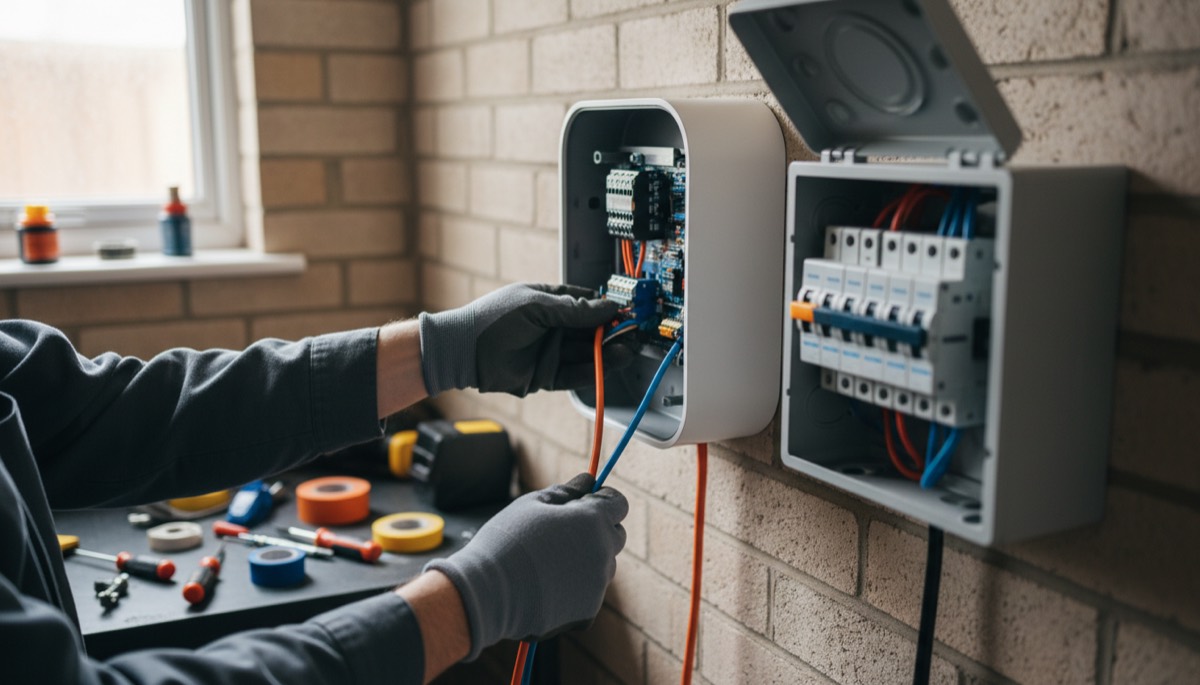
Is an EV charging qualification a legal requirement?
No single law says you must hold a 2921 qualification to fit an EV charger. What actually gates the work is the same framework that governs all electrical installation work: the Electricity at Work Regulations require competence, and installing a new circuit is notifiable under the Building Regulations unless a competent person scheme member self-certifies it. Our guide on domestic installer vs fully qualified electrician explains how that notification and self-certification system works.
Where the 2921 qualification matters is scheme membership and approval:
- The Electrotechnical Assessment Specification (EAS), which sets the minimum competence schemes require before they let a business self-certify work, treats Electric Vehicle Charging Equipment (EVCE) Installation as its own work category, separate from general electrical installation. The EAS points schemes to its own Qualifications Guide for the specific qualifications it accepts for this category, rather than naming one qualification directly in the specification itself.
- Competent person schemes such as NICEIC and NAPIT generally expect installers working under their EV charging scope to hold a relevant qualification. Confirm the current accepted list with the scheme you plan to join, since it can change.
- Manufacturer approval schemes, which many homeowners and installers rely on for warranty and support, commonly require installer accreditation that in turn expects a recognised EV charging qualification.
In short: nobody will arrest you for fitting a charger without 2921-34, but you will struggle to get scheme approval, manufacturer accreditation, or grant-funded work without it.
How EV charging fits the wider competence framework
The IET's Electrotechnical Assessment Specification (June 2026 edition) treats EV charging as a distinct category (A3: Electric Vehicle Charging Equipment Installation), alongside general electrical installation (A1), periodic inspection (A2), solar PV (A4), battery storage and micro wind turbine installation. Each of these has its own underpinning core technical competence requirement, plus category-specific additional qualifications, referenced through the EAS Qualifications Guide rather than listed by name inside the specification itself.
This matters because EV charging increasingly sits alongside other low-carbon installation work. An electrician moving into retrofit and renewables territory may end up holding several of these category-specific qualifications: EV charging, solar PV, and possibly battery storage, each assessed and recognised separately even though the underlying electrical competence overlaps.
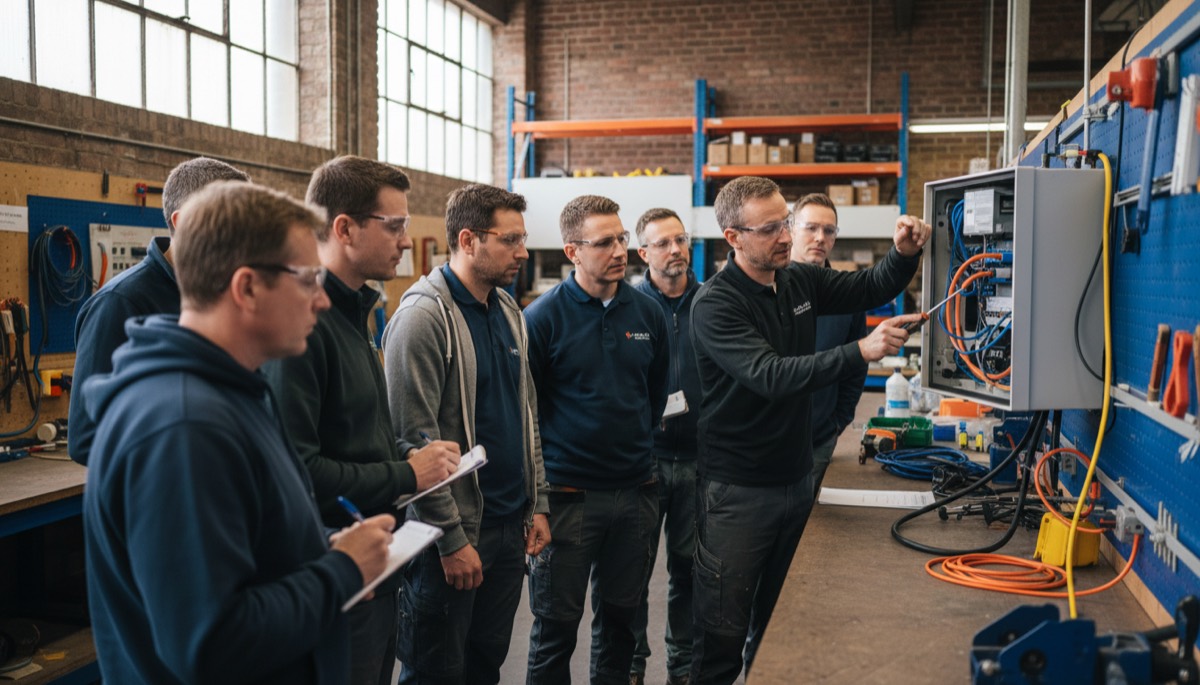
Step by step: becoming an EV charger installer
- Qualify as an electrician first. Complete your Level 3 electrotechnical qualification and the AM2, as covered in our guide on how to become an electrician.
- Hold the 18th Edition (BS 7671) qualification. EV charging installation design depends on current wiring regulations knowledge. See our guide to the 18th Edition qualification.
- Decide domestic/small commercial or largescale. Most electricians start with 2921-34.
- Book the relevant 2921 award with an approved City & Guilds centre.
- Pass the assessment. 2921-34 is assessed by online multiple-choice test.
- Check your competent person scheme's requirements. Confirm your scheme accepts the qualification for self-certifying EV charging work, and update your registration scope if needed.
- Keep your core qualifications current, particularly your BS 7671 knowledge, since EAS rules expect Qualified Supervisors to hold an appropriate BS 7671 qualification within two years of any change to the wiring regulations.
Costs to budget for
City & Guilds lists its own qualification fees, though training providers charge more on top for delivery, materials and assessment time.
| Qualification | City & Guilds qualification fee (UK) |
|---|---|
| 2921-34 | £90.00 |
| 2921-32 | £129.00 |
| 2921-33 | £130.00 |
These are the awarding body's registration fees only. Expect your training provider's course price to be considerably higher once teaching, materials and their own assessment costs are included. Ask for the full price before booking, and confirm what it includes.
What a typical domestic installation involves
Beyond the qualification, it helps to understand what the job itself actually requires, since this shapes what the 2921-34 syllabus covers.
- Load assessment. Check the property's existing supply capacity and what else draws on it, since a 7kW or 22kW charger can be a significant new load alongside an electric shower, cooker and other circuits.
- Earthing arrangement. PME (protective multiple earthing) supplies need particular consideration for EV charging because of the small risk of an open-PEN fault transferring a dangerous voltage to the vehicle and anyone touching it; most modern chargers include built-in protection for this, but the installer needs to understand why it matters.
- Protective device selection. EV charger circuits typically need their own dedicated circuit with correctly rated overcurrent protection and RCD protection, often a specific RCD type suited to the DC leakage current some EV charging equipment can produce.
- Cable route and location. Chargers are commonly fitted outside, which raises cable routing, weatherproofing and mechanical protection questions that a standard indoor socket circuit does not.
- Load management, where relevant. Smart chargers that limit charging based on overall household demand, or multiple chargers sharing a limited supply, add a layer of design most general domestic work does not involve.
- Commissioning and handover. As with any new circuit, the work needs testing, certification, and a clear explanation to the customer of how to use and maintain the charger safely.
None of this is beyond a competent electrician. It is exactly why City & Guilds frames the 2921 suite as "requirements for the design and installation" rather than basic practical training: it assumes you already know how to wire a circuit, and teaches you what is specific to EV charging.
Finding EV charging work
Once qualified, EV charger installation can be a standalone specialism or an addition to general domestic electrical work.
- Manufacturer approval. Several charger manufacturers run their own installer networks, which usually require your 2921-34 (or equivalent) plus proof of your core electrical qualifications and scheme membership.
- Grant and incentive schemes. Government-backed chargepoint grant schemes have specific eligibility rules for both properties and installers, and these change over time, so check the current rules directly with the scheme before quoting a job that depends on grant funding.
- Referrals from retrofit and renewables work. EV charging increasingly sits alongside solar PV and battery storage installations, so electricians building a reputation in low-carbon home upgrades often pick up charger work as part of a wider package.
- Local advertising and word of mouth. As with any specialism, early jobs done well, with clear invoicing and proper certification, are what builds a reputation for larger contracts later.
Common mistakes
- Trying to take an EV charging course before you are electrically qualified. The 2921 suite assumes an existing electrician's knowledge; it is not a standalone route into the trade.
- Enrolling on 2921-31 without checking its status. It is no longer available for new registrations after 31 October 2024.
- Choosing 2921-32/33 for domestic work, or 2921-34 for a depot project. Match the award to the scale of the installations you actually do.
- Assuming the qualification alone lets you self-certify. You also need to be part of the right scheme, with EV charging in your registered scope.
- Letting your BS 7671 knowledge lapse. EAS competence requirements expect it to be kept current.
Is EV charging a good specialism to add?
The number of electric vehicles on UK roads has grown steadily, and home and workplace charging infrastructure has grown with it. For an electrician, EV charging has two attractions: the work is relatively quick and well defined compared with a full rewire, and it sits naturally alongside other low-carbon specialisms such as solar PV and battery storage, which means satisfied customers often come back for more than one type of work.
It is not without its challenges. Supply capacity limits, PME earthing considerations, and keeping up with evolving guidance mean this is genuinely specialist work, not a simple add-on circuit. Pricing also needs care: customers increasingly compare quotes online, so it helps to be clear about what is included, from the initial load assessment through to certification and handover.
For an electrician who already has a solid core qualification and wants to diversify their work, EV charging is one of the more accessible specialisms to add, both in terms of the relatively short 2921-34 qualification and the ongoing demand for the work.
Frequently asked questions
Can I become an EV charger installer without being an electrician?
No. City & Guilds describes the 2921 suite as for qualified electricians, installers and engineers upskilling into EV charging. You need your core electrical qualifications and competence first.
Is 2921-31 still valid?
City & Guilds' own suite page shows 2921-31 as available only until 31 October 2024, with no further registrations after that date. If you already hold it, it remains a valid qualification you achieved; if you are looking to train now, you need 2921-34 instead.
What is the difference between 2921-34 and 2921-32/33?
2921-34 covers domestic and small commercial EV charging installations, assessed by an online multiple-choice test. 2921-32 and 2921-33 cover largescale installations, such as depots and fleets, assessed by short-answer scenario-based tests, with 2921-32 adding a project assignment.
Do I need an EV charging qualification to install a charger legally?
Not as a standalone legal requirement, but the work is still governed by the Electricity at Work Regulations and, where notifiable, the Building Regulations. In practice, competent person schemes and manufacturer approval schemes expect a recognised EV charging qualification before they will approve you for this work.
Is EV charger installation notifiable under the Building Regulations?
Installing a new circuit, which an EV charger installation normally involves, is notifiable work. A competent person scheme member can self-certify it; otherwise it must be notified to building control or signed off by a registered third party, as covered in our guide on domestic installer vs fully qualified electrician.
How much does EV charger installer training cost?
City & Guilds' own qualification fees range from £90 for 2921-34 to £130 for 2921-33, but these are registration fees only. Training providers' course prices, which include teaching and assessment delivery, are higher. Get a full quote before booking.
Does my competent person scheme automatically cover EV charging?
Not necessarily. The EAS treats EV charging as a separate work category from general electrical installation, so check with your scheme whether your registration already covers it or whether you need to add it, and what qualification evidence they require.
How Nexis Academy can help
Nexis Academy is a City & Guilds Approved Centre (T91185) in Manchester. We currently deliver internal wall insulation training, with more trade and construction courses in development. We do not yet offer electrical or EV charging courses, so please register your interest to hear when that changes.
Sources
- City & Guilds, Electric Vehicle Charging (2921): qualification codes, status, dates, fees, assessment methods, who it is for.
- IET, Electrotechnical Assessment Specification, June 2026 edition: EVCE as a distinct work category, Qualified Supervisor requirements.